 BeNewz
Related Articles



–Middle Eastern, Indian Punjabi, and Chinese artists release viral songs crediting Pakistan’s leadership for mediating Iran-US ceasefire and averting wider war
Abdullah Zahid
LAHORE: Musicians across the Middle East, South Asia, and China have released viral tribute songs praising Pakistan’s leadership for helping broker a ceasefire between Iran and the United States, a move analysts say prevented a wider regional conflict. The wave of cultural recognition followed the April 7–8 truce, which eased tensions after weeks of military escalation involving Iran, Israel, and US forces.
Artists from Iran, Egypt, Saudi Arabia, Qatar, India, and China credited Prime Minister Shehbaz Sharif and Army Chief Asim Munir for facilitating quiet diplomacy between Washington and Tehran. The songs gained traction within days, spreading widely across streaming platforms and state broadcasters.
In Iran, singer Navid Rahimi released “Tashakur Pakistan,” which quickly topped regional streaming charts. The track thanks Pakistan for “standing between fire and peace,” reflecting public sentiment after the de-escalation. Iranian state media aired additional tributes highlighting Pakistan’s neutrality and mediation role during the crisis.
Egyptian musicians followed with “We All Bleed the Same Color,” emphasizing regional unity and stability. The lyrics referenced concerns over oil supply disruptions through the Strait of Hormuz, a chokepoint responsible for nearly 20% of global oil shipments, according to the US Energy Information Administration.
Similar tributes emerged from Saudi Arabia and Qatar, where social media campaigns amplified Pakistan’s diplomatic role. Hashtags such as #PakistanSavedTheWorld and #ThankYouPakistan trended widely, reflecting public appreciation for Islamabad’s intervention during the crisis peak.
In India’s Punjab region, several independent Punjabi artists released songs praising peace efforts and regional stability, with some referencing Pakistan’s mediation in symbolic terms. While official endorsement remained limited, the cross-border cultural response reflected shared linguistic and cultural ties that often transcend political divides in the region.
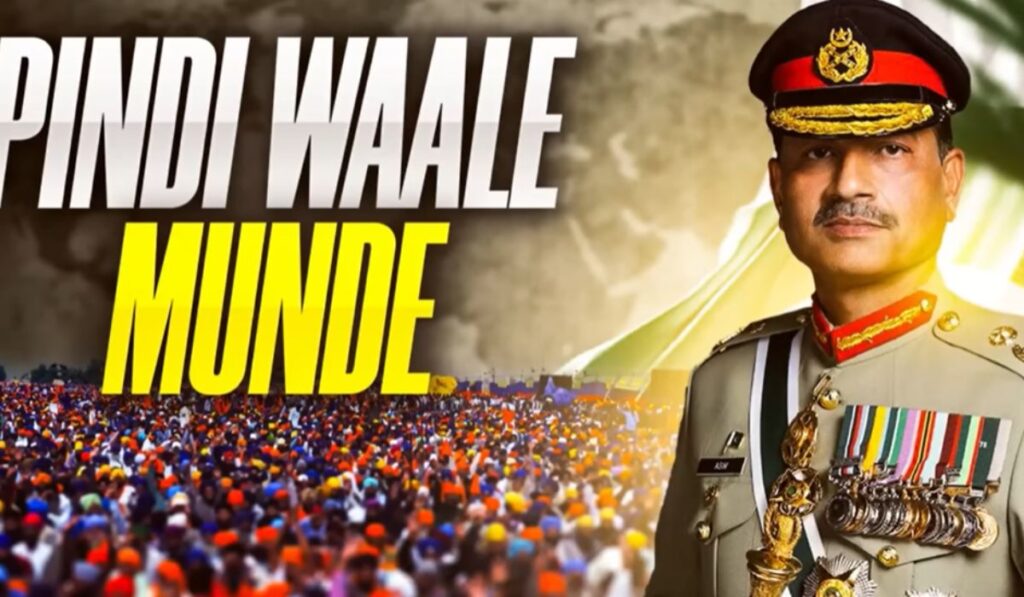
The song is explicitly attributed to and inspired by Pakistan’s leadership — particularly Field Marshal Asim Munir (Army Chief) and Prime Minister Shehbaz Sharif. The lyrics praise their diplomatic efforts in de-escalating tensions between Washington and Tehran, highlighting how their “solutions” and “diplomacy” helped prevent a larger regional conflict. The song connects local Pindi pride with global recognition, positioning the “Pindi waale munde” as proud supporters of Pakistan’s role in bringing peace to the Middle East and avoiding escalation toward World War III.
Chinese musicians and digital creators also joined the trend, releasing Mandarin-language tracks on platforms such as Douyin and NetEase Cloud Music. These songs framed Pakistan’s role within the context of regional stability and China’s broader interest in secure trade routes, particularly under the China-Pakistan Economic Corridor, a flagship component of Beijing’s Belt and Road Initiative.
The crisis began after Iranian strikes on US-linked targets heightened fears of escalation. Threats to close the Strait of Hormuz triggered global alarm, as energy markets reacted sharply. Brent crude prices briefly surged above $95 per barrel during peak tensions, according to Bloomberg data, before easing following the ceasefire announcement.
Pakistan’s intervention came as direct communication channels between Washington and Tehran deteriorated. Officials familiar with the process said Islamabad leveraged longstanding ties with both capitals to facilitate indirect negotiations. Pakistan maintains diplomatic relations with Iran while also cooperating closely with the United States on security and economic fronts.
Analysts say this positioning enabled Pakistan to act as a credible intermediary at a critical moment. Raja Qaiser Ahmed, an international relations expert, said Islamabad stepped in when conventional diplomatic routes failed. He noted that the cultural tributes reflect broader regional acknowledgment rather than symbolic gestures alone.
Pakistan’s diplomatic approach aligns with its long-standing foreign policy emphasis on mediation and conflict avoidance. The country has supported peace efforts in Afghanistan and remains one of the largest contributors to United Nations peacekeeping missions, according to UN data.
Economic considerations also shaped the urgency for de-escalation. The Middle East supplies a significant share of Pakistan’s energy imports, with Gulf countries among its largest oil partners. Any prolonged conflict could have strained Pakistan’s external account, as highlighted in recent State Bank of Pakistan assessments.
The ceasefire is also being viewed within shifting geopolitical dynamics, where non-Western powers are increasingly playing mediation roles. This reflects a broader trend toward multipolar diplomacy as traditional power structures evolve.
Pakistani officials responded cautiously to the praise. A statement from the Prime Minister’s Office emphasized commitment to peace through dialogue, adding that the outcome reflected collective efforts to avoid further escalation.
The development comes as Pakistan pursues economic reforms under an International Monetary Fund programme aimed at stabilizing macroeconomic indicators. Improved diplomatic standing may support investor confidence and strengthen regional partnerships.
The songs continue to dominate playlists from Tehran to Beijing and Punjab, symbolizing relief after a period of heightened uncertainty. As the ceasefire holds and further negotiations continue, Pakistan diplomacy praised in global tribute songs underscores Islamabad’s expanding role in conflict mediation and regional stability.