 BeNewz
Related Articles

–Pakistan repays $2bn to UAE, managing external obligations without major hit to forex reserves
Aftab Maken
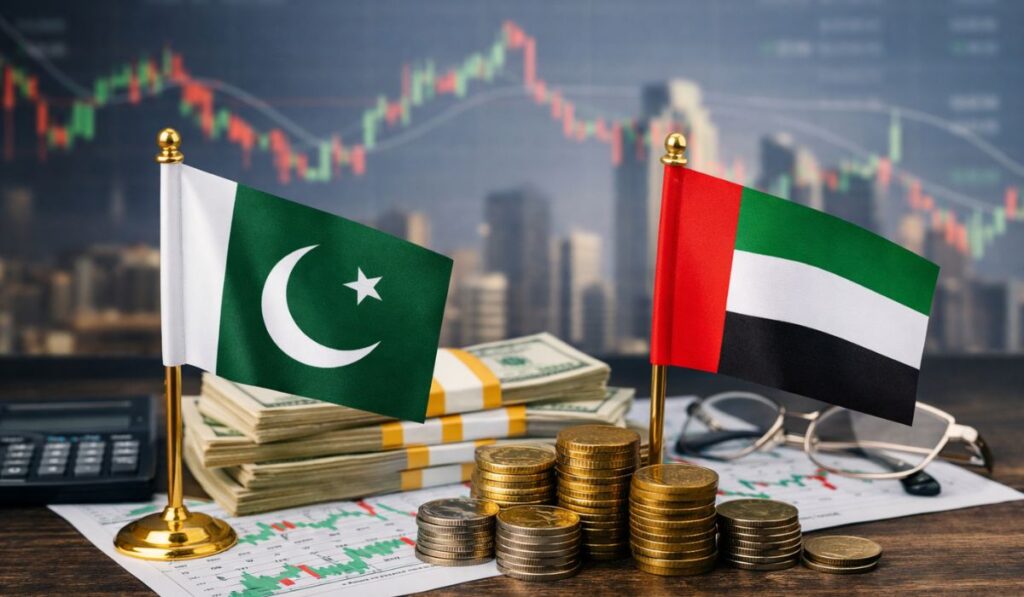
KARACHI: Pakistan has repaid $2 billion to the United Arab Emirates, fulfilling a key external obligation while maintaining relative stability in its foreign exchange reserves, according to the State Bank of Pakistan.
The central bank’s spokesperson said the amount was earlier held as a safe deposit in Pakistan’s account and has now been returned as per agreed terms. The repayment comes amid a series of external debt settlements completed by Pakistan in recent weeks.
Officials said Pakistan met its global payment commitments on time, supported by inflows and careful reserve management. The country avoided a sharp decline in its foreign exchange reserves despite significant outflows linked to maturing obligations.
Last week, Pakistan repaid nearly $1.5 billion in Eurobond liabilities while also settling $2 billion in matured deposits. At the same time, it raised $500 million through fresh Eurobond issuance, partially offsetting the outflows.
In addition, Pakistan received a $2 billion deposit from Saudi Arabia, providing critical support to its external account. These inflows helped stabilize reserves, which have remained under pressure due to high debt servicing and import requirements.
Pakistan’s external financing needs have remained elevated over the past two years. According to the State Bank’s latest data, the country’s foreign exchange reserves have fluctuated between $7 billion and $9 billion during fiscal year 2025, covering barely two months of imports. Economists say such levels remain below the comfort threshold recommended by the International Monetary Fund, which typically suggests at least three months of import cover.
The repayment to the UAE reflects Pakistan’s ongoing efforts to maintain credibility with bilateral partners. Gulf countries, particularly Saudi Arabia and the UAE, have played a critical role in supporting Pakistan’s balance of payments through deposits, oil facilities, and deferred payment arrangements.
Historically, Pakistan has relied heavily on such bilateral deposits to shore up reserves. Since 2018, Saudi Arabia and the UAE have collectively provided more than $10 billion in financial assistance, according to finance ministry disclosures. These deposits are often rolled over, but periodic repayments are required under revised agreements.
Pakistan’s successful management of recent outflows comes at a time when the country is implementing reforms under an IMF programme. The IMF’s latest review emphasized the need for sustained fiscal discipline, improved tax collection, and a market-determined exchange rate to ensure external stability.
Data from the State Bank shows that Pakistan’s current account has narrowed significantly, recording a deficit of around $1 billion in the first half of fiscal year 2025 compared with over $3 billion a year earlier. Analysts attribute this improvement to import compression, exchange rate adjustments, and higher remittances.
Remittances from overseas Pakistanis remain a key buffer. The central bank reported inflows exceeding $27 billion in fiscal year 2024, with Gulf countries contributing a major share. This steady stream of foreign currency has helped offset external debt repayments and trade deficits.
However, challenges persist. Pakistan faces external debt repayments exceeding $20 billion annually over the next few years, according to IMF estimates. Maintaining reserve adequacy will depend on continued inflows, including multilateral financing, foreign investment, and export growth.
The government has also focused on rebuilding investor confidence through policy measures and structural reforms. Recent steps include tightening fiscal controls, revising energy tariffs, and improving tax administration under IMF guidance.
Market participants say timely repayment of obligations, including the UAE deposit, sends a positive signal to creditors and rating agencies. It indicates Pakistan’s willingness and ability to honor commitments despite constrained financial conditions.
Looking ahead, Pakistan’s external sector outlook remains closely tied to IMF programme continuity and support from bilateral partners. Analysts say sustained inflows and prudent reserve management will be crucial in the coming months as debt servicing pressures persist. The repayment to the United Arab Emirates highlights Pakistan’s balancing act between meeting obligations and maintaining financial stability.