 BeNewz
Related Articles
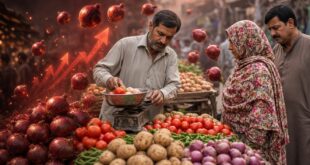


–Seasonal fruit gains importance as farmers expand acreage and urban demand strengthens

BeNewz Report
MULTAN: Pakistan’s watermelon crop is gaining traction this summer as rising temperatures boost consumption and farmers expand cultivation across key producing regions.
Watermelon, locally known as tarbooz, remains a staple summer fruit due to its affordability and high water content. Growers in Punjab and Sindh provinces have reported stable yields this season, supported by improved irrigation access and favorable weather conditions during the sowing period.
According to the Pakistan Bureau of Statistics, fruit production in the country has shown consistent growth over the past five years, with total output crossing 7.5 million tonnes in 2024. While watermelon constitutes a smaller share compared to citrus and mango, its cultivation area has gradually expanded, particularly in districts such as Rahim Yar Khan, Multan, and Thatta.
Farmers say the crop offers relatively quick returns compared to other fruits. Watermelon typically matures within 70 to 90 days, making it an attractive option for small landholders managing limited capital. Input costs remain moderate, though recent increases in fertilizer and diesel prices have added pressure on profit margins.
Market traders in Lahore and Karachi report steady wholesale prices, ranging between Rs25 and Rs40 per kilogram depending on size and quality. Retail prices in urban centers have remained higher due to transportation and handling costs, particularly during early-season arrivals.
The fruit’s strong demand is closely tied to Pakistan’s climate patterns. The country experiences prolonged heatwaves during May and June, often pushing temperatures above 40 degrees Celsius. According to the Pakistan Meteorological Department, 2025 recorded above-average summer temperatures, a trend expected to persist under changing climate conditions.
Watermelon consumption rises sharply during this period, as consumers seek hydration and relief from extreme heat. Nutritionists highlight the fruit’s benefits, noting that it contains over 90% water along with essential vitamins such as A and C. This has helped sustain its popularity across both urban and rural populations.
Historically, watermelon cultivation in Pakistan has remained concentrated in riverine belts and irrigated plains. Over the past decade, however, farmers have increasingly adopted tunnel farming and drip irrigation techniques to improve yields and reduce water wastage. According to the National Agriculture Research Centre, drip irrigation can reduce water use by up to 40% while enhancing crop quality.
Government policies have also played a role in shaping the sector. The agriculture package introduced in 2025 included subsidies on fertilizers and seeds, aimed at boosting overall crop productivity. While the focus remained on staple crops such as wheat and cotton, fruit growers indirectly benefited from lower input costs and improved access to credit.
Export potential for watermelon remains limited but gradually evolving. Pakistan exports small quantities to Gulf countries, particularly the United Arab Emirates and Oman, where demand for fresh produce rises during summer months. However, exporters cite challenges including inconsistent quality standards, lack of cold chain infrastructure, and high freight costs.
The State Bank of Pakistan has repeatedly emphasized the need to diversify agricultural exports beyond traditional commodities. In its latest policy statement, the central bank noted that horticulture products, including fruits, offer significant untapped potential if supply chain inefficiencies are addressed.
Post-harvest losses remain a critical issue for watermelon growers. Experts estimate that up to 20% of fruit production is lost due to inadequate storage, transportation damage, and poor handling practices. The absence of modern cold storage facilities in rural areas exacerbates the problem, limiting farmers’ ability to access distant markets.
Retail dynamics have also evolved with the growth of organized grocery chains and online delivery platforms in major cities. These channels are increasingly sourcing directly from farms, offering better prices to growers while ensuring consistent quality for consumers. However, traditional mandi systems continue to dominate the bulk of trade.
Climate variability poses an ongoing risk to watermelon production. Unseasonal rains and heat stress can significantly affect yields and fruit quality. Agricultural experts warn that without improved seed varieties and adaptive farming techniques, productivity gains may remain limited in the coming years.
Despite these challenges, watermelon continues to hold a firm place in Pakistan’s agricultural and consumer landscape. Its low price point and widespread availability make it accessible to a broad segment of the population, particularly during periods of high inflation affecting food budgets.
Looking ahead, policymakers and industry stakeholders are focusing on improving supply chains, promoting modern farming methods, and exploring export markets. These efforts are expected to support the broader horticulture sector, with watermelon serving as a key seasonal crop within Pakistan’s evolving agricultural economy.