 BeNewz
Related Articles



–Weekly inflation accelerates as vegetable, fuel, and protein prices climb sharply across key urban markets
Aftab Maken
ISLAMABAD: Pakistan’s Sensitive Price Indicator (SPI) rose 0.97% for the week ended March 26, 2026, driven by sharp increases in food and energy costs, according to data released by the Pakistan Bureau of Statistics.
The weekly inflation gauge reflected significant price pressures in essential commodities, particularly vegetables and fuel-related items, indicating persistent volatility in short-term inflation trends. The SPI tracks 51 essential goods across 50 markets in 17 cities and serves as an early signal of price movements affecting households.
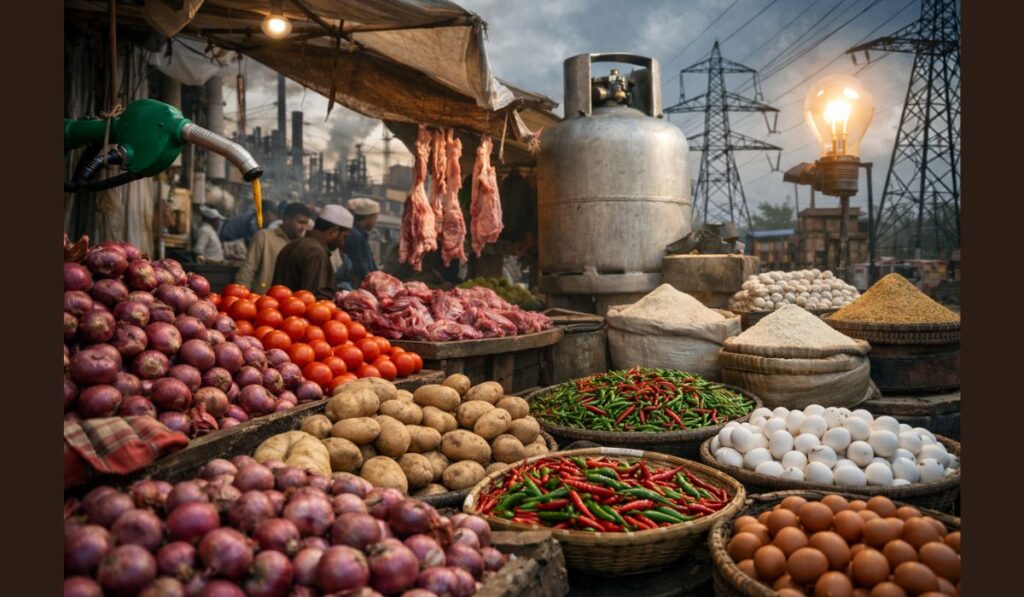
On a weekly basis, onions recorded the steepest increase, rising 18.10%, followed by tomatoes at 11.38%. Liquefied petroleum gas prices climbed 10.05%, reflecting ongoing pressure in the energy segment. Chicken prices increased 8.70%, while potatoes rose 8.11%, underscoring a broad-based surge in perishable food items.
Electricity charges for the first quarter increased by 6.11%, adding to the rising household cost burden. Eggs, garlic, mutton, and beef also registered moderate increases, indicating sustained demand pressures in protein and food staples. Minor increases were also noted in non-food items such as georgette fabric and firewood.
In contrast, a limited number of items recorded price declines during the week. Banana prices fell by 4.50%, while wheat flour decreased by 1.00%, offering some relief in a key staple category. Sugar prices dropped 0.29%, while gur, pulse moong, and IRRI rice varieties recorded marginal declines of 0.17% to 0.20%.
The overall distribution of price changes shows a mixed pattern, though skewed towards increases. Out of the 51 tracked commodities, prices of 23 items, or 45.10%, increased during the week. Prices of six items, or 11.76%, declined, while 22 items, representing 43.14%, remained unchanged.
On a year-on-year basis, the SPI recorded an increase of 8.24%, highlighting persistent inflationary pressures despite periodic easing in certain categories. Energy and fuel costs were the primary drivers of annual inflation. LPG prices surged 34.73% compared to the same period last year, while diesel prices rose 29.94%.
Gas charges for the first quarter increased 29.85%, reflecting tariff adjustments and higher input costs in the energy sector. Wheat flour prices rose 25.76% annually, indicating continued stress in the staple food supply chain. Petrol prices also climbed 25.75%, adding to transportation and logistics costs across sectors.
Among food items, onions saw a 25.07% increase on a yearly basis, while chili powder rose 15.20%. Beef and mutton prices increased by 13.08% and 12.41%, respectively, reflecting sustained demand and supply constraints in livestock markets. Powdered milk prices rose 10.10%, indicating higher costs in processed food categories.
Pakistan’s weekly inflation trends have remained volatile in recent months, largely influenced by fluctuations in agricultural output, exchange rate movements, and energy pricing adjustments. According to recent assessments by the State Bank of Pakistan, food inflation remains a key risk factor, particularly due to seasonal supply disruptions and weather-related shocks.
The agriculture sector has faced intermittent challenges, including uneven rainfall patterns and rising input costs, which have impacted crop yields and market supply. Data from the Ministry of National Food Security shows vegetable prices often spike during transitional harvest periods, contributing to weekly inflation volatility.
Energy prices continue to play a central role in shaping inflation dynamics. Pakistan’s reliance on imported fuels exposes domestic prices to global market fluctuations. Recent adjustments in electricity and gas tariffs, partly linked to commitments under the International Monetary Fund program, have added to cost pressures for consumers.
Urban markets, which form the basis of SPI data collection, have seen sharper price movements compared to rural areas, reflecting higher transportation and distribution costs. Analysts note that perishable goods such as vegetables and poultry remain highly sensitive to supply chain disruptions, leading to frequent weekly spikes.
Government interventions, including subsidies and price monitoring mechanisms, have had limited impact in stabilizing short-term price fluctuations. The Utility Stores Corporation and provincial price control committees continue efforts to manage essential commodity prices, though enforcement challenges persist.
Looking ahead, inflation trends will depend on upcoming harvest cycles, energy pricing decisions, and exchange rate stability. Any further adjustments in fuel or utility tariffs could sustain upward pressure on the SPI in the coming weeks.
The latest SPI reading reinforces concerns over cost-of-living pressures, particularly for low- and middle-income households, as food and energy remain the largest components of household expenditure in Pakistan.