 BeNewz
Related Articles



–PM Shehbaz Sharif announced a major cut in petroleum prices, reducing diesel by Rs135 and petrol by Rs12 per litre to pass on relief from falling global oil prices
Aftab Maken
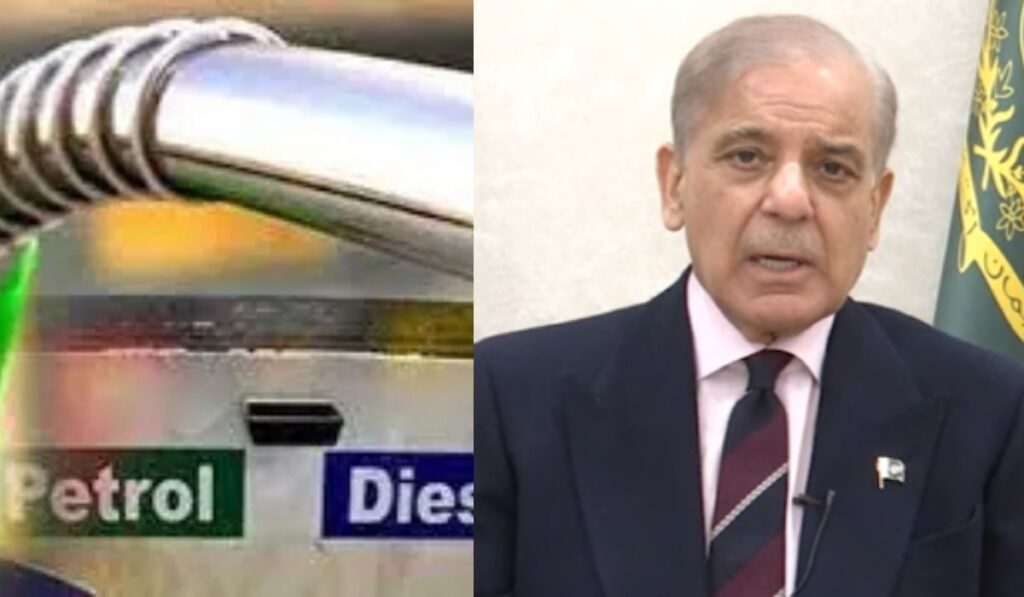
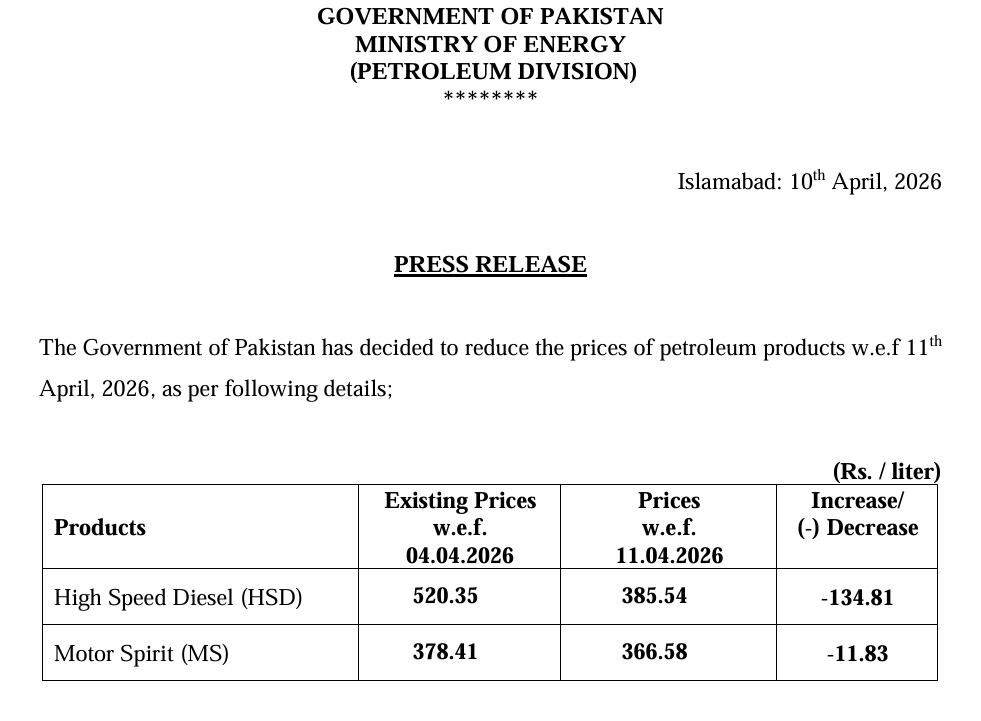
ISLAMABAD: Prime Minister Shehbaz Sharif on Friday announced a significant reduction in petroleum product prices, citing a decline in global oil markets and the government’s commitment to ease inflationary pressure. He said high-speed diesel would drop by Rs135 per litre, bringing the price down from Rs520 to Rs385, while petrol would be reduced by Rs12 per litre to Rs366 from Rs378.
In a televised address, the prime minister said the government had pledged to reduce fuel prices when inflation surged sharply in recent months. He added that the latest decline in international crude oil prices had created fiscal space to transfer relief directly to consumers. According to official notification, diesel prices were reduced by Rs134.85 to Rs385.54 per litre, while petrol fell by Rs11.83 to Rs366.58 per litre, effective from midnight.
The notification further showed kerosene oil prices decreased by Rs17.33 per litre to Rs450.15, while light diesel oil dropped by Rs25.31 to Rs369.72 per litre. These adjustments come as part of the government’s broader effort to stabilize prices and reduce the burden on households and businesses.
Sharif said the government absorbed Rs129 billion in recent weeks to cushion the impact of rising prices. He noted that the wheat harvesting season had begun and lowering fuel costs would help farmers reduce production expenses. Agriculture contributes around 19% to Pakistan’s GDP and employs a large portion of the workforce, making fuel costs critical for rural economic stability.
Fuel prices in Pakistan are closely tied to global crude oil trends, exchange rate movements, and domestic taxation policies. According to the State Bank of Pakistan, petroleum imports account for a significant share of the country’s import bill, and lower oil prices can help ease pressure on the current account deficit. Recent trends in Brent crude prices have shown a downward trajectory due to shifting supply-demand dynamics in global energy markets.
The prime minister also highlighted improving geopolitical conditions, stating that tensions in the Gulf region were easing and dialogue had replaced confrontation. He thanked leadership in Iran and the United States for engaging in talks, noting that both sides had responded positively to Pakistan’s diplomatic outreach.
He said Pakistan played a constructive role in encouraging a temporary ceasefire and facilitating negotiations. Sharif praised Deputy Prime Minister Ishaq Dar and military leadership, including Asim Munir, for their contributions in easing tensions and promoting dialogue.
Economists say the reduction in fuel prices could lower transportation and production costs, helping bring down overall inflation. Data from the Pakistan Bureau of Statistics shows inflation has remained elevated in recent months, but energy price adjustments often play a key role in shaping price trends.
The move comes as Pakistan continues fiscal consolidation under an IMF-supported program, where energy pricing reforms are a key component. However, the current decline in global oil prices has allowed the government to provide relief without significantly disrupting fiscal targets.
Future fuel price trends will depend on international oil market movements and domestic policy decisions. Analysts say if global prices remain stable, further relief may be possible, strengthening public confidence in the government’s economic management under Shehbaz Sharif.