 BeNewz
Related Articles

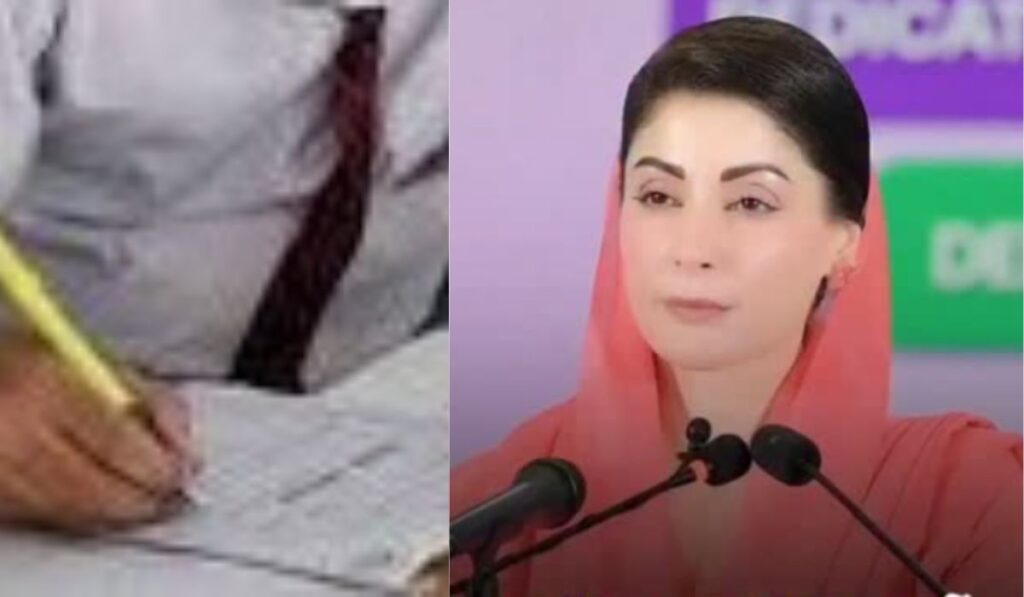
–Students across Punjab were asked to write essays on Maryam Nawaz Sharif during Matric examinations held under the Punjab Boards of Intermediate and Secondary Education, marking a notable inclusion of contemporary political leadership in board-level assessment papers
Aftab Maken
LAHORE: Matriculation students across Punjab appeared in annual examinations where essay topics included Maryam Nawaz Sharif, the Chief Minister of Punjab, focusing on her political journey and governance agenda.
The development emerged during ongoing Class 10 English and Urdu compulsory papers of Pak Studies conducted by multiple education boards across the province.
The inclusion of such a topic placed emphasis on leadership, governance, and public policy themes. Students were asked to write structured essays discussing her role as a provincial leader, with particular reference to education reforms, youth initiatives, and infrastructure development. The topic quickly drew attention among educators, parents, and social media users, sparking discussion about the boundaries between curriculum content and political representation in examinations.
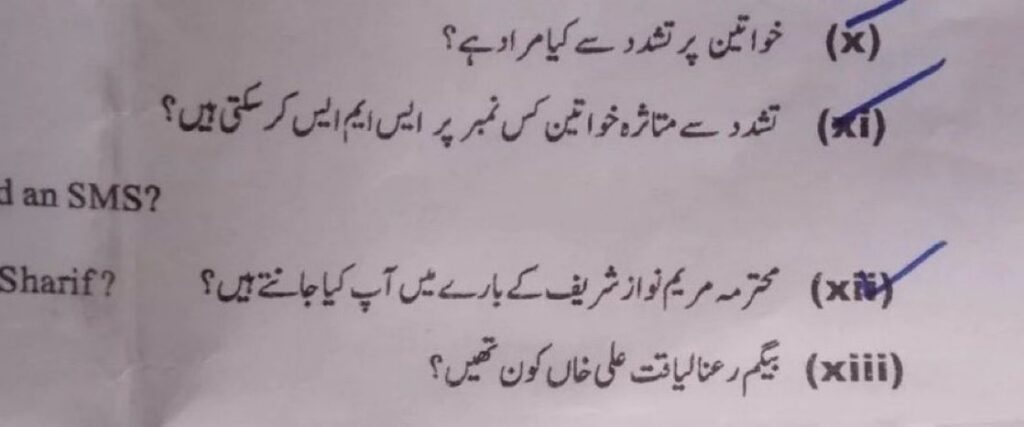
Maryam Nawaz Sharif has served as Chief Minister of Punjab since February 2024, becoming the first woman to hold the office. According to official provincial records and public profiles, she has positioned education reform and youth development as central priorities of her administration. Her government has repeatedly announced measures aimed at improving public schooling standards, expanding technical education, and modernizing examination systems.
In recent public addresses, she has highlighted initiatives such as scholarships, school infrastructure upgrades, and digital evaluation reforms. Government statements in 2025 and 2026 emphasized efforts to reduce disparities between public and private education systems, while also expanding access to skill-based learning programs across Punjab. These themes were reflected in the essay prompts given to students.
Education authorities in Punjab have in recent years incorporated contemporary political and social figures into academic material, particularly in Pakistan Studies and English composition syllabi. A 2025 curriculum revision had already included notable women from Pakistan’s political and social history, including serving and former leaders, as part of a broader effort to highlight female representation in public life.
Examination papers across Punjab typically include essay topics on current affairs, national development, and social issues. Past papers show recurring themes such as education, science, technology, and personality-based essays aimed at assessing analytical writing skills rather than memorization alone. Education officials argue that such topics encourage students to engage with real-world governance and develop informed opinions.
Students who sat for the exams described the essay as straightforward but thought-provoking. Several candidates noted that it allowed them to discuss recent policy changes and leadership ideas they had studied in current affairs preparation. Teachers also reported that students were already familiar with similar themes due to classroom discussions on governance and civic responsibility.
However, the inclusion of a sitting political figure in examination content has generated debate. Some educationists and observers argue that such topics risk blurring the line between academic neutrality and political narrative. Others believe that referencing current leadership in essay papers helps students stay connected with national developments and improves contextual learning.
Public reaction has been divided. Supporters of the move say it reflects modern educational trends where students are expected to analyze contemporary leadership and policy outcomes. Critics, however, question whether examination settings should feature active political office holders, suggesting that neutral historical or civic topics may be more appropriate.
The Punjab education boards have not issued any formal clarification on the selection of essay topics, which are typically set internally by examination committees. Officials have previously stated that paper-setting aims to assess comprehension, expression, and awareness of societal issues rather than political endorsement.
Education reform remains a key policy focus in Punjab, with authorities continuing to expand digital assessment systems, improve school infrastructure, and introduce skills-based curricula. The government has also highlighted efforts to align education with labor market demands and technological change.
As Matric examinations continue across the province, the discussion around curriculum content and academic neutrality is expected to persist. The broader education policy direction in Punjab will likely remain under scrutiny as reforms evolve and examination frameworks adapt to changing governance priorities.