 BeNewz
Related Articles



–Balochistan storms trigger floods, crop losses
BeNewz Report
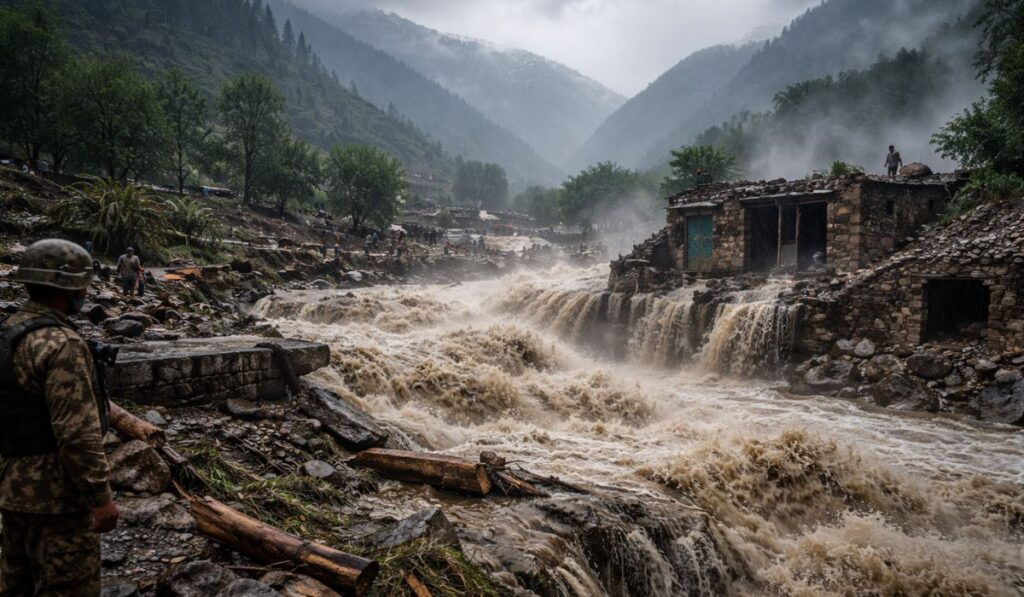
ISLAMABAD: Stormy rains in northeastern Balochistan triggered flash floods and landslides, damaging crops, infrastructure, and disrupting daily life as the weather system continued to batter large parts of Pakistan.
Heavy rainfall in border areas near the Pakistan-Afghanistan frontier sent torrents from the Sulaiman Khel mountain range into nearby villages, inundating homes and agricultural land, according to provincial control room officials on Friday.
Authorities said wind speeds ranging between 40 to 50 km per hour were recorded across multiple districts, intensifying the impact of the storm system. The situation worsened as continuous rain combined with hailstorms, creating flood-like conditions in several areas.
Intense rainfall was recorded in Pishin, Khanozai, Bostan, Huramzai, Barshore, Kan Mehtarzai, Toba Achakzai, Toba Kakari, Loi Band, Muslim Bagh, and Qamar Din. Local officials reported that drainage systems overflowed, causing water to accumulate on roads and entered residential streets.
Control room data confirmed that hailstorms accompanied the rain in many areas, damaging standing crops and orchards. Farmers reported significant losses to wheat, vegetables, and fruit gardens, raising concerns about rural incomes in affected districts.
Pakistan’s agriculture sector remains highly vulnerable to extreme weather, contributing about 23% to GDP and employing nearly 37% of the workforce, according to the Pakistan Economic Survey 2024-25. Balochistan’s orchard economy, particularly apples, grapes, and apricots, plays a key role in regional livelihoods, making such weather shocks economically significant.
In urban and peri-urban areas, floodwater entered streets and low-lowing areas while drainage channels overflowed due to the intensity of rainfall.
An unusual weather event was also recorded in Ziarat Valley, where snowfall occurred in April after nearly five decades. Officials said temperatures dropped below freezing, and nearby mountains were covered in snow, highlighting the intensity and rarity of the current weather system.
Meteorologists attribute the widespread instability to a strong westerly wave affecting upper and central parts of the country. The system has already produced heavy rain, thunderstorms, and dust storms across Sindh, Punjab, Khyber Pakhtunkhwa, and Balochistan over the past 24 hours.
Recent data shows that Mohenjo Daro recorded 60 mm rainfall, while parts of Karachi received over 30 mm. In Khyber Pakhtunkhwa, Cherat recorded 47 mm and Dir 45 mm, reflecting the of the system’s reach. Hailstorm also reported in many parts of Punjab.
Climate experts say Pakistan has seen increasing frequency of extreme weather events in recent years. According to the Pakistan Meteorological Department, rainfall patterns have become more erratic, with intense short-duration storms becoming more common due to climate variability.
The National Disaster Management Authority has repeatedly warned that such events increase the risk of flash floods, particularly in mountainous and semi-arid regions like northeastern Balochistan. Poor drainage infrastructure and unplanned settlements further exacerbate flood impacts in vulnerable areas.
Energy and communication infrastructure also remains at risk during such storms. Strong winds often damage electric poles and transmission lines, leading to power outages. Solar panels and weak structures are particularly exposed during hailstorms and gusty winds.
The Pakistan Meteorological Department has already warned of continued rainfall and thunderstorms in upper and central regions through April 4
Authorities have advised residents in affected areas to avoid unnecessary travel, secure loose structures, and remain alert to official advisories. Emergency response teams have been placed on standby in vulnerable districts.
Economists note that repeated weather shocks could affect food supply and inflation trends. The State Bank of Pakistan, in its recent policy assessment, flagged climate-related disruptions as a growing risk to agricultural output and price stability.
The ongoing weather pattern underscores the increasing exposure of Pakistan’s regions to climate-driven extreme events, with Balochistan storms again highlighting the need for stronger disaster preparedness and resilient infrastructure.