 BeNewz
Related Articles



Aftab Maken
ISLAMABAD: The Sensitive Price Indicator (SPI), a key short-term measure of inflation, recorded a weekly decline of 0.33% for the week ending May 21, 2026, according to data released by the Pakistan Bureau of Statistics (PBS). The index is used to track price movements of essential commodities across urban markets on a weekly basis.
The SPI, which covers 51 essential items from 50 markets in 17 cities, showed mixed price trends during the week. While several commodities witnessed a decline, a larger share of items recorded increases or remained unchanged.
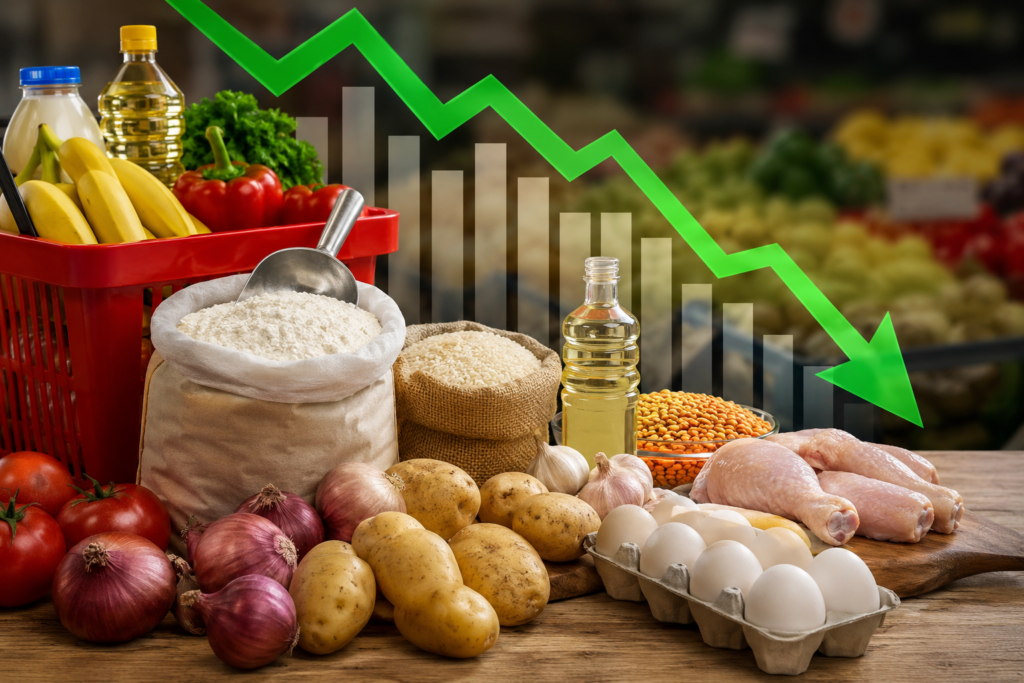
Among the major weekly decreases, chicken prices fell by 8.56%, followed by electricity charges for Q1 at 6.08%, garlic by 3.53%, pulse moong by 1.45%, and petrol and diesel by 1.21% each. Prices of LPG, pulse gram, bananas, eggs, and pulse mash also saw marginal declines.
On the other hand, significant increases were recorded in tomatoes (7.17%), onions (6.08%), wheat flour (1.84%), potatoes (0.87%), cooked daal, tea prepared, cooking oil, curd, and various textile items including long cloth, georgette, shirting, and printed lawn fabric.
Out of the 51 monitored items, 26 (50.98%) registered an increase in prices, 11 (21.57%) declined, while 14 (27.45%) remained stable during the week.
Despite the weekly dip, year-on-year inflation measured through SPI rose sharply by 14.47%. The PBS data showed substantial annual increases in essential energy and food items, including onions (68.33%), petrol (62.24%), diesel (60.90%), wheat flour (59.45%), LPG (50.73%), and electricity charges (43.30%).
Food items such as tomatoes, mutton, beef, chilies powder, garlic, and bananas also recorded notable annual increases. However, some commodities showed relief on a yearly basis, including potatoes (down 42.02%), eggs (24.47%), sugar (14.95%), and various pulses.
According to PBS, the SPI is compiled weekly using prices from 17 urban centers and reflects inflation trends across five income groups (quintiles). The latest data shows that inflationary pressure persists across all income segments, with year-on-year SPI increases ranging from 11.79% to 14.47% depending on the consumption group.
The combined SPI for the lowest income group stood at 335.56, reflecting a slight weekly decline but sustained double-digit annual inflation. Similar trends were observed across higher income groups, indicating broad-based price pressure in the economy.
Monthly SPI data also shows continued volatility over the past year, with periodic spikes driven mainly by food and energy prices.
Economists note that while the weekly decline offers marginal short-term relief, persistent annual increases in essential goods continue to strain household budgets, particularly for lower-income segments.
The SPI remains one of the key indicators used by policymakers to monitor inflationary trends and assess price stability across the country.