 BeNewz
Related Articles


–Punjab government approved a 25% fare increase after talks, scrapping a steep 65% hike announced by transporters
BeNewz Report
LAHORE: The Punjab Transport Department on Saturday approved a 25% increase in intercity bus fares after successful negotiations with transporters, withdrawing an earlier unilateral hike of up to 65%. The revised fare structure has been implemented immediately across bus terminals in Lahore.
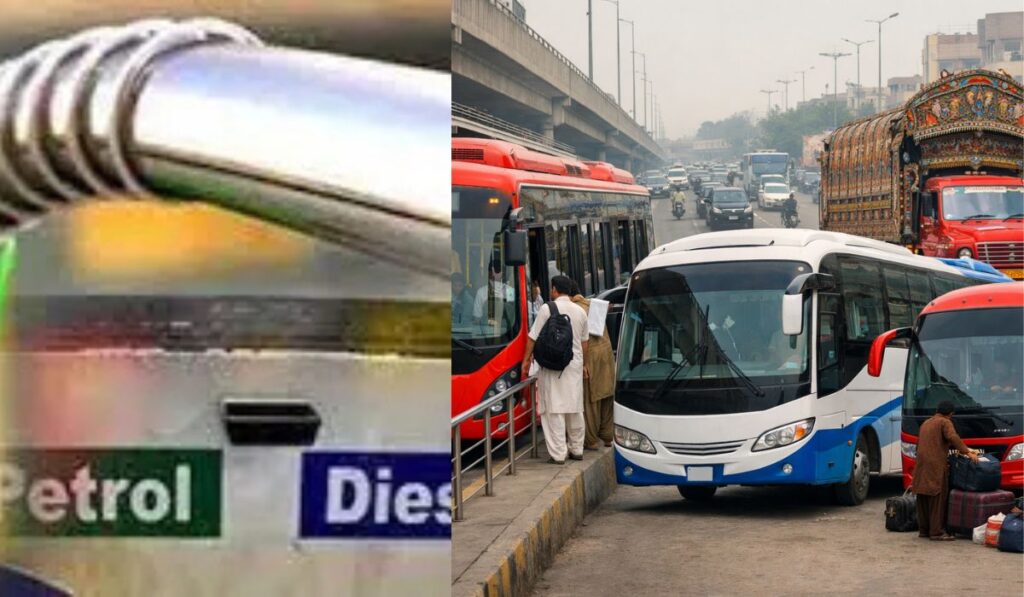
Officials said transporters had raised fares sharply following a surge in fuel prices, prompting the government to intervene. Authorities have now issued a new fare list and directed all bus stands to prominently display updated rates to ensure transparency and prevent overcharging.
Under the revised fares, travel from Lahore to Rawalpindi will cost Rs3,100 in executive class, up from Rs2,480. Economy class fares have increased to Rs4,600, while first class tickets now stand at Rs4,750. Similarly, fares to Peshawar have been raised, with executive class reaching Rs3,950 and economy Rs5,400.
| Route | Executive (New) | Economy (New) | First Class (New) | Old Executive | Old Economy |
|---|---|---|---|---|---|
| Lahore to Rawalpindi | Rs 3,100 | Rs 4,600 | Rs 4,750 | Rs 2,480 | Rs 3,680 |
| Lahore to Peshawar | Rs 3,950 | Rs 5,400 | – | Rs 3,150 | Rs 4,300 |
| Lahore to Sargodha | Rs 1,600 | Rs 2,200 | – | Rs 1,270 | Rs 1,750 |
| Lahore to Faisalabad | Rs 1,600 | Rs 2,150 | – | Rs 1,270 | Rs 1,700 |
| Lahore to Multan | Rs 2,750 | Rs 3,500 | – | Rs 2,200 | Rs 2,800 |
| Lahore to Bahawalpur | Rs 3,200 | Rs 4,600 | – | – | – |
| Lahore to Karachi | Rs 9,650 | Rs 12,300 | Rs 13,700 | – | – |
| Lahore to Quetta | Rs 5,600 | Rs 7,200 | Rs 8,700 | – | – |
Other key routes also saw notable increases. Fares from Lahore to Faisalabad and Sargodha now range between Rs1,600 and Rs2,200 depending on class. Travel to Sialkot and surrounding areas has been revised to around Rs1,450 for executive class.
Long-distance routes recorded sharper increases due to higher fuel consumption. Tickets from Lahore to Multan now cost Rs2,750 in executive class and Rs3,500 in economy. Fares to Bahawalpur have been set at Rs3,200 and Rs4,600 respectively.
Northern and tourist destinations also saw adjustments. Travel to Murree now costs Rs4,150 in executive class, while fares to Mingora in Swat have increased to Rs4,050. These routes typically experience seasonal demand, further influencing pricing decisions.
For longer interprovincial travel, fares have risen significantly. Tickets from Lahore to Karachi now stand at Rs9,650 for executive class and Rs12,300 for economy. Similarly, fares to Quetta have increased to Rs5,600 and Rs7,200 respectively.
The fare revision comes amid sharp fluctuations in petroleum prices, which directly impact transport costs. According to the Pakistan Bureau of Statistics, transport expenses are a key contributor to inflation, with fuel costs accounting for a large share of operating expenses in the sector.
Pakistan’s transport sector is highly sensitive to fuel price movements due to its reliance on diesel and petrol. Recent increases in global oil prices, coupled with currency pressures, have pushed operating costs higher, forcing transporters to seek fare adjustments.
Officials said the approved 25% increase strikes a balance between protecting commuters and ensuring the viability of transport operators. A higher hike could have placed a significant burden on passengers, particularly lower-income groups who rely on public transport for intercity travel.
The government warned that strict enforcement measures will be taken against operators who fail to comply with the new fare list. Displaying official fare charts at terminals has been made mandatory to improve accountability and prevent exploitation of passengers.
Economists note that while the controlled increase offers some relief compared to the proposed 65% hike, it will still add to inflationary pressures. Transport costs often feed into prices of goods and services, amplifying the broader impact on the economy.
The decision reflects the government’s attempt to manage rising costs while maintaining public affordability. Future fare revisions will likely depend on fuel price trends and broader economic conditions, with the Punjab Transport Department expected to continue monitoring the situation closely.