 BeNewz
Related Articles



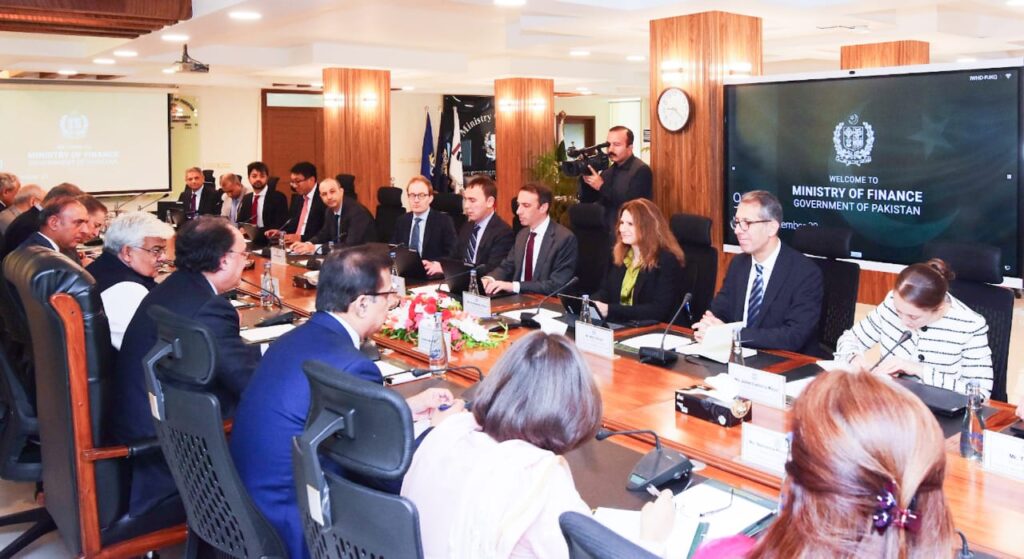
IMF cuts short Pakistan visit over security concerns and shifts $1.2bn tranche talks to virtual mode from Turkiye.
BeNewz Report
ISLAMABAD: The International Monetary Fund ended its Pakistan visit early and shifted talks on a $1.2bn loan tranche to virtual meetings from Turkiye, citing security concerns.
The IMF mission met Finance Minister Muhammad Aurangzeb on Tuesday morning before departing Islamabad hours later. The discussions relate to the third review of the Extended Fund Facility and the second review under the Resilience and Sustainability Facility, according to a statement issued by IMF resident representative Esther Perez Ruiz.
The move came a day after the United States issued a Level 3 travel advisory for Pakistan, urging its citizens to reconsider travel and avoid large gatherings. Certain areas were placed under a Level 4 advisory, effectively barring travel. The US Embassy also restricted staff movement after protests outside consulates in Lahore and Karachi and calls for further demonstrations in Islamabad and Peshawar.
The IMF’s mission chief for Pakistan, Iva Petrova, had earlier stressed the need for sustained structural reforms and higher revenue collection to secure macroeconomic stability. She said recent improvements in growth were encouraging but required continued fiscal discipline and reform momentum. She also highlighted the importance of increasing social spending on health and education to protect vulnerable segments.
Pakistan is seeking the next $1.2bn disbursement under its $3bn Stand-By Arrangement approved in 2023, which helped avert a sovereign default and stabilise foreign exchange reserves. According to State Bank of Pakistan data, reserves have recovered to above $8bn in recent weeks from critically low levels last year, though they remain below import cover adequacy thresholds recommended by the IMF.
Inflation has eased sharply from a record high of around 38% in May 2023 to below 25% in early 2024, as per Pakistan Bureau of Statistics figures. The central bank has kept its policy rate elevated at 22% to anchor expectations and meet IMF conditions on tight monetary policy. Fiscal consolidation remains central to the programme, with the government targeting a primary budget surplus of around 0.4% of GDP this fiscal year.
Officials said several scheduled meetings were cancelled due to the mission’s abrupt departure. These included discussions on proposed amendments related to the sovereign wealth fund, expansion of the e-procurement system, information sharing with accountability institutions, and withdrawal of incentives granted to state-owned and military-owned enterprises. A review session on Federal Board of Revenue performance was also postponed.
Revenue mobilisation has been a key sticking point in previous reviews. The IMF has repeatedly urged Pakistan to broaden the tax base and reduce exemptions. According to Federal Board of Revenue data, tax collection in the first half of the current fiscal year rose by around 30% year-on-year, though officials acknowledge a shortfall against ambitious targets agreed with the Fund.
A global think tank network has also flagged weaknesses in the IMF’s approach to verifying undeclared assets of senior bureaucrats, raising concerns over transparency and governance reforms embedded in the programme.
Pakistan’s economy has shown tentative signs of stabilisation following last year’s balance of payments crisis. The current account posted a narrow deficit in recent months, supported by improved remittances and import compression. However, growth remains subdued, with the World Bank projecting GDP expansion of around 2% for the current fiscal year, insufficient to absorb a rapidly growing labour force.
Analysts say completion of the third review is critical for unlocking not only IMF funds but also additional financing from multilateral lenders and bilateral partners. The Asian Development Bank and the World Bank typically align their disbursements with IMF programme reviews.
Any delay in securing the next tranche could weigh on investor confidence and the rupee, which has stabilised after sharp depreciation last year. Pakistan’s sovereign bonds have rebounded modestly in international markets but remain at distressed levels.
The shift to virtual negotiations underscores persistent security and political risks facing Pakistan even as it navigates a fragile economic recovery under the IMF programme.