 BeNewz
Related Articles
Aftab Maken
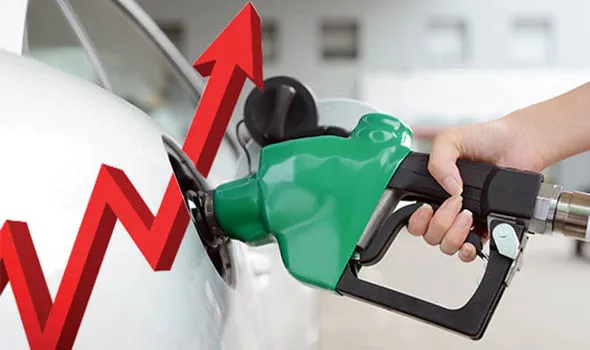
ISLAMABAD: Pakistan raises petrol and diesel prices for 15 days from March 1, citing OGRA recommendation amid global oil volatility.
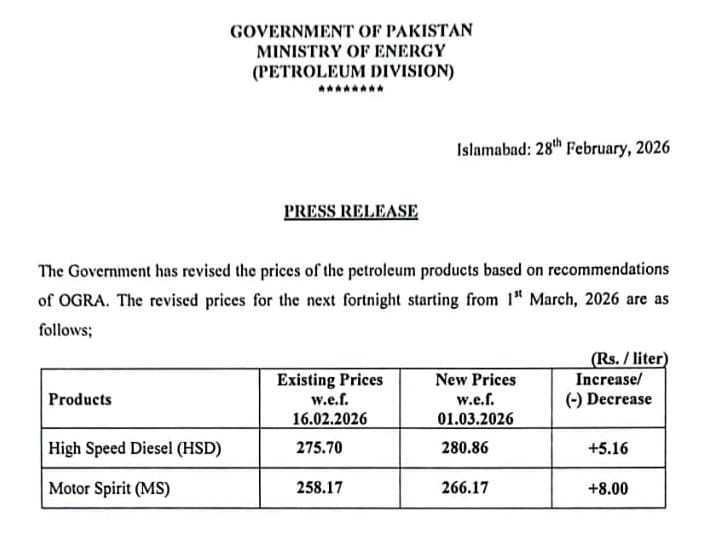
The government of Pakistan increased petrol and diesel prices from March 1, raising petrol by Rs8 per litre to Rs266.17, according to a notification issued by the Petroleum Division. The decision followed a recommendation by the Oil and Gas Regulatory Authority.
The revised prices took effect at midnight and will remain in place for the next 15 days. Petrol previously sold at Rs258.17 per litre. High-speed diesel rose by Rs5.16 per litre to Rs280.86, up from Rs275.70.
Pakistan reviews petroleum prices twice a month, adjusting rates in line with global crude oil benchmarks and currency movements. The pricing mechanism also factors in petroleum levy and sales tax, which are key revenue sources for the federal government.
According to the Finance Ministry’s budget documents for FY2024-25, the government has set a petroleum levy collection target exceeding Rs869 billion. The levy currently stands at up to Rs 60 per litre on petrol and diesel. Analysts say adjustments in retail prices often reflect efforts to maintain revenue targets agreed under fiscal consolidation plans.
Global crude markets have remained volatile in recent months. Brent crude has traded in a wide range amid geopolitical tensions and shifting supply dynamics from OPEC+ producers. Pakistan imports the bulk of its petroleum requirements, making domestic prices highly sensitive to international market trends and rupee-dollar parity.
High-speed diesel plays a central role in Pakistan’s transport and agriculture sectors. Most freight movement relies on diesel-powered vehicles. According to the Pakistan Bureau of Statistics, transport carries over 90% of domestic cargo. Any increase in diesel prices typically feeds into higher food and commodity costs.
Inflation has eased from its 2023 peak but remains sensitive to energy price shocks. Headline inflation stood at around [verify]% in the latest monthly reading, according to official data. Energy and transport costs are significant components of the consumer price index basket.
The State Bank of Pakistan has repeatedly flagged energy pricing reforms as essential for fiscal stability. The central bank’s recent monetary policy statement noted that controlled energy subsidies and improved tax collection remain critical for macroeconomic balance.
Petroleum pricing reforms also form part of structural commitments under Pakistan’s programme with the International Monetary Fund. Authorities have pledged to maintain a market-based pricing mechanism to limit fiscal slippages and rebuild foreign exchange reserves.
Market analysts say further price revisions will depend on global oil trends and exchange rate stability. If international crude prices soften or the rupee strengthens, some relief could follow in the next review cycle. For now, the increase in petrol and diesel prices adds immediate pressure on consumers and businesses, reinforcing the fiscal and energy policy challenges facing Pakistan.