 BeNewz
Related Articles



Aftab Maken
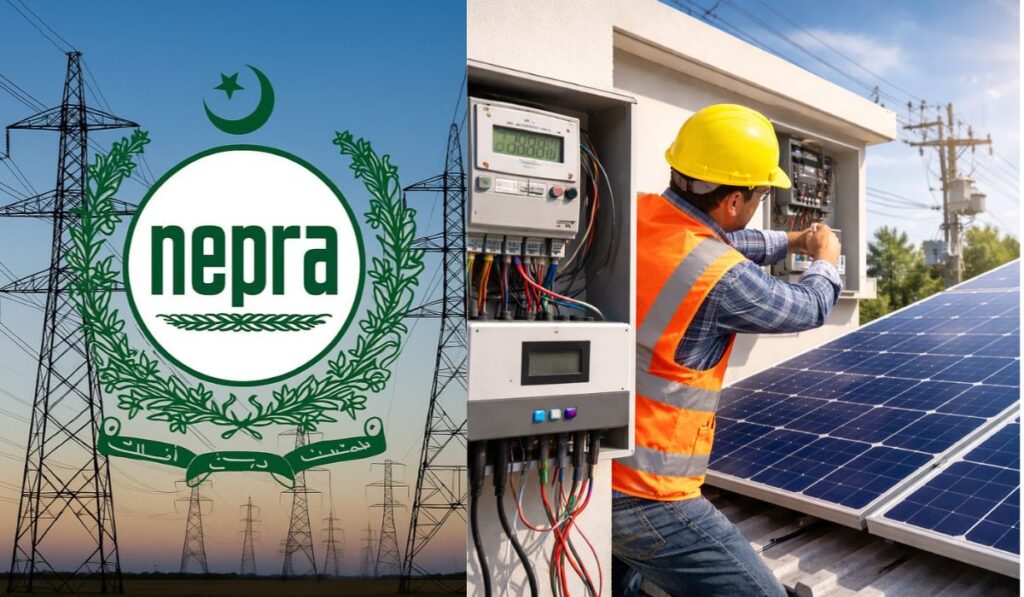
ISLAMABAD: The National Electric Power Regulatory Authority (NEPRA) has officially notified the Net Metering Regulations 2026, replacing the long-standing net metering regime with a new net billing mechanism. This major policy shift ends the popular “unit-for-unit” exchange system for solar and other renewable energy prosumers, marking a significant change for hundreds of thousands of households and businesses that have invested in rooftop solar panels.
Under the new regulations, excess electricity generated by net metering (now net billing) consumers will be purchased by distribution companies (DISCOs) at the National Average Energy Price (NEP) rather than at the retail tariff rate. This price is expected to be substantially lower—reports suggest around Rs 11–13 per unit compared to the previous retail rates of Rs 25–60 per unit depending on the slab and DISCO. Consumers will continue to pay the prevailing retail tariff for any electricity they draw from the grid.
Key features of the Net Metering Regulations 2026 include:
- The new net billing system applies to solar, wind, and biogas prosumers.
- Excess generation will be settled on a quarterly basis, with payments credited to the consumer’s account every three months.
- Contracts for net billing connections will be valid for an initial period of five years, with the possibility of renewal for another five years.
- Billing will be issued separately at the end of each billing cycle, clearly showing grid consumption, exported units, and net settlement.
- The old Net Metering Regulations 2015 stand suspended with immediate effect for new connections. Existing net metering agreements will remain valid until their expiry, after which they will transition to the new regime.
NEPRA officials have justified the change by pointing to the rapid growth of solar installations across Pakistan. They estimate that more than 6,000 MW of distributed solar capacity has already been added, putting significant financial pressure on the national grid and exacerbating capacity payment obligations to independent power producers (IPPs).The authority argues that purchasing excess solar power at full retail rates was unsustainable in the long run, especially as daytime solar generation often coincides with low national demand, leading to curtailment issues and grid instability.
However, the decision has sparked widespread criticism from solar consumers, industry stakeholders, and environmental groups. Many argue that the shift drastically reduces the financial incentive for rooftop solar adoption, potentially slowing the country’s transition to cleaner energy and increasing reliance on expensive imported fuels.
Under the new rules, DISCOs are required to install bi-directional meters or separate export meters for net billing consumers. Systems ranging from 1 kW to 1 MW are permitted, while installations of 250 kW and above will require a mandatory load flow study.
Experts believe the policy could push more consumers toward hybrid systems with battery storage to maximize self-consumption and reduce dependence on grid exports. Others warn that the reduced payback period may deter future investments in distributed renewables at a time when Pakistan urgently needs to diversify its energy mix and lower carbon emissions.
The regulations come into force immediately for all new applications. Existing net metering customers are advised to review their agreements and plan accordingly before their current contracts expire.
This policy change is expected to have far-reaching implications for Pakistan’s renewable energy landscape, household electricity bills, and the economics of solar investments in the coming years.