 BeNewz
Related Articles



By Aftab Maken
ISLAMABAD: Pakistan’s economy delivered a stretch of rare macroeconomic calm in the first half of FY2026, with easing inflation, a revival in large-scale manufacturing, firmer foreign exchange buffers and a steady rupee combining to lift investor confidence and policy credibility.
Official data for July–December show a stabilizing price environment alongside improving production indicators, while fiscal managers squeezed out a surplus and overseas Pakistanis kept dollars flowing in. The stock market, riding the wave of policy continuity and reform signaling, ranked among the world’s top performers during the period.
The government has paired this stabilization with a push on Economic Governance Reforms aimed at locking in discipline and shifting the growth engine toward private-sector investment.
Agriculture shows mixed but resilient performance
Agriculture expanded 2.9% in the first quarter of FY26, up from 1.0% a year earlier, reflecting strength in livestock even as crop dynamics remained uneven.
Important crops excluding wheat slipped 0.7% against last year’s strong 13.1% growth, largely due to a 1.2% dip in cotton output. Other crops contracted 6.4%, reversing a 19.3% surge last year, as green fodder production fell sharply despite a 13% rise in fertilizer usage.
Livestock emerged as the standout, growing 6.3% compared to 2.0% last year, supported by relatively cheaper feed and input costs. Forestry and fishing maintained steady growth of 2.1% and 0.9%, respectively.
Support indicators remained encouraging: agricultural credit rose 11.4% to Rs 1.41 trillion, while imports of farm machinery jumped 21.6% to $65.8 million. Urea offtake during the ongoing Rabi season climbed 26.1%, though DAP usage fell 22%, pointing to shifting nutrient patterns and pricing effects.
LSM posts strongest momentum in years
Large-Scale Manufacturing (LSM) emerged as a central pillar of the recovery, expanding 6.0% during July–November and pushing the Quantum Index of Manufacturing to its highest first-quarter level since FY2016.
Out of 22 industrial groups, 16 recorded positive growth, including textiles, wearing apparel, food, beverages, non-metallic minerals, coke and petroleum products, electrical equipment, automobiles and tobacco.
November alone saw LSM grow 10.4% year-on-year. Automobiles made the largest contribution, followed by petroleum products and apparel. Vehicle production numbers underscored the turnaround: car output surged 56%, trucks and buses nearly doubled, and jeeps and pick-ups rose 37%.
Cement dispatches increased 9.7% to 25.8 million tonnes, driven by a 13% rise in domestic demand, even as exports slipped slightly.
Inflation eases, fiscal books improve
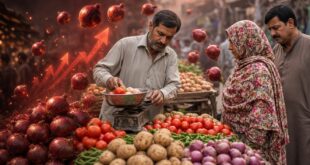
Consumer price inflation cooled to 5.6% year-on-year in December and averaged 5.2% in the first half, down sharply from 7.2% last year. Price pressures persisted in education, health, housing and clothing, but steep declines in perishable food items helped anchor the overall index.
Weekly data also pointed to easing pressures, with the Sensitive Price Indicator falling modestly in late January.
On the fiscal side, the government posted a surplus of 0.8% of GDP during July–November, a sharp turnaround from a slight deficit a year ago. The primary surplus stood at 2.8% of GDP, reflecting tighter expenditure control and improved revenue mobilization.
Tax collection by the Federal Board of Revenue rose into record territory, supported by gains in direct taxes, sales tax and excise duties. Meanwhile, overall expenditure declined, helped by a significant drop in interest payments amid lower borrowing costs.
External gap widens but buffers hold
The current account returned to a deficit of $1.2 billion in the first half, compared to a surplus last year, as imports picked up with recovering domestic demand.
Goods exports remained broadly stable, with continued strength in textiles and a nearly 20% rise in IT services exports to $2.2 billion. Imports rose more sharply, especially in petroleum, crude oil and palm oil, widening the trade gap.
Remittances once again proved a critical cushion, climbing 10.6% to $19.7 billion, led by strong inflows from Saudi Arabia and the UAE. These inflows, together with multilateral support, helped lift foreign exchange reserves to over $21 billion by mid-January, with the central bank holding the bulk.
Foreign direct investment remained modest, with inflows concentrated in power and financial services.
Monetary easing and a roaring stock market
Broad money supply expanded moderately, while private-sector borrowing picked up strongly, signaling a revival in business confidence. The government, meanwhile, reduced its reliance on bank borrowing.
The Pakistan Stock Exchange reflected the improved sentiment. The KSE-100 index surged to record highs by December and extended gains into January, with market capitalization swelling sharply as both local and foreign investors returned to equities.
Social spending and jobs abroad
Overseas employment trends also improved, with more Pakistanis finding jobs abroad during the year. Social protection programs continued to disburse funds, though spending under some schemes remained below last year’s levels, reflecting fiscal consolidation.
Outlook: steady but watchful
With inflation projected to stay in the 5–6% range in the near term and industrial momentum building, Pakistan appears set for firmer growth in FY26. Policymakers, however, remain alert to external risks, commodity price swings and financing needs.
Even as the current account slips back into deficit, steady remittances, expanding IT exports and tighter fiscal management are providing buffers. If reform momentum holds and political stability endures, the first half’s stabilization could evolve into a more durable, investment-led recovery.