 BeNewz
Related Articles
Aftab Maken
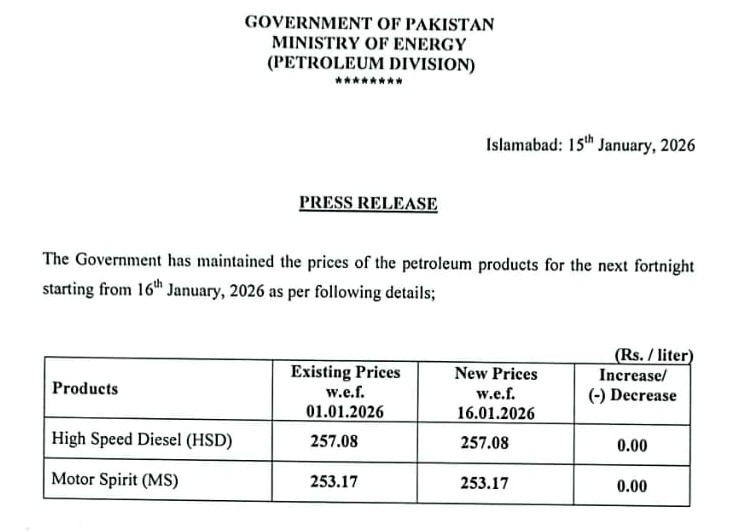
ISLAMABAD: It was a chilly morning in Islamabad when, on January 15, 2026, the Ministry of Energy (Petroleum Division) issued a press release. The announcement stated that for the next fortnight starting January 16, the prices of petrol and high-speed diesel would remain exactly the same as they had been since January 1: Motor Spirit (petrol) at Rs 253.17 per litre and High Speed Diesel at Rs 257.08 per litre. No increase, no decrease—just the same old figures.
However, a notification from the Petroleum Division, made available to and other credible sources, revealed the real story behind the “stability.” The federal government quietly increased the petroleum levy, effectively snatching away the relief that the public was hoping to receive due to falling global oil prices.
According to the official document:
- The levy on petrol was raised by Rs 4.65 per litre—from Rs 79.62 to Rs 84.27 per litre.
- The levy on diesel was increased by Rs 0.80 per litre—from Rs 75.41 to Rs 76.21 per litre.
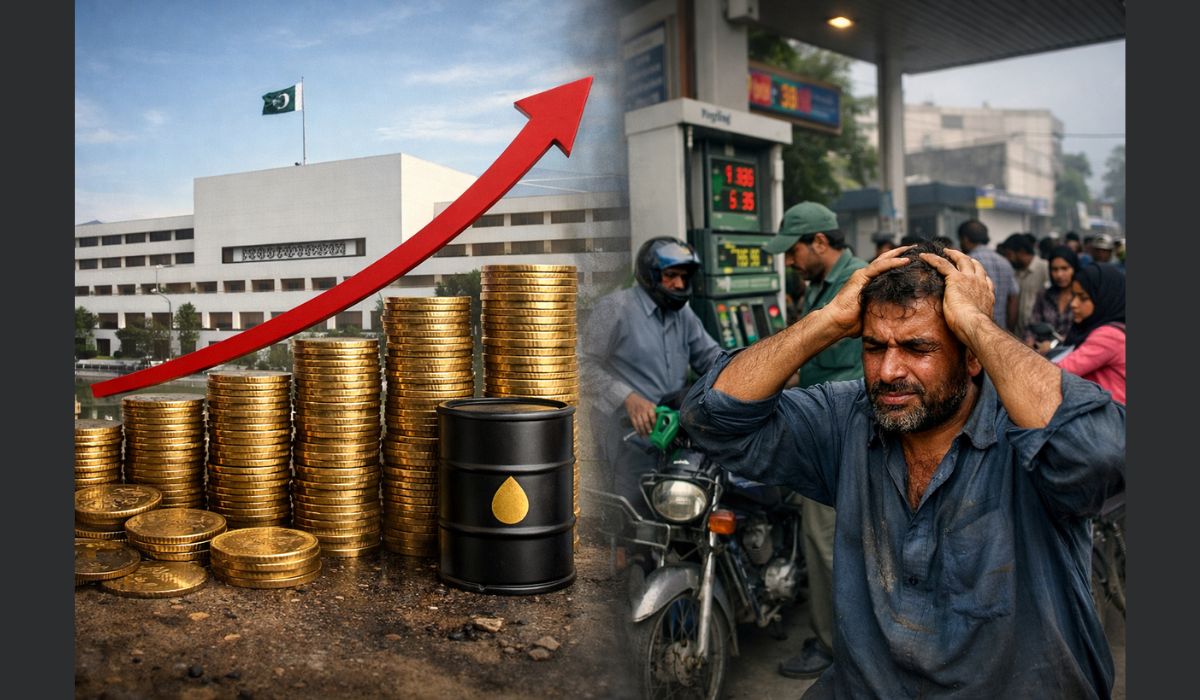
This adjustment came at a time when international crude oil prices (Brent) had dropped to around $59 per barrel, the rupee had shown some stability, and many expected a price reduction of Rs 4–5 per litre for petrol and a modest cut for diesel. Instead, by hiking the levy, the government neutralized any potential relief and kept retail prices unchanged.
In the bustling streets of the city, taxi driver Ahmed Khan pulled his old Toyota Corolla up to the petrol pump. For the past few days he had been reading in newspapers and scrolling through social media that global oil was getting cheaper—perhaps a Rs 4–5 saving per litre was on the cards. He had already planned in his mind: fill the tank today, maybe buy some sweets for the kids with the money saved. But when the attendant handed him the bill, it was the same old Rs 253.17. Ahmed Khan shook his head and muttered, “They raised the levy and took away the relief… so this is what they call stability?”
On the other side of Lahore, truck driver Malik Arif was refueling his diesel tanker. He remembered reading reports that diesel could see at least a Rs 2.70 reduction. He was hoping to lower freight rates a little this month, or at least improve his slim margin. Seeing the unchanged price and learning about the 80-paisa levy hike, his face fell. “They increased the levy by 80 paisa and kept the price the same… when will our burden ever lighten?” he asked no one in particular.
Before this announcement, hope had flickered among the public. Global oil was softening, the rupee had gained a bit of ground, and many remembered the meaningful relief given on January 1—Rs 10.28 off petrol and Rs 8.57 off diesel. People thought the government might repeat the gesture. Instead, the levy hike extinguished that hope. Officials say the measure is necessary to meet IMF commitments and maintain fiscal discipline, but for ordinary citizens, it simply means one more weight on already tired shoulders.
A small shopkeeper summed it up: “Brother, prices not going up is something, but when they raise the levy and snatch the relief, what kind of stability is this? Inflation has already broken our backs.”
That evening, when Ahmed Khan reached home, he told his wife, “Petrol is the same today… but they increased the levy and killed the relief.” His wife smiled faintly and replied, “Then tonight we’ll have daal chawal again—no problem. Stability is part of life too… maybe the next fortnight will bring something different.”
And so another fifteen days will pass in Pakistan—petrol and diesel prices unchanged on the surface, levy quietly raised underneath, public expectations dimmed once again, and the wheel of life keeps turning exactly as before. Perhaps the next price review will bring new hope… or perhaps this version of “stability” will simply have to be enough.