 BeNewz
Related Articles



Aftab Maken
ISLAMABAD: Islamabad Local Government Ordinance 2026 reshapes how a citizen’s vote travels, weakening direct public control while strengthening indirect representation and federal oversight.
When a citizen in Islamabad casts a vote at a polling station, that vote no longer carries the same direct force it once did. The Islamabad Local Government Ordinance 2026 fundamentally alters the journey of that vote, redefining how power moves from the voter to the city’s highest municipal office. The change is not merely legal. It reshapes representation, accountability, and local democracy itself.
Under the earlier framework of the Local Government Act 2015, along with proposed amendments in 2024, Islamabad functioned as a single metropolitan corporation. The city had one mayor and one central council responsible for urban planning, service delivery, and policy direction. A voter’s choice at the union council level fed more directly into the leadership of the city.
The 2026 ordinance dismantles that structure. Islamabad is now divided into three separate town corporations. Each town aligns with specific National Assembly constituencies. On paper, this looks like an administrative adjustment. In practice, it fragments the city’s political authority and redistributes power across multiple local centers.
Supporters argue this makes governance more local. Different sectors face different problems. G-13’s issues are not the same as F-7’s. Smaller town corporations may respond faster to local needs. Yet Islamabad remains one interconnected city. Roads, water supply, sewage systems, and public transport cross town boundaries. Managing these shared systems with three separate mayors creates coordination risks that the ordinance does not clearly resolve.
The most consequential changes appear at the voter’s level. Previously, a voter in a union council elected nine general members as well as the chairman and vice chairman directly. This direct election created a clear line of accountability. Citizens knew who led their union council because they had chosen that person themselves.
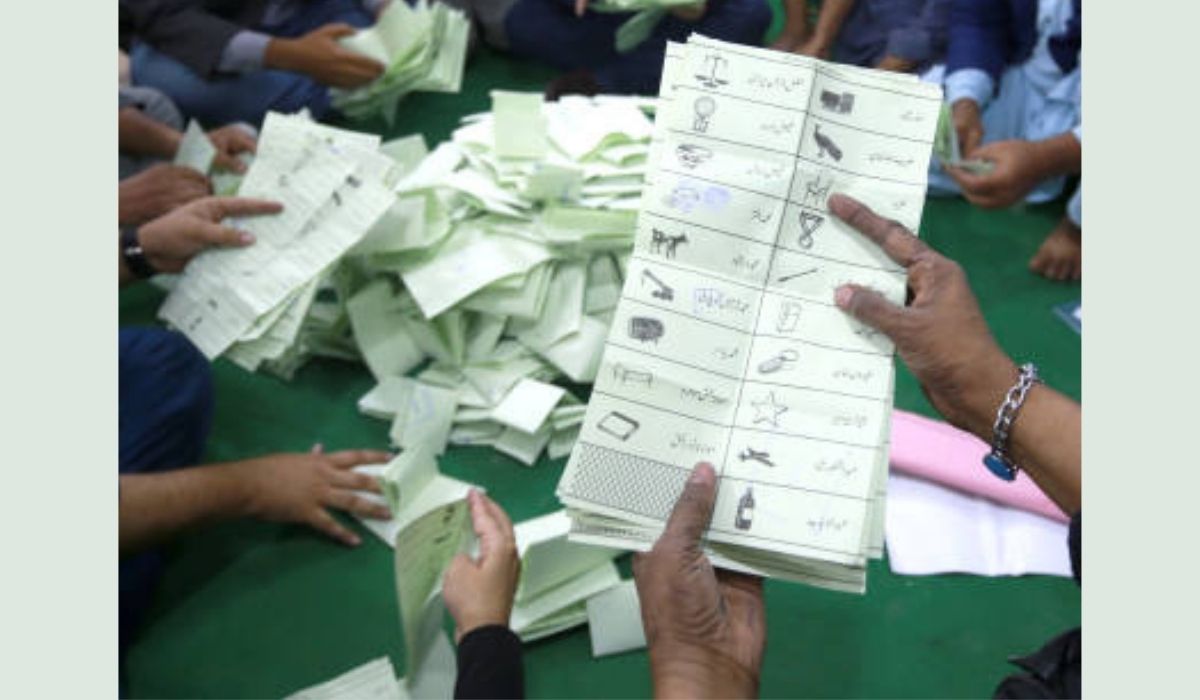
The new ordinance removes that link. Each union council is now treated as a multi-member ward. A voter casts only one vote. The nine candidates with the highest votes become general members. The chairman and vice chairman are no longer elected by the public. They are chosen internally by these nine members.
This single change dramatically shifts power. The chairman’s political survival now depends on fellow councillors, not voters. Accountability moves inward, away from the electorate and toward a small group of elected representatives. Local democracy becomes more indirect and filtered.
The process goes further. The selection of chairman and vice chairman is conducted through a show of hands, not secret ballot. Every councillor’s choice is visible. This may reduce vote trading and enforce party discipline. It also increases pressure, limits independent judgment, and raises concerns about transparency and coercion.
The voter’s influence weakens further as the system moves upward. Once elected, a union council chairman automatically becomes a general member of the relevant town corporation. Citizens do not directly elect town corporation members. They inherit their positions through this indirect chain.
Town corporations then fill reserved seats for women, youth, farmers or workers, traders, and non-Muslims. These selections are also made internally by open voting. Only after this process is complete does the town corporation elect its mayor and two deputy mayors, again through a show of hands.
From the voter’s perspective, the path is long and indirect. The voter selects general members. Those members select chairmen. Chairmen form the town corporation. The town corporation selects the mayor. The voter initiates the process but does not directly shape its final outcome.
Federal oversight has also expanded. Under previous law, an administrator could be appointed for a maximum of six months if a local government was dissolved. Elections had to follow. The 2026 ordinance removes this time limit entirely. An unelected administrator may now run the city indefinitely until elections are held.
Financial autonomy has also narrowed. Local governments must now obtain federal approval before introducing new taxes or adjusting existing rates. Policy directions issued by the federal government are binding on both elected councils and administrators.
Taken together, these changes signal a shift in control. Authority moves away from direct voter choice and toward indirect representation and federal supervision. The vote still matters, but its power is diluted as it passes through multiple institutional layers.
The central question remains unresolved. Will this system deliver better local governance by focusing on smaller areas, or will it distance citizens further from decision-making? The vote remains the first link in the chain. It is no longer the final word.