 BeNewz
Related Articles



Aftab Maken
ISLAMABAD: Pakistan’s short-term inflation edged higher during the week ended December 18, 2025, as food and energy prices recorded mixed movements, official data showed.
The Pakistan Bureau of Statistics said the Sensitive Price Indicator increased 0.24% week-on-week, reflecting rising prices of several essential consumer items. The SPI tracks weekly price movements of 51 basic commodities across 50 markets in 17 cities to assess near-term inflation trends.
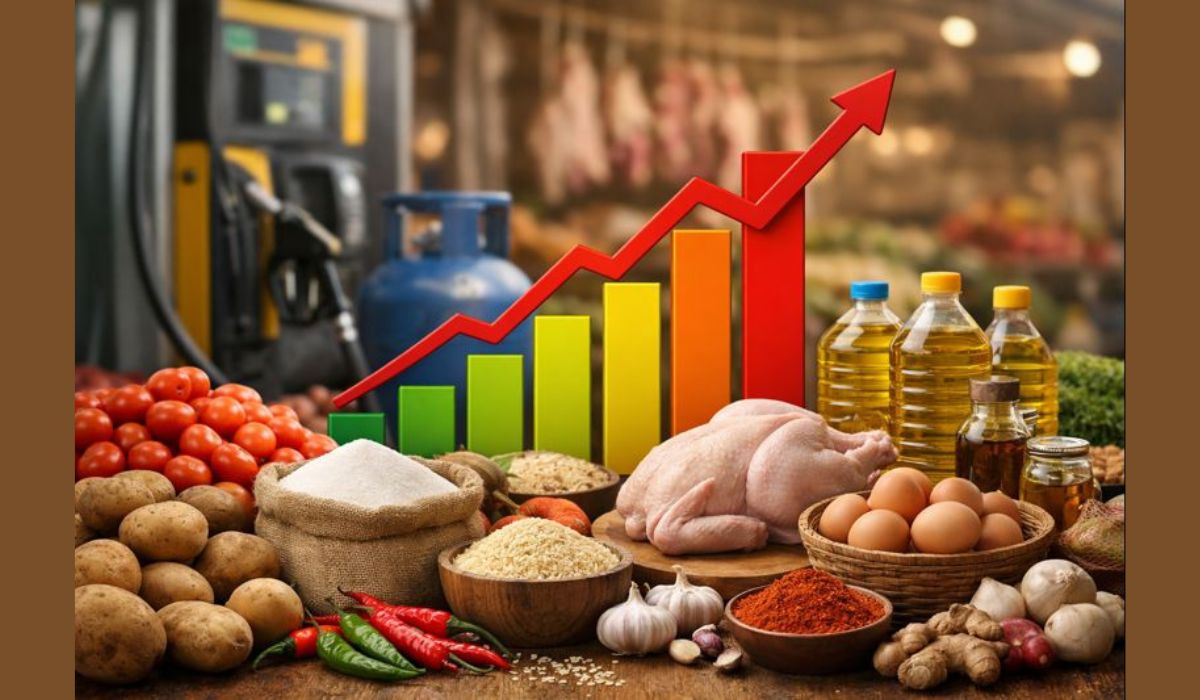
According to the PBS executive summary, chicken prices surged 11.11% during the week, marking the sharpest increase among monitored items. Chilies powder rose 3.08%, while egg prices increased 2.88%, adding pressure on household food budgets. Clothing items also saw higher prices, with shirting up 1.64%, while firewood increased 0.86%.
Energy-related and staple items also recorded modest gains. Cooking oil in a five-litre pack rose 0.32%, while energy savers and pulse moong increased 0.31% each. Mustard oil prices went up 0.25%, and beef prices edged higher by 0.23%, the bureau reported.
In contrast, vegetable prices provided some relief to consumers. Tomato prices dropped sharply by 11.38%, while potatoes fell 8.39% during the week. Diesel prices declined 5.00%, contributing to a broader easing in transport-related costs.
Sugar prices decreased 4.52%, while onions fell 3.52%, reflecting improved supply conditions. Prices of pulse mash declined 1.29%, garlic fell 1.26%, salt powder decreased 1.12%, and gur prices dropped 1.05%. Liquefied petroleum gas prices were down marginally by 0.14%.
The PBS data showed that out of the 51 items monitored, prices of 17 items, or 33.33%, increased during the week. Prices of 14 items, or 27.45%, declined, while 20 items, accounting for 39.22%, remained unchanged, indicating uneven inflationary pressures across consumption categories.
On a year-on-year basis, the SPI recorded an increase of 3.75%, suggesting moderate inflation compared to earlier periods of elevated price growth. The annual data highlighted substantial increases in administered and staple prices.
Gas charges for the first quarter were up 29.85% compared with the same period last year. Sugar prices rose 24.10%, while wheat flour increased 22.52%, reflecting higher input and distribution costs. Chicken prices were up 20.78% year-on-year, while beef prices increased 13.66%.
Other notable annual increases included gur at 13.43%, firewood at 12.08%, powdered milk at 9.50%, eggs at 8.75%, lawn printed fabric at 8.29%, shirting at 8.07%, and banana prices at 7.83%, according to PBS figures.
However, several food items recorded significant year-on-year declines. Tomato prices plunged 66.49%, while potatoes were down 45.31%. Garlic prices fell 39.10%, onions declined 29.77%, and pulse gram prices dropped 28.95%.
Tea Lipton prices decreased 17.79%, pulse mash fell 14.23%, and electricity charges for the first quarter declined 8.40%. Salt powder prices were down 6.14%, while LPG prices showed a marginal annual decline of 0.15%.
Economists say the weekly uptick highlights persistent volatility in food prices, despite a relatively contained annual inflation trend. The SPI is closely watched by policymakers as an early indicator of consumer inflation, particularly for lower-income households, and may influence near-term fiscal and monetary policy assessments as Pakistan navigates supply-side pressures and energy pricing adjustments.