 BeNewz
Related Articles


Aftab Maken
ISLAMABAD: With Pakistan’s existing auto policy set to expire in June 2026, the government has initiated the process to finalize a new five-year Auto Industry Policy (2026–31), aimed at liberalizing the market and aligning the sector with international competitiveness and tariff reforms.
According to a Dawn report, the Engineering Development Board (EDB) has begun extensive consultations with automobile assemblers, auto parts manufacturers, and used-car importers to shape the upcoming policy. Officials confirmed that the new framework will be formulated under the National Tariff Policy (NTP), part of Pakistan’s $7 billion IMF Extended Fund Facility program.
The NTP caps tariffs on finished products at 15% and recommends phasing out special regulatory orders (SROs), signaling a gradual shift toward a market-driven and transparent automotive regime.
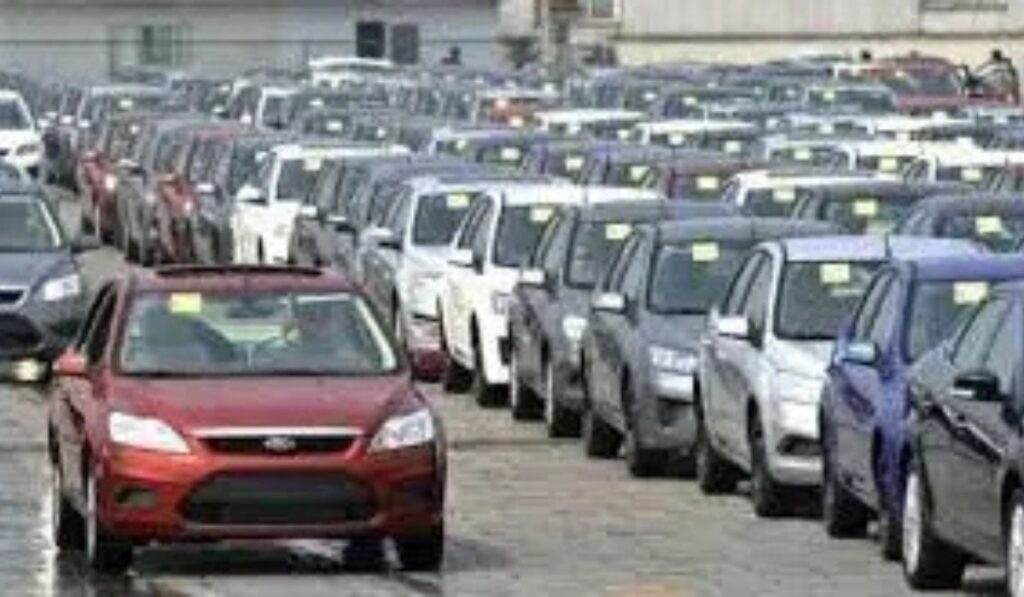
Meanwhile, the government has allowed commercial imports of used vehicles and is expected to retain the gift and baggage schemes for overseas Pakistanis. However, local assemblers have voiced concern that traders are misusing these schemes for commercial imports. The influx of used cars—often undervalued at customs—has intensified competition for locally assembled vehicles.
Industry sources indicate deep divisions within the sector. Out of 11 local assemblers representing 15 global brands from Japan, China, and South Korea, nine have jointly proposed lowering duties and taxes to ensure fair competition with used imports, reduce prices, and stimulate market growth.
These assemblers have suggested capping duties on completely knocked-down (CKD) kits and locally produced parts at 10% or less, and eliminating tariffs on safety components entirely. They argue that over 50% of a car’s retail price currently consists of government taxes and duties, making vehicles unaffordable for most consumers. Localization, they contend, should only continue if it enhances global competitiveness.
In contrast, two major Japanese assemblers and several parts manufacturers favor maintaining high tariff protection—up to 35% on locally made components. Policymakers, however, argue that such protectionism has limited exports, reduced innovation, and kept outdated vehicle models in production. Officials involved in the policy formulation say the government has made it clear that long-term protectionism is no longer sustainable.
The Ministry of Industries has asked long-established assemblers and vendors to justify how decades of localization have benefited consumers. Despite claims of high local content, many locally produced models still fail to meet global safety and emission standards and remain internationally uncompetitive.
According to Topline Securities, Indus Motor Company reports localization levels above 60% in Corolla, Yaris, and Cross models, while Hilux and Revo remain below 50%. Honda Atlas claims 73% localization in City, 60% in Civic, and below 50% in BR-V and HR-V models. Suzuki Pakistan, which delisted from the Pakistan Stock Exchange in 2024, reported 62% localization in Alto 660cc, 51% in Cultus, and 35% in Swift.
Despite these figures, data shows that none of these models have achieved significant export volumes in the past five years, raising questions about the effectiveness of localization as a long-term industrial strategy.
Diplomatic sources told Dawn that Japan has filed a complaint with the World Trade Organization (WTO) against Pakistan’s proposal to link tariff benefits with export performance. However, local policymakers argue that such a linkage ensures accountability for long-term incentives.
Meanwhile, new entrants have introduced hybrid and plug-in hybrid vehicles featuring enhanced safety standards and modern designs. Some have even begun small-scale exports, strengthening the case for tariff reforms and a level playing field in the market.
Analysts believe the upcoming policy has already disrupted long-standing monopolies and expanded consumer choice. They say the next phase should prioritize competition, innovation, and affordability instead of preserving old players’ protection.
The new Auto Policy 2026–31 is expected to serve as a turning point for Pakistan’s automotive industry — moving away from protectionism toward competitiveness, efficiency, and export-oriented growth. Policymakers hope the shift will attract foreign investment, promote hybrid and electric vehicle production, and make cars more accessible for consumers across Pakistan.