 BeNewz
Related Articles



Aftab Maken
ISLAMABAD: The Economic Coordination Committee (ECC) of the Cabinet on Thursday reviewed inflationary trends and approved several technical supplementary grants (TSGs) across sectors, as the government emphasized coordinated policy measures to stabilize prices and protect consumer purchasing power.
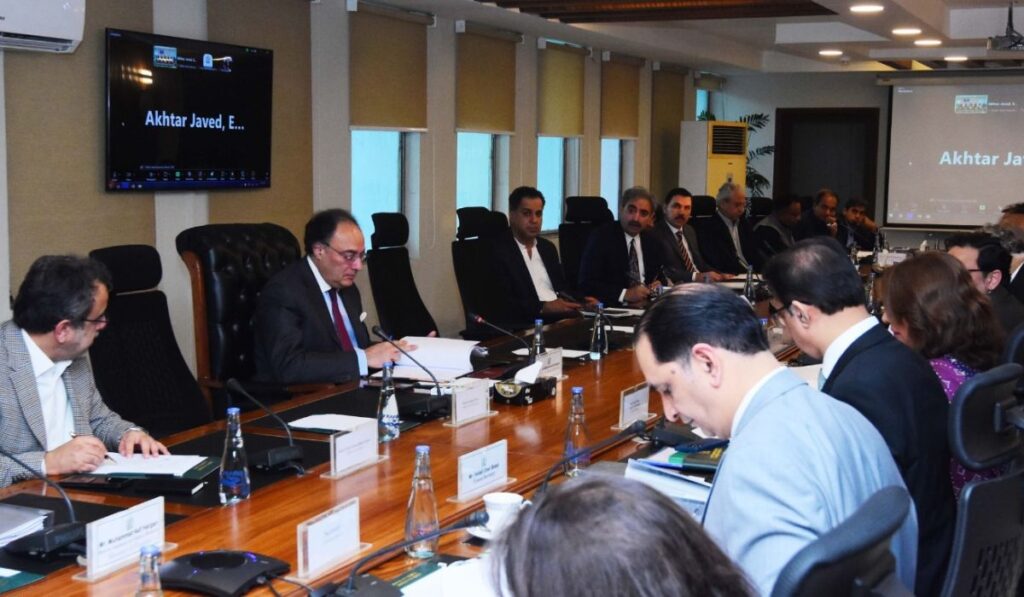
Chairing the meeting at the Finance Division, Federal Minister for Finance and Revenue Senator Muhammad Aurangzeb stressed the need for sustained monitoring, inter-agency coordination, and timely interventions to ensure overall market stability. The meeting was attended by Federal Ministers Ahsan Iqbal and Sardar Awais Leghari, alongside senior officials from the Finance, Commerce, and Planning ministries.
Dr. Imtiaz Ahmad, Chief Economist at the Ministry of Planning, Development and Special Initiatives, presented a detailed analysis of inflation trends and the findings of the National Price Monitoring Committee (NPMC). According to the Pakistan Bureau of Statistics (PBS), headline inflation rose to 5.6% in September 2025, following extensive flood damage to agricultural land and livestock that disrupted supply chains and spurred food inflation. The Sensitive Price Index also showed an upward trajectory through October, with notable increases in sugar, beef, cooking oil, and ghee prices, while chicken, rice, and LPG recorded minor declines.
The NPMC proposed several stabilization measures, including targeted agricultural credit for flood-affected farmers, enhanced coordination between federal and provincial agencies to address supply bottlenecks, and a sensitivity analysis to gauge global commodity price impacts. The Competition Commission of Pakistan was also directed to probe potential cartelization in the edible oil and ghee sectors.
Preparations are underway for a comprehensive Ramzan price stabilization plan, with provinces encouraged to utilize the PBS Decision Support System for improved market monitoring. The Finance Minister directed concerned ministries to implement the proposed measures effectively to contain inflation and strengthen market oversight.
During its regular agenda, the ECC approved a proposal from the Ministry of Commerce to improve the Pre-Shipment Inspection (PSI) framework under the Import Policy Order 2022, allowing only accredited and registered PSI agencies to conduct inspections. It also reviewed amendments to import procedures for vehicles under the Personal Baggage, Transfer of Residence, and Gift Schemes, directing further stakeholder consultations.
The Committee endorsed the continuation of the existing import-export framework for precious metals and jewellery, adding transparency and automation measures to enhance efficiency.
Among fiscal approvals, the ECC sanctioned Rs 2.5 billion for establishing the Pakistan Maritime Science and Technology Park under the Pakistan Navy and AED 45 million (in rupee cover) for the Frontier Works Organization to settle overseas overdraft obligations. The Election Commission of Pakistan was granted Rs 455.984 million for local government election expenditures in FY2025–26, while Rs 112.118 million was approved for installing electricity meters in the Pakistan Mint Residential Colony. Additionally, Rs 21.5 million was allocated to the Pakistan Rangers (Punjab) for helicopter maintenance.
The Finance Division reiterated that the government remains focused on curbing inflation and supporting price stability amid supply-side challenges, as the ECC continues to balance fiscal discipline with targeted sectoral support.