 BeNewz
Related Articles



PBS data shows 24 essential items became costlier, while chicken and fuel prices eased slightly.
Benewz Report
ISLAMABAD: Inflationary pressures continued to build during the week ending October 16, 2025, as the Sensitive Price Indicator (SPI) — which tracks short-term price movements of essential commodities — rose by 0.49%, according to data released by the Pakistan Bureau of Statistics (PBS) on Friday.
The SPI, designed to gauge weekly inflation trends, monitors the prices of 51 essential items collected from 50 markets in 17 major cities across Pakistan.
The latest report indicates that prices of 24 items (47.06%) increased, eight items (15.69%) declined, and 19 items (37.25%) remained unchanged during the week under review.
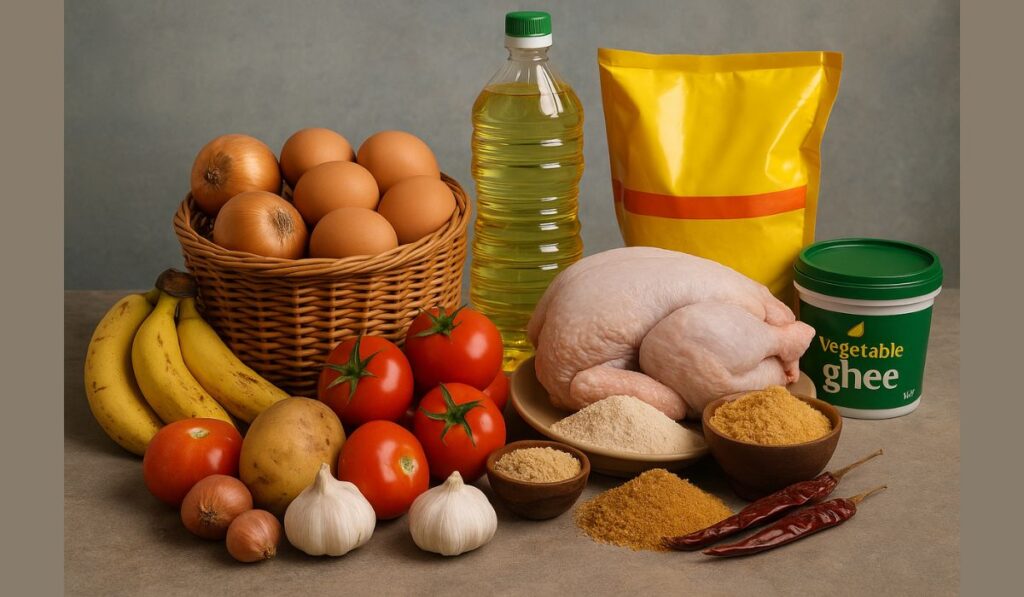
According to PBS data, the sharpest weekly increases were recorded in tomatoes, which surged by 33.20%, followed by onions that rose 8.70%. Prices of eggs increased by 2.18%, wheat flour by 1.42%, garlic by 0.85%, and potatoes by 0.71%. Similarly, vegetable ghee in both 1kg and 2.5kg packs recorded modest increases of 0.56% and 0.63% respectively, while the prices of firewood, LPG, washing soap and shirting fabric also showed slight upward movements.
The PBS noted that a combination of supply disruptions in vegetable markets and rising transport costs contributed to the sharp rise in food prices, particularly tomatoes and onions, which are key components of household consumption.
Conversely, the report showed that prices of several essential items declined during the week. Chicken prices fell by 6.38%, while bananas dropped 4.70%. The prices of pulse gram and pulse moong declined by 2.20% and 0.49% respectively, while petrol and diesel registered a fall of 2.09% and 0.55%. Rice basmati broken and IRRI-6/9 also posted marginal decreases of 0.51% and 0.03%.
According to PBS officials, the reduction in poultry and fuel prices provided limited relief to consumers amid persistent food inflation.
On a year-on-year (YoY) basis, the SPI rose by 4.57%, reflecting continued price pressures despite monetary tightening and a relatively stable exchange rate in recent months.
Major annual increases were observed in tomatoes, which climbed a massive 121.38%, while ladies’ sandals became 55.62% costlier. Sugar prices increased by 36.94%, gas charges by 29.85%, and wheat flour by 16.92%. The prices of gur (jaggery), beef, and vegetable ghee (both 1kg and 2.5kg) also saw double-digit increases. Firewood rose by 11.71%, diesel by 9.75%, and eggs by 9.02%.
Meanwhile, notable annual declines were reported in onions, down 33.55%, and chicken, which dropped 29.81%. Pulse gram and garlic fell by 28.86% and 28.48%, while electricity charges decreased by 26.26%. Tea (Lipton) prices fell by 17.93%, pulse mash by 17.55%, potatoes by 16.97%, pulse masoor by 4.11%, and LPG by 3.44%.
Economists say the latest SPI figures point to volatile food price dynamics, particularly in perishable goods, which remain highly sensitive to weather conditions, logistics, and import costs. The marginal relief in fuel prices, they argue, may be offset in the coming weeks if the global oil market reverses trend or if the rupee weakens further.
Analysts at the Pakistan Institute of Development Economics (PIDE) noted that “while inflation has moderated compared to earlier months, food price spikes continue to hurt low- and middle-income households the most, as nearly half their monthly expenditure goes toward essentials.”
The government, which has set an average inflation target of 11% for FY2025–26, faces continued challenges in stabilizing consumer prices amid supply chain bottlenecks, import cost pressures, and volatile energy tariffs.
The Sensitive Price Indicator, a key measure used by policymakers and the Finance Division, provides a snapshot of short-term inflation trends and serves as an early warning tool for assessing the effectiveness of government price control measures.
With the upcoming winter season expected to increase demand for food staples and fuel, officials say the Economic Coordination Committee (ECC) may review supply and pricing mechanisms in the coming weeks to ensure availability and prevent hoarding of essential commodities.