 BeNewz
Related Articles



Power Minister unveils six-year elimination plan, praises IMF-backed reforms and landmark bank deal
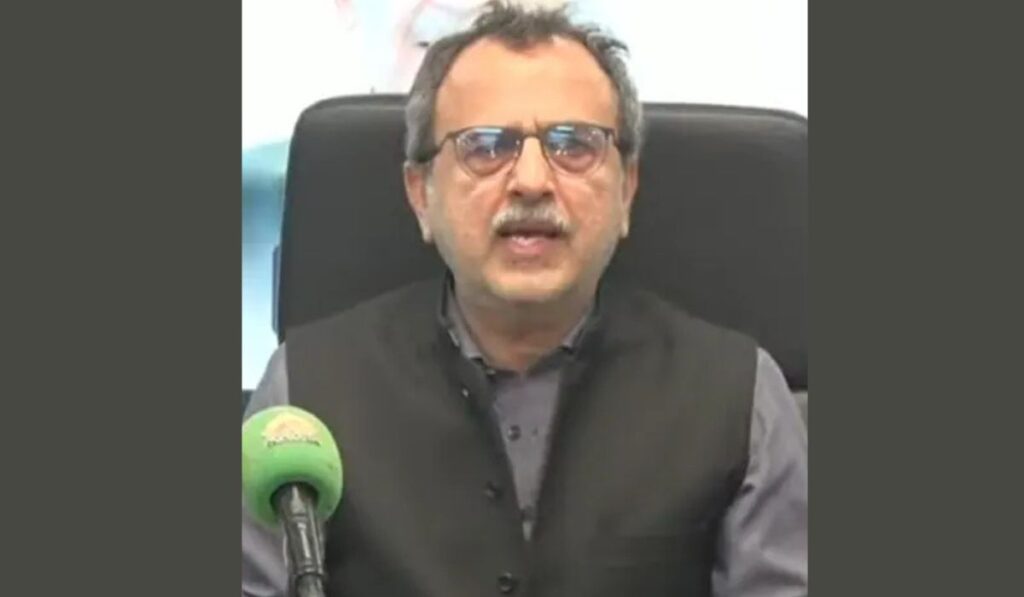
Aftab Maken
ISLAMABAD: Federal Minister for Power Division Awais Leghari announced that Pakistan’s entrenched issue of circular debt in the power sector will be entirely resolved within six years, under a structured reform plan already yielding results. Speaking at a press conference at the Ministry of Power on Friday, Leghari revealed that the government had successfully cut Rs 780 billion in circular debt in a single fiscal year — without taking on new loans or using financial maneuvering.
Highlighting recent progress, he disclosed that a major agreement, chaired by the Prime Minister, had been signed with 18 commercial banks, aimed at long-term restructuring of the circular debt at a globally rare interest rate of KIBOR minus 0.9%. Leghari stressed that no bank was excluded, and the deal represents one of the most comprehensive of its kind, spanning thousands of pages and developed by a special task force.
Calling circular debt a “burden on the national economy,” Leghari said it arises annually from inefficiencies and losses in the power sector, further straining the country’s financial health. He explained that when the PML-N government concluded its term in 2018, the circular debt stood at Rs 1,100 billion. By 2022, it had reached Rs 2,250 billion, and at the time the current government assumed office, it had climbed to Rs 2,400 billion. Through reforms and strategic financial planning, that figure was brought down to Rs 4,164 billion by June 2025.
Leghari said that if the current pace is maintained, the circular debt will be eliminated by 2031. Among the critical measures contributing to this turnaround:
- Rs 242 billion was saved by curbing DISCOs inefficiencies, such as excessive transmission and distribution (T&D) losses and poor recoveries.
- Rs 175 billion was saved through controlled economic parameters, particularly falling interest rates.
- Rs 363 billion was saved via waivers and negotiated settlements, especially with Independent Power Producers (IPPs).
Further, the government had earmarked Rs 1,323 billion in subsidies for FY2025, but only Rs 1,225 billion was utilized — saving Rs 98 billion.
Leghari stated that the government has surpassed IMF targets: circular debt flow, which was capped at Rs 36 billion by the IMF, was brought down to a negative Rs 780 billion, representing an Rs 816 billion improvement. Similarly, losses projected at Rs 639 billion under the IMF program were reduced to Rs 397 billion, an efficiency gain of Rs 242 billion.
On electricity surcharges, Leghari said that the Rs 3.23 per unit currently charged to consumers — which previously lingered for 8 to 10 years — will now be phased out in 5 to 6 years, saving the government an estimated 3.5% to 5.5% annually in interest costs.
He also raised concerns over the current solar net metering rates, describing them as “alarming,” and called for urgent review, stating that revising these rates could benefit over 35 million electricity consumers through reduced bills.
Addressing broader power sector reforms, Leghari shared that 18 million domestic users now receive electricity at 50% reduced rates, and that the foreign currency-denominated debt in the sector has been significantly lowered.
He confirmed that the IMF mission currently in Pakistan has been fully briefed on these developments. Detailed discussions on circular debt reduction and related reforms are ongoing as part of the economic review process.
Operationally, the performance of distribution companies (DISCOs) has improved, with better board governance playing a key role. Within just one year, this has led to a Rs 242 billion cut in losses.
Concluding his address, Leghari said that Pakistan’s power sector — long a fiscal liability — is now on course to become a key driver of economic stability, with the potential for sustained growth and financial independence from circular debt in the foreseeable future.