 BeNewz
Related Articles


BeNewz Report
The Economic Coordination Committee (ECC) of the Federal Cabinet on Thursday approved definitive agreements and financial commitments for the Reko Diq Project. The decision paves the way for full-scale development work to begin in Balochistan, with an estimated bridge financing package of $390 million allocated to rail infrastructure.
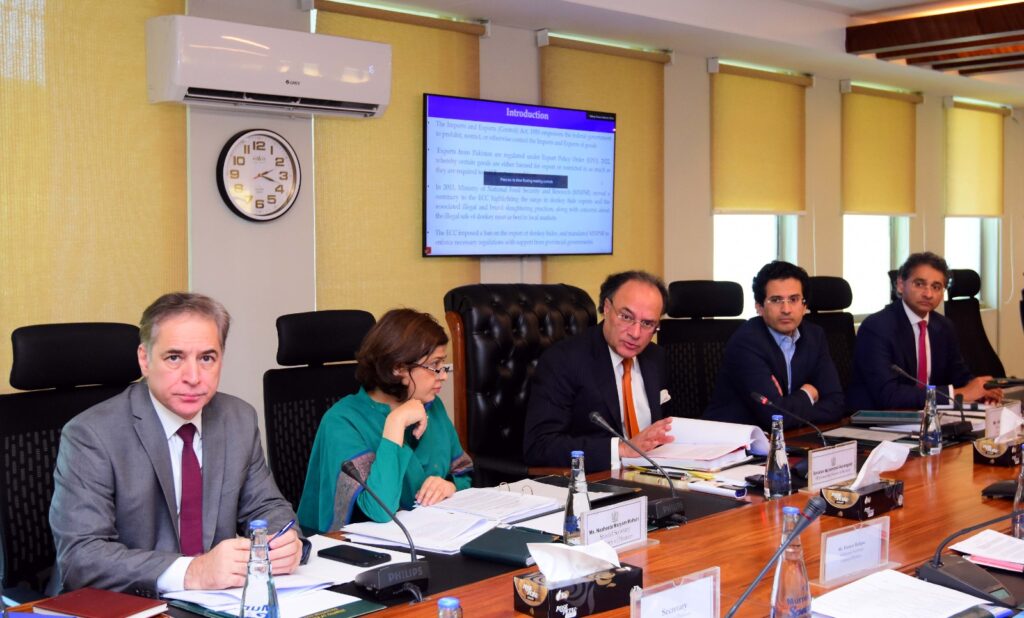
The meeting, held at the Finance Division in Islamabad and chaired by Finance Minister Muhammad Aurangzeb, addressed two key issues central to the project’s financing and logistics. The first, submitted by the Petroleum Division, secured the ECC’s consent for the finalized terms of multiple agreements between the government and the Reko Diq Mining Company. Any significant deviations from these terms in the execution phase will require fresh ECC approval, based on validation from legal and financial consultants.
The second summary, brought forward by the Ministry of Railways, sought approval for a rail development agreement and a bridge financing arrangement with the Reko Diq Mining Company. The proposal outlines the laying of a 1,350-kilometre railway line designed to transport large volumes of export material from the mineral-rich region in Balochistan to the country’s ports. The ECC gave the green light to this plan, with instructions for the Ministry of Railways to submit both agreements to the Finance Division for review and coordinate a project implementation update by March 2026.
Reko Diq, situated in Chagai district of Balochistan, holds an estimated 5.9 billion tonnes of copper and gold ore, making it one of the most significant untapped mineral reserves globally. The project, stalled for over a decade due to legal and financial disputes, resumed momentum after a 2022 settlement with Barrick Gold Corporation and Antofagasta plc. That deal paved the way for a new ownership structure, with Barrick taking a 50% stake and Pakistani entities—including federal and Balochistan governments—holding the remaining share.
Minister Aurangzeb emphasized the transformative potential of the project, stating that the ECC’s approvals reaffirm the government’s commitment to long-term economic development. “The Reko Diq Project will not only unlock one of the world’s largest undeveloped copper-gold deposits but also catalyze job creation, infrastructure development, and long-term socio-economic uplift across the region,” he said.
Analysts note that the newly approved railway line is critical to the project’s commercial viability. By ensuring a cost-effective, high-capacity route to international markets, the railway could significantly boost export revenues and reduce logistical bottlenecks. The 1,350 km route is expected to pass through multiple provinces, connecting Reko Diq to key industrial and port cities.
The bridge financing component will enable early construction phases before long-term capital is mobilized. Bridge financing—often used in large-scale infrastructure and energy projects—helps accelerate timelines while awaiting formal project finance closure. The $390 million package will likely be repaid from future export revenues or additional investor inflows.
The project’s broader economic impact is also drawing attention. Once operational, Reko Diq is expected to generate thousands of direct and indirect jobs, enhance regional connectivity, and contribute substantially to Pakistan’s GDP. It also aligns with broader geopolitical efforts to develop Balochistan’s infrastructure and reduce regional disparities.
This latest ECC decision follows earlier efforts by the federal government to de-risk the project through legal reforms, arbitration settlements, and investor guarantees. Given its scale and strategic importance, Reko Diq is seen as a cornerstone of Pakistan’s mineral and export policy for the next two decades.
The ECC’s directive to revisit the agreements and provide updates by March 2026 indicates continued scrutiny and oversight of the project’s execution. If timelines are met, Pakistan could see initial mineral extraction by 2028, with full-scale production ramping up shortly after.
As global demand for copper surges—driven by electric vehicle production, renewable energy infrastructure, and electronics—the Reko Diq Project is expected to position Pakistan as a major supplier in the international minerals market.
With the ECC’s latest approvals, the long-awaited Reko Diq initiative is now firmly on track, carrying the promise of a mineral-fueled economic transformation for Balochistan and beyond.