 BeNewz
Related Articles



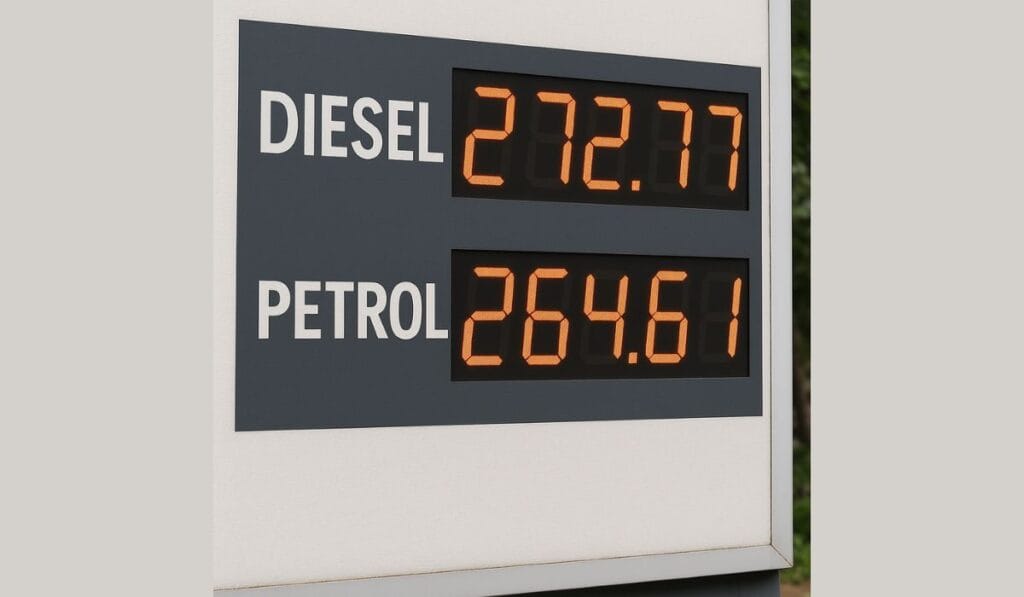
High Speed Diesel price revised to Rs272.77 per litre for September 16–30; petrol holds steady at Rs264.61.
Aftab Maken
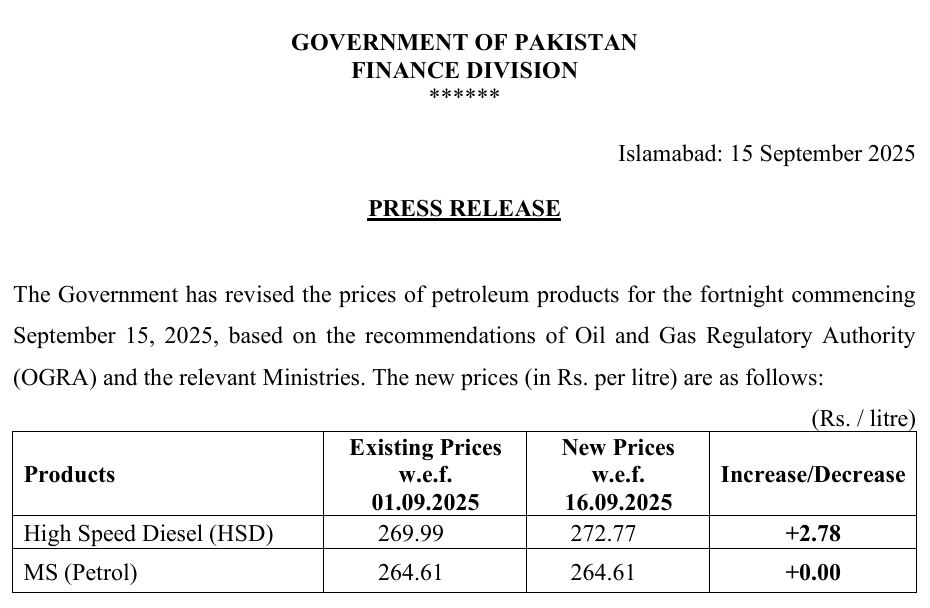
The Government has announced a revision in petroleum prices, increasing the rate of High Speed Diesel (HSD) by Rs2.78 per litre while leaving the price of petrol unchanged. The new prices, effective from September 16, 2025, were issued by the Finance Division on the recommendation of the Oil and Gas Regulatory Authority (OGRA) and in consultation with relevant ministries.
According to the official notification released in Islamabad on September 15, the price of HSD will rise from Rs269.99 to Rs272.77 per litre for the fortnight beginning September 16. Meanwhile, the price of Motor Spirit (petrol) remains fixed at Rs264.61 per litre.
The revision reflects adjustments in international oil markets, fluctuations in exchange rates, and import premiums. The government typically reviews petroleum prices twice a month based on OGRA’s input, which accounts for changes in global oil prices and local economic indicators.
This latest increase in diesel prices is expected to have a cascading impact on the cost of transportation and goods, as HSD is widely used in commercial freight, agriculture, and public transport sectors. Fuel prices directly influence inflation, which has already been a pressing concern for Pakistan amid macroeconomic uncertainty and recent energy tariff hikes.
In comparison, the price of petrol has remained stable over the past two fortnights, which may offer minor relief to private vehicle owners. However, this comes after a steep rise earlier in the year when petrol rates peaked at over Rs270 per litre in July.
Pakistan’s petroleum pricing mechanism has undergone frequent scrutiny in recent years. The country, heavily reliant on imported oil, remains vulnerable to global market volatility. Any changes in Brent crude prices or the US dollar exchange rate can significantly influence domestic pump rates. For example, a similar fortnightly increase in diesel prices occurred in August 2023 when HSD was raised by Rs7.50 per litre amid rising global demand.
Public reaction to the latest hike has been mixed. While some commuters expressed frustration over the continual burden on household expenses, others voiced concern over the inflationary pressure on food and transport. Transporters have already hinted at fare adjustments if diesel prices continue to rise.
As of mid-September 2025, inflation in Pakistan remains above 20% year-on-year, driven largely by food and energy prices. The International Monetary Fund (IMF) has urged the government to rationalise subsidies and maintain market-based pricing to align with structural reform commitments under the Extended Fund Facility (EFF).
OGRA, in a statement earlier this month, reiterated its role in recommending prices based on import parity, refining margins, and taxation, while stressing that the final decision rests with the Ministry of Finance. The current diesel price hike is seen as an effort to align with market dynamics without further straining fiscal reserves.
The fortnightly price adjustments serve both as a revenue source for the government—through the petroleum levy—and as a tool for economic signalling. For September’s second half, the unchanged petrol price may reflect an effort to temper public backlash while accommodating fiscal needs through a diesel levy increase.
The next review of petroleum product prices is scheduled for the end of September 2025, with implementation from October 1. Market observers will continue to monitor trends in global oil benchmarks, foreign exchange reserves, and government fiscal space as indicators of future price movement.
High diesel, petrol, and other petroleum products form the backbone of Pakistan’s energy matrix, and even marginal changes in pricing have wide-ranging implications for consumers, businesses, and the overall economic outlook.
#PetrolPricePakistan #DieselPrice #FuelPrice #Inflation #PakistanEconomy