 BeNewz
Related Articles


BeNewz Report
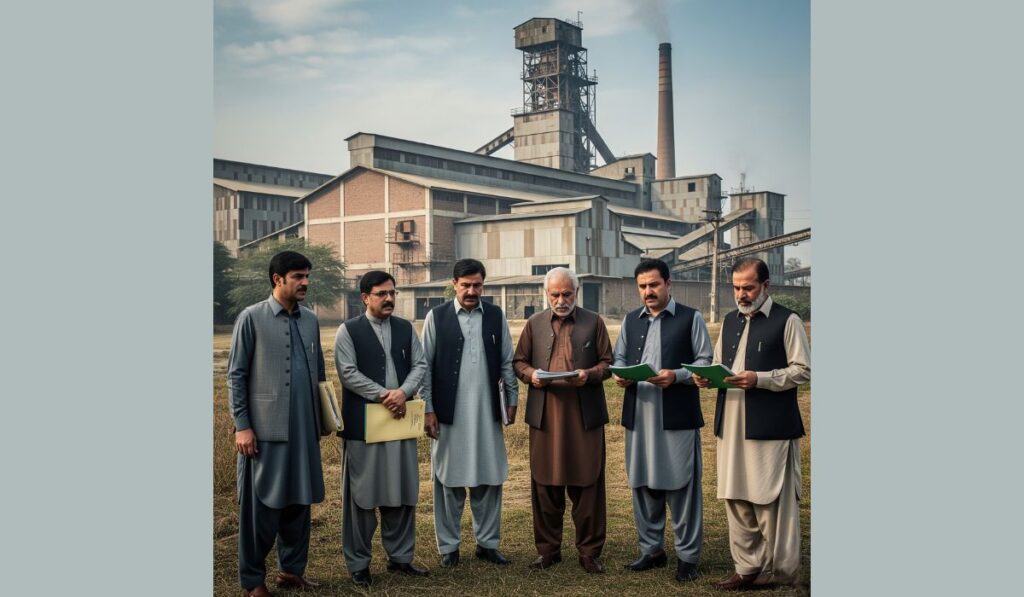
Documents from the Securities and Exchange Commission of Pakistan (SECP) have revealed that several leading politicians, including Hamza Shahbaz, Moonis Elahi, and Chaudhry Shujaat Hussain, own shares in multiple sugar mills, reigniting debate about political influence in the country’s sugar industry.
The SECP prepared the data following recommendations by the National Assembly’s Standing Committee on Commerce subcommittee. The disclosures highlight deep financial ties between Pakistan’s political elite and the sugar industry, raising concerns over transparency, accountability, and conflicts of interest.
According to the records, members of the Sharif family are listed as shareholders in Al-Arabia Sugar Mills and Ramzan Sugar Mills. Hamza Shahbaz, Salman Hamza, and Nusrat Shahbaz hold stakes in these companies. Similarly, Chaudhry Shujaat Hussain and Salik Hussain own shares in Punjab Sugar Mills, while Moonis Elahi and Makhdoom Umar Shehryar are named as investors in RYK Mills.
The documents further show that Khawaja Abdul Ghani Majeed owns 100 percent of Tando Allahyar Sugar Mills, while former Pakistan Cricket Board chairman Zaka Ashraf holds shares in Ashraf Sugar Mills. Former Lahore mayor Mian Aamer Mehmood is listed among stakeholders in Rahim Yar Khan Sugar Industry.
Other mills are also tied to influential families. Medina Sugar Mills lists Muhammad Rasheed and Muhammad Mujtaba as shareholders. Fatima Sugar Mills is owned by Abbas, Faisal, and Fawad Mukhtar. Ittehad Sugar Mills has shares held by Makhdoom Hashim Jawan Bakht and Makhdoom Umar Shehryar. In Baloch Sugar Mills, Dost Ali Mazari and Tariq Ali Mazari appear as shareholders.
Chaudhry Sugar Mills includes Abdul Aziz Abbas Sharif, Abdullah Yusuf Sharif, and the Sharif Trust, while Cheema Sugar Mills lists Chaudhry Anwar Ali, Sardar Muhammad Arif Nakai, and Muhammad Shafi.
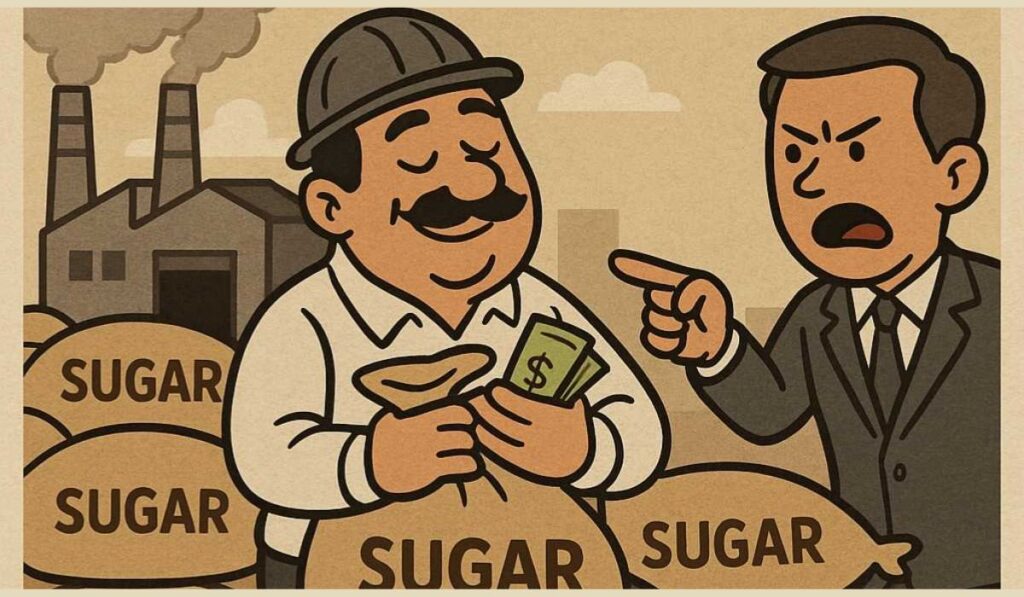
Analysts note that Pakistan’s sugar industry plays a powerful role in the national economy, and the dominance of political families raises concerns about governance and policymaking. For decades, Pakistan has faced recurring sugar crises, marked by sudden price hikes and alleged hoarding, with fingers often pointed at politically connected mill owners.
Historically, inquiries into sugar shortages have linked the crises to manipulation by mill owners with direct or indirect political influence. These new disclosures have sparked debate over whether political investors should be allowed to control essential commodities that directly affect consumers.
Experts are calling for stronger regulation, independent oversight, and stricter accountability mechanisms to prevent monopolistic practices. Civil society groups argue that unchecked political ownership allows elites to profit at the expense of ordinary citizens, especially during artificial price hikes.
The SECP documents underline how sugar mills are not merely industrial enterprises but instruments of political and economic power. Public pressure is now mounting on the government to launch transparent investigations and implement policies to curb monopolies, ensuring fair market practices.
As debate intensifies, the revelations are expected to reach parliamentary discussions, where lawmakers will face scrutiny over whether policymaking can remain impartial when many of them or their families have direct financial stakes in the industry.
The controversy once again highlights the entrenched nexus between politics and Pakistan’s sugar industry, with growing demands for reforms to protect consumers from exploitation.