 BeNewz
Related Articles


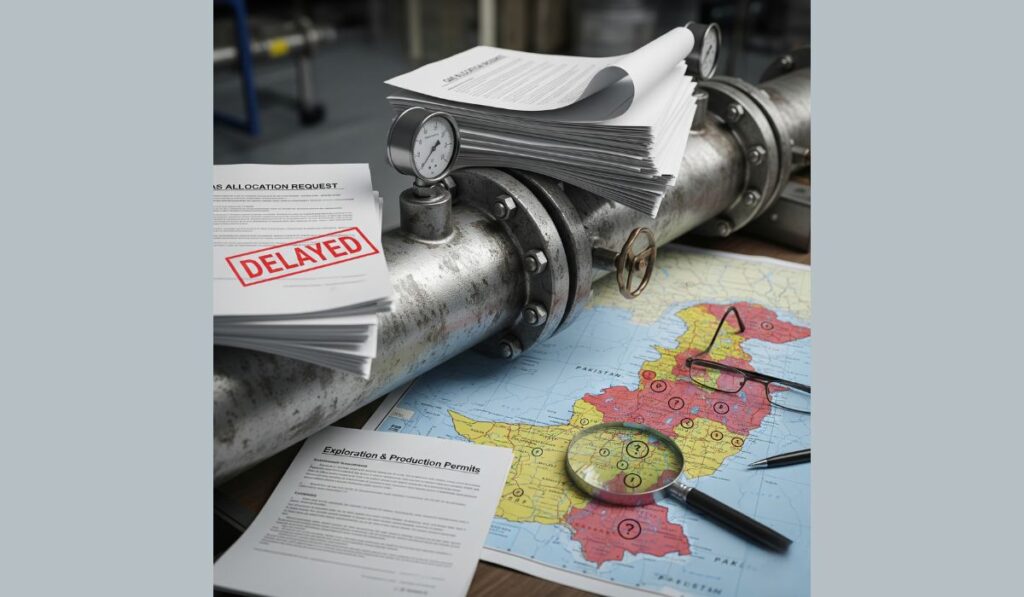
Exploration companies are delaying gas sales to third parties despite CCI approval, amid disputes over whether OGRA licences are mandatory for bidders.
Hydrocarbon exploration and production (E&P) companies in Pakistan are under growing scrutiny for delaying the allocation of newly discovered gas to third-party buyers, despite approval from the Council of Common Interests (CCI). Industry officials allege that the delays are being used to benefit favoured groups, many of whom lack the legally required licences from the Oil and Gas Regulatory Authority (OGRA). Regulators fear this could undermine the CCI’s January 2025 policy designed to liberalise the gas market.
The Shehbaz Sharif-led government increased the allocation of new gas discoveries for private buyers from 10% to 35% earlier this year, a move resisted by the former petroleum minister but welcomed by exploration firms. E&P companies argued that selling more gas directly to the private sector would improve their cash flow, much of which remains trapped in state entities due to circular debt.
However, implementation has stalled. According to Section 23(1) of the OGRA Ordinance 2002, no person may sell, purchase, transmit, or distribute natural gas without first obtaining a licence. This was reinforced by Ecnec and reaffirmed by the CCI, which stated that only licensed entities could participate in third-party gas purchase arrangements. Despite this, some E&P companies argue that the licensing condition applies only at the stage of gas sale and not during bidding, allowing unlicensed parties to compete first and obtain licences later.
Regulators and industry experts view this interpretation as a loophole. “The companies are using delaying tactics to stretch out the bidding timeline, allowing unlicensed buyers to enter the fray,” one official said, warning that it violates the approved framework. Others note that shifting vetting to the post-bidding stage would place extra strain on OGRA, raising costs, extending timelines, and weakening enforcement capacity.
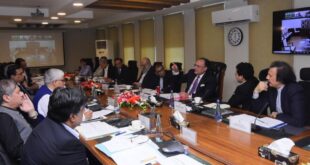
The controversy deepened following a July 18, 2025, meeting at the head office of Mari Energies, attended by senior executives from Mari, Pakistan Petroleum, the Oil and Gas Development Company, and OGRA’s Gas Division. Observers found it unusual that such a policy-sensitive meeting was held at a private company’s premises rather than at the regulator’s office.
Discussions focused on licensing requirements for third-party buyers. Some participants argued that demanding licences at the bidding stage would amount to preferential treatment for existing licence holders, narrowing competition. They proposed instead that provisional Gas Sale and Purchase Agreements (GSPAs) between E&P firms and buyers could serve as evidence to secure gas volumes while buyers completed licensing formalities.
Mari Energies later wrote to OGRA’s chairman, citing Section 1(a) of the CCI framework, which states that E&P companies may sell up to 35% of their share of pipeline-specification gas to third parties “having an Ogra licence” through a competitive process, provided prices are not lower than those fixed under the Petroleum Policy 2012. Regulators stress that the wording is explicit and requires licensing at the outset, leaving little room for reinterpretation.
Industry insiders suggest that some companies may be seeking to sow confusion to protect entrenched interests and stall reforms aimed at liberalising the gas market. “This looks like an attempt to sabotage market opening,” one source remarked. Legal experts also caution that any attempt to allocate gas to unlicensed buyers could be challenged in court, further delaying allocations and worsening shortages.
Pakistan’s gas sector has long been vulnerable to ad hoc policymaking and inconsistent enforcement. In the mid-2010s, disputes over LNG import licences caused prolonged shortages and forced the state into expensive emergency contracts. Critics warn that the current controversy risks repeating those mistakes, with ambiguous interpretations used to serve narrow interests rather than broader market stability.
The stakes are high. Pakistan faces a persistent gas shortfall that has forced both industry and households to endure rationing and higher energy costs. Rising import bills and limited reserves have heightened the urgency of attracting private investment, but uncertainty over regulatory requirements threatens to deter new entrants.
For policymakers, the issue reflects the broader challenge of balancing market liberalisation with regulatory discipline. The government has promoted private-sector participation to reduce dependence on state-run utilities, but such participation depends on strict compliance with licensing and oversight rules. Without safeguards, observers warn, the risk of market capture and anti-competitive practices increases sharply.
The outcome of the dispute will likely set a precedent for Pakistan’s energy market governance. If OGRA enforces licensing as a precondition for bidding, existing licence holders will retain an advantage, but regulatory standards will be protected. If E&P companies succeed in deferring licensing to the contract stage, the market could open to more bidders but face greater risks of disputes, delays, and political interference.
For now, the controversy underscores the difficulty of reconciling policy clarity with vested interests. Unless regulators and companies reach consensus, the framework meant to expand Pakistan’s gas market could instead deepen uncertainty, weaken oversight, and further strain an already fragile energy landscape.