 BeNewz
Related Articles

Aftab Maken
ISLAMABAD: Finance Minister Senator Muhammad Aurangzeb has called for focused reforms and stronger governance across State-Owned Enterprises (SOEs), as cumulative losses hit an alarming Rs 5.8 trillion and circular debt in the energy sector crosses Rs 4.9 trillion.
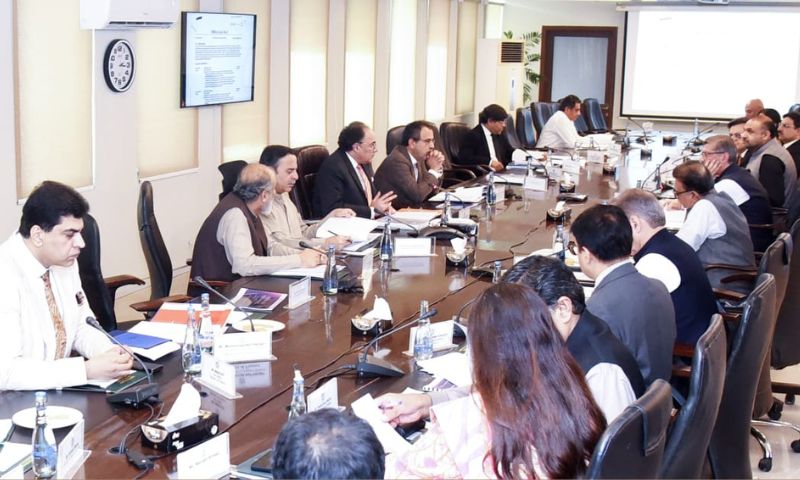
Chairing a crucial meeting of the Cabinet Committee on State-Owned Enterprises (CCoSOEs), the finance minister underscored the urgent need to align SOEs’ business plans with national priorities, enhance operational efficiency, and address systemic inefficiencies that are severely impacting Pakistan’s fiscal space and investor confidence.
The committee was presented with a biannual performance report of federal SOEs for the period July–December 2024 by the Central Monitoring Unit of the Finance Division. According to the report, the SOEs recorded a loss of Rs 342 billion in just six months—translating to a daily loss of Rs 1.9 billion. These losses are on top of a cumulative debt burden that now stands at Rs 5.8 trillion.
Particularly alarming was the revelation that circular debt in oil, gas, and power sectors had surged past Rs 4.9 trillion, severely disrupting cash flows and damaging asset valuations. Government fiscal support to SOEs in the form of grants, subsidies, and loans exceeded Rs 600 billion in the past six months—roughly 10% of Pakistan’s total revenue during that period.
In addition, unfunded pension liabilities, especially in electricity distribution companies (DISCOs) and railways, are estimated at Rs 1.7 trillion and remain off the official books. Government guarantees, now standing at Rs 2.2 trillion, coupled with rising rollover costs and restructuring liabilities, are further compounding the economic pressure.
The finance minister expressed concern over continued governance gaps and operational inefficiencies across SOEs, noting low levels of compliance with financial transparency standards such as IFRS Section 30 and a lack of strategic alignment in business operations.
The chair emphasized the critical need to reform power sector entities like DISCOs and NTDC, where delays in network upgrades and inefficiencies are stalling progress. He also highlighted the importance of financial discipline and accountability, calling on government-nominated directors on SOE boards to play an active and informed role in strengthening institutional performance.
The committee also approved key proposals from the Power Division, including:
- Appointment of Chairman on Quetta Electric Supply Company (QESCO) Board
- Formation of the Board of Directors for the Independent System Market Operator (ISMO)
- Appointment of Independent Directors and Chairpersons on the boards of Gujranwala Electric Power Company (GEPCO), GENCO Holding Company Limited (GHCL), Multan Electric Power Company (MEPCO), and Power Information Technology Company (PITC)
- Constitution of the Board of the Energy Infrastructure Development and Management Company (EIDMC)
Additionally, a summary from the Ministry of Railways for the winding up of three companies—RAILCOP, PRACS, and PRFTC—was also approved, signaling a broader restructuring move in the railways sector.
The meeting reflected the government’s determination to bring transparency, accountability, and efficiency to the public sector—at a time when Pakistan’s economy faces unprecedented fiscal stress.