 BeNewz
Related Articles


Aftab Maken
ISLAMABAD: Pakistan’s Sensitive Price Indicator (SPI), the government’s weekly barometer of inflation for essential goods, edged up by just 0.05 percent for the week ended August 27, 2026, according to the latest data released by the Pakistan Bureau of Statistics (PBS). The marginal weekly uptick came even as household staples like tomatoes, chicken and onions posted sharp price declines, offering some relief to consumers amid a year-on-year inflation rate that still stands at 9.04 percent.
The SPI, which tracks the prices of 51 essential items across 50 markets in 17 cities nationwide, showed a mixed picture: of the 51 items surveyed, 20 items (39.22 percent) rose in price, 11 items (21.56 percent) fell, and 20 items (39.22 percent) held steady.
What Drove the Numbers
Energy and fuel costs remained the primary drivers of the modest weekly increase. LPG led the surge with a 3.46 percent jump, followed by diesel (2.44 percent), first-quarter electricity charges (2.06 percent) and petrol (1.71 percent). Among food items, pulse gram (0.88 percent), wheat flour (0.39 percent) and eggs (0.34 percent) also registered gains.
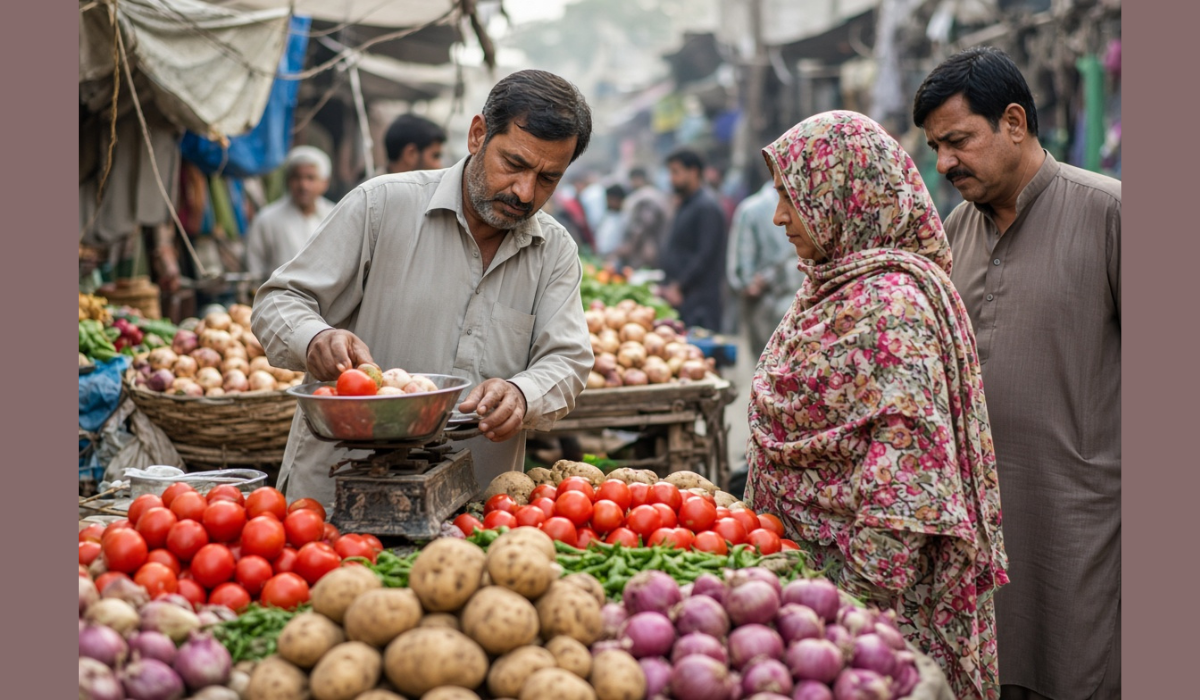
On the flip side, perishables saw steep drops that helped offset the overall increase. Tomato prices plunged 18.65 percent week-on-week, chicken fell 4.41 percent, onions dropped 2.87 percent and bananas declined 2.80 percent. Potatoes, garlic and rice varieties also became cheaper.
The year-on-year comparison tells a starker story of the cost-of-living squeeze facing ordinary Pakistanis. Onion prices have more than doubled over the past twelve months, up 125.86 percent, while LPG (55.66 percent), wheat flour (45.28 percent), tomatoes (36.69 percent), diesel (36.33 percent) and petrol (29.84 percent) have all posted heavy annual increases. Some relief came from potatoes (down 31.33 percent annually), chicken (down 23.87 percent), sugar (down 19.33 percent) and eggs (down 17.97 percent).
Notably, the burden of inflation is not evenly distributed. Broken down by income quintile, the lowest-income group (Q1, earning up to Rs. 17,732) saw prices actually fall by 0.17 percent for the week, while the highest-income group (Q5, above Rs. 44,175) saw a 0.13 percent increase — suggesting the week’s fuel and energy-driven inflation weighed more heavily on wealthier households’ consumption baskets, even as food relief helped the lowest earners more.
Public Reaction
Household budgeting has remained a dominant talking point on Pakistani social media in recent months, with users frequently sharing grocery receipts and utility bills to illustrate the gap between official inflation figures and lived experience. Commentary around weekly SPI releases typically centers on two recurring threads: relief at falling vegetable and poultry prices, which are highly visible in daily kitchen budgets, and frustration over recurring hikes in fuel and electricity charges, which affect nearly every other expense indirectly. This week’s report, showing both trends simultaneously, is likely to fuel similar mixed reactions online, particularly given the near-19 percent single-week collapse in tomato prices against a fresh round of LPG and diesel increases.
Expert Analysis
Economists tracking Pakistan’s inflation trajectory generally note that the near-flat weekly SPI reading masks two offsetting forces: a seasonal correction in perishable food supply, particularly tomatoes and onions following harvest cycles, and structurally persistent increases in energy costs tied to fuel price adjustments and quarterly electricity tariff revisions. Analysts typically caution that while headline weekly inflation appears contained, the 9.04 percent year-on-year figure indicates underlying price pressures remain elevated compared to historical norms, and that energy-linked items — LPG, diesel, petrol and electricity — continue to act as the primary structural drivers of inflation regardless of short-term relief from food prices. The quintile-wise data, showing divergent trends across income groups, is also likely to draw attention to how monetary and energy policy decisions have uneven effects across the income spectrum.