 BeNewz
Related Articles



—Government expected to prioritize debt servicing, defence spending, subsidies and development projects in the upcoming fiscal plan
Aftab Maken
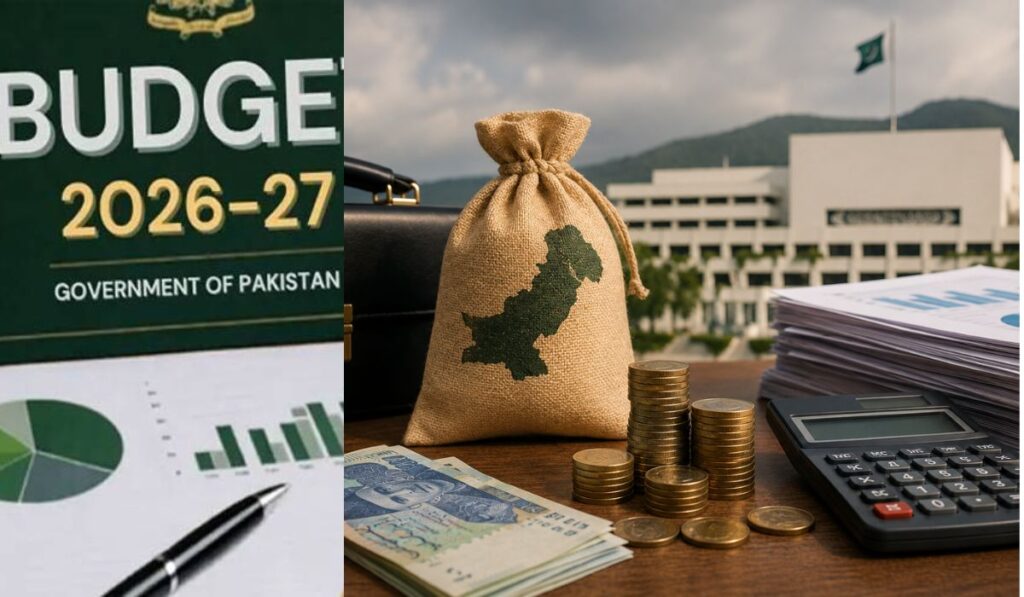
ISLAMABAD: The federal government is set to present the budget for fiscal year 2026-27 in Parliament on Friday, with the total outlay expected to be around Rs17.5 trillion. The budget is likely to focus on debt servicing, defence, subsidies and development spending while aiming to meet fiscal targets agreed with the International Monetary Fund (IMF).
According to official estimates, the federal government’s net revenue is expected to exceed Rs11 trillion, while the Federal Board of Revenue (FBR) may be assigned a tax collection target of more than Rs15 trillion. Non-tax revenues are also projected to surpass Rs5 trillion during the next fiscal year.
Budget proposals suggest that direct tax collections will be targeted at over Rs7.4 trillion, while sales tax revenue is expected to exceed Rs4.7 trillion. Customs duties are projected to generate around Rs1.65 trillion, while collections from the Federal Excise Duty (FED) are expected to cross Rs1 trillion.
Debt servicing is set to remain the single largest expenditure item in the federal budget. The government is likely to allocate around Rs7.8 trillion for interest payments on domestic and external debt, accounting for a significant share of total expenditures.
Defence spending is expected to range between Rs2.9 trillion and Rs3 trillion, reflecting the country’s security requirements amid evolving regional challenges. Subsidies for various sectors, including energy and social protection programmes, are likely to be allocated around Rs1.1 trillion.
The government is also considering allocating nearly Rs1 trillion for the Public Sector Development Programme (PSDP) and other ongoing and new development projects aimed at supporting infrastructure, energy and social sector initiatives.
Sources indicate that approximately Rs1.1 trillion may be earmarked for pension payments to retired federal government employees, while administrative and operational expenditures of the federal government are expected to amount to around Rs900 billion.
Under the National Finance Commission (NFC) Award, more than Rs8 trillion is likely to be transferred to the provinces during the next fiscal year. In addition, over Rs350 billion may be reserved for contingency and emergency expenditures to address unforeseen situations.
Financial experts estimate that the overall budget deficit for FY2026-27 could remain close to Rs3 trillion. However, after excluding the expected provincial surplus, the federal government’s actual fiscal deficit may exceed Rs5.5 trillion.
Economic analysts believe the success of the upcoming budget will largely depend on the government’s ability to achieve its ambitious revenue targets, maintain expenditure discipline and continue implementing structural reforms under the IMF programme.
The budget is also expected to include measures aimed at broadening the tax base, increasing revenue generation, improving fiscal management and reducing the country’s dependence on borrowing. Market participants and investors will closely watch the government’s fiscal strategy as Pakistan seeks to sustain economic stability and strengthen growth prospects in the coming year.