 BeNewz
Related Articles



Aftab Maken
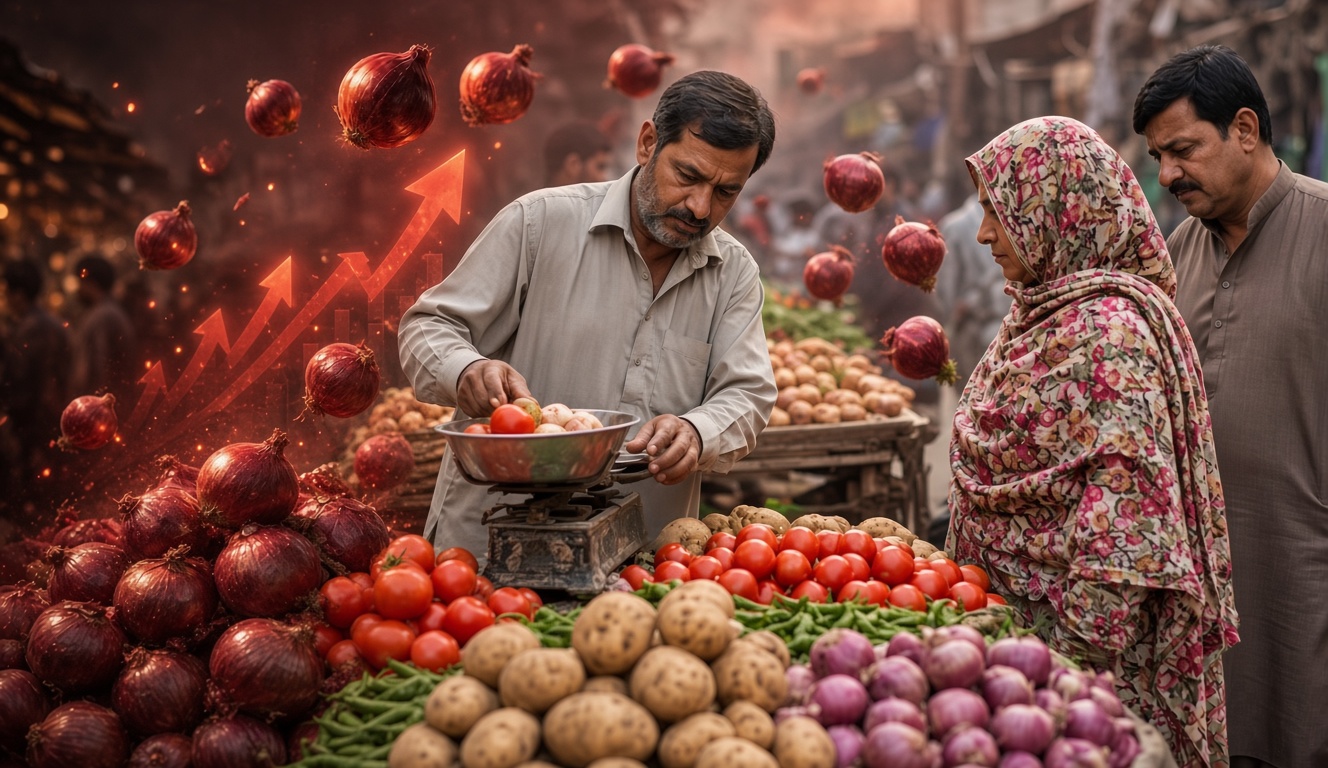
KARACHI/ISLAMABAD: The onion tomato price surge gripping Pakistani households has intensified, with fresh government data showing onion rates jumping 26.30 percent in a single week and nationwide food inflation climbing further, even as officials insist relief supplies are finally on the way.
According to the Pakistan Bureau of Statistics (PBS), onions nationwide now retail between Rs 160 and Rs 280 per kilogram, up sharply from Rs 110–250 just a week earlier.
Tomatoes are selling for Rs 120–280 per kg, with Islamabad and Rawalpindi buyers paying the steepest rates in the country at Rs 220–280 per kg.
The Sensitive Price Indicator (SPI) rose 0.65 percent week-on-week, while year-on-year inflation touched 9.11 percent, driven heavily by the ongoing onion tomato price surge.
A Narrow Supply Window Behind the Surge
The onion tomato price surge is rooted in a familiar seasonal gap. Sindh’s onion and tomato crops typically wind down by spring, leaving Balochistan as Pakistan’s main supplier through early September — and this year’s Balochistan harvest has fallen short of demand.
Deliveries from the province have been further delayed by local disruptions, while imports of Iranian tomatoes have slowed.
Monsoon flooding compounded the shortage: flash floods, urban waterlogging, and mudslides damaged roads and bridges, disrupting harvesting and delaying produce reaching wholesale markets.
On a year-on-year basis, the numbers are stark — tomato prices have surged roughly 144 percent and onion prices around 126–160 percent, depending on the region, according to PBS figures reported over recent weeks.
Transport costs, elevated during earlier fuel-price spikes tied to the Middle East crisis, have also not fully unwound even as petrol and diesel rates have eased slightly.
Tomato producer Yunus Sumro told local media that Iranian tomato supplies have slowed, leaving Balochistan’s harvest to meet most local demand, but that prices may begin stabilizing once tomatoes from Thatta in Sindh reach markets later this month.
Public Reaction: Frustration Builds on Social Media
The onion tomato price surge has become a flashpoint on Pakistani social media, with users sharing grocery receipts and mandi photos showing onions and tomatoes priced well above official notified rates.
Many have criticized the gap between government-set prices and what retailers actually charge, while others have posted tips on substituting or reducing use of onions and tomatoes in daily cooking to cope with tightening household budgets.
Expert Analysis
Economists tracking the onion tomato price surge point to structural weaknesses beyond weather and transport. Limited cold-storage capacity means Balochistan and Sindh harvests cannot be staggered efficiently, so supply gaps between regions translate directly into price spikes.
High post-harvest wastage of perishable produce and rising input costs for farmers — seeds, fertilizer, and fuel — are also cited as recurring drivers.
Analysts caution that without investment in storage infrastructure and better coordination between provincial harvest cycles, similar price spikes are likely to recur each year during the seasonal transition window.