 BeNewz
Related Articles


Aftab Maken
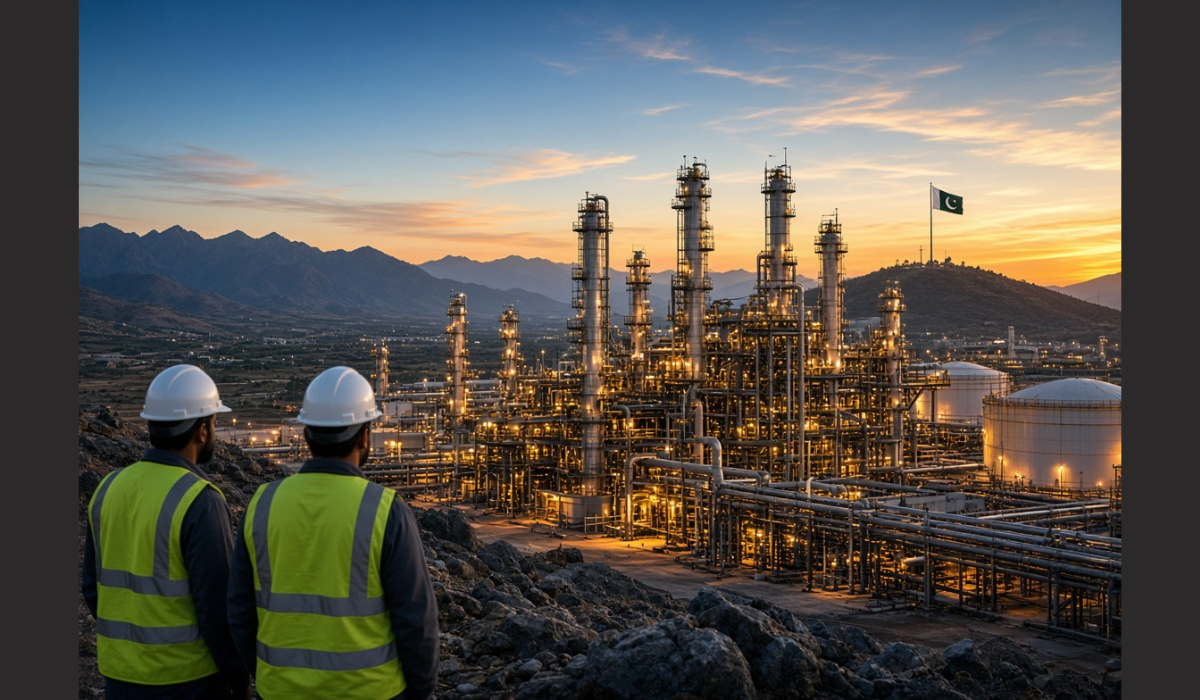
ISLAMABAD: Pakistan has cleared the way for one of the largest industrial investment drives in its energy sector in decades, approving amendments to its refining policy that could unlock between $4.5 billion and $6 billion for the modernization of five domestic refineries.
What Was Approved
The Cabinet Committee on Energy, chaired by Prime Minister Shehbaz Sharif, signed off on changes to the Pakistan Oil Refining Policy 2023 that pave the way for an estimated $5-6 billion investment in refinery upgrades aimed at producing Euro-V fuels, increasing petrol and diesel output and strengthening the country’s energy security. The revised framework also targets higher petrol and diesel output, lower furnace oil production and reduced reliance on imported refined products.
Officials say delays in refinery modernization had been costing the country between $1.5 billion and $2 billion a year, making the policy update a significant milestone for the downstream petroleum sector. The Petroleum Division has reportedly been tasked with taking the investment case on the road, holding roadshows in Gulf markets including Qatar and Saudi Arabia to court foreign capital.
Five Refineries, One Transformation
Collectively, plans from Parco, Pakistan Refinery Limited (PRL), Cnergyico Pakistan Limited (CPL), Attock Refinery Limited (ARL) and National Refinery Limited (NRL) represent a potential $4.5 billion to $5 billion transformation of Pakistan’s refining industry.
- Cnergyico (CPL), the country’s largest private refinery, is pursuing a roughly $1.2 billion, three-phase program covering green fuel production, “bottom-of-barrel” upgrades, capacity expansion and a new Single Point Mooring facility. The refinery currently has crude capacity of around 156,000 barrels per day and aims to raise that to about 200,000 bpd, with the first phase — reaching Euro-V/VI specifications — already underway.
- PRL is said to be planning one of the sector’s biggest single projects, a $1.8-2 billion bottom-of-barrel upgrade that could roughly double its crude processing capacity.
- Parco, a Pakistan-UAE joint venture, has opted for a $600 million green fuel project after evaluating two upgrade studies, and will shift entirely from Euro-III to Euro-V standards. It has already cut its furnace oil share and aims to eventually eliminate furnace oil output altogether.
- NRL says it has already achieved production of Euro-V high-speed diesel</cite> and is weighing an increase in crude capacity from 50,000 to 70,000 bpd, though the final upgrade configuration is still being finalized.
Industry watchers note the shift would turn these plants into “deep-conversion” refineries capable of processing heavier crude fractions into higher-value petrol and diesel instead of leaving large volumes as low-value furnace oil.
Where the Money Comes From
According to Basim Raza, assistant director at the NUST Institute of Policy Studies, the $4.5-5 billion figure represents planned investment rather than a state outlay. The government’s contribution is expected to be limited to around 27.5%, delivered through escrow-based incentives and tax relief, while the bulk of financing will have to be raised by the refineries themselves through equity, commercial loans, foreign financing and strategic partners.
That search for capital is already underway. Pakistani refiners are reportedly in talks with lenders and investors in Saudi Arabia, Azerbaijan and Türkiye to help finance the multibillion-dollar overhaul. Executives caution that policy approval is only the first hurdle — refiners still need to secure several billion dollars in long-term debt and foreign exchange, and convince lenders the projects are financially viable.
Import Substitution, Not Export Growth
Raza was clear that the point of the exercise is to plug a foreign-exchange leak, not to build an export industry. Pakistan imports a substantial share of its refined petroleum products, draining hard currency reserves in the process — a gap the upgraded plants are meant to close by processing more crude domestically instead of shipping in finished fuel.
Don’t Expect Cheaper Fuel at the Pump
Perhaps the most important caveat, according to Raza, is that ordinary consumers shouldn’t expect the upgrades to translate into lower pump prices. Efficiency gains and better-quality fuel are likely, and the import bill should shrink, but retail prices will continue to be driven mainly by international crude prices, the rupee’s exchange rate, the petroleum levy and taxation — factors the refinery investment does nothing to change. In his assessment, the real payoff is energy security and foreign-exchange savings rather than relief at the pump.
Background: A Six-Year Wait
The policy shift has been a long time coming. Pakistan first approved the move from Euro-2 to Euro-5 fuel standards back in 2020, with refiners requesting a two-year transition — yet little progress was made for roughly six years amid disputes over incentives and financial viability. Analysts have also framed the refinery push alongside Pakistan’s offshore Indus basin exploration efforts: if commercial crude is eventually found domestically, the upgraded refineries would be positioned to process a lighter, sweeter local crude slate at Euro-V specification; if not, they still capture the import-substitution benefit on refined products.
PD to Sign, Monitor Refinery Upgrade Deals as Ogra Steps Back
In a related development, the government has decided to shift responsibility for signing and monitoring brownfield refinery Upgrade Agreements (UAs) away from the Oil and Gas Regulatory Authority (Ogra) to the Petroleum Division (PD). Federal Minister for Petroleum Ali Pervaiz Malik confirmed that the agreements will now be signed directly with the ministry rather than the regulator.
Malik said the Petroleum Secretary, who is spearheading preparation of the agreements, would be in office to finalize matters, and that the UAs would be signed once they are completed. He added that the Director General (Oil) would oversee implementation of the agreements on behalf of the Petroleum Division.
The move places the ministry itself — rather than an independent regulator — in direct charge of both negotiating and monitoring compliance on the multibillion-dollar upgrade contracts, a shift that underscores how central the refinery modernization drive has become to the government’s energy policy agenda.
Social Media and Industry Reaction
Energy analysts and industry commentators on social platforms have largely welcomed the policy approval as overdue, framing it as a long-delayed fix to a persistent drain on foreign reserves and a step toward aligning Pakistan’s fuel quality with international standards used by its main crude suppliers. At the same time, some commentary online has echoed the skepticism voiced by policy experts — questioning whether the upgrades will meaningfully ease the cost-of-living pressure ordinary motorists associate with fuel prices, given that pump prices remain tied to global oil markets, the rupee, and government levies rather than domestic refining costs. Industry pages tracking the sector have also flagged financing as the key risk to watch, noting that securing multibillion-dollar foreign loans in the current environment will be the real test of whether the ambitious investment figures materialize on schedule.
What Comes Next
With the policy amendment now approved, attention shifts to execution: refinery-by-refinery financial close, foreign lender negotiations, and the multi-year construction timelines typical of brownfield refinery upgrades. Officials have signaled that roadshows in Gulf capitals are intended to accelerate that process, but as executives themselves note, policy approval was only step one.