 BeNewz
Related Articles

BeNewz Report
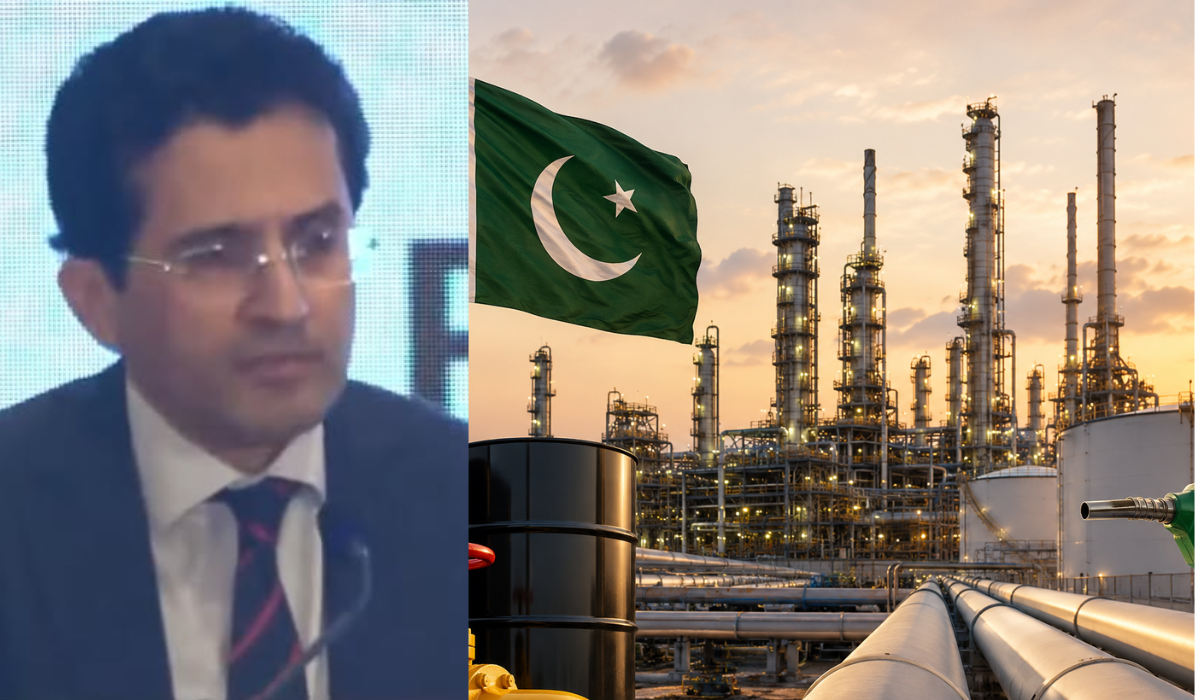
ISLAMABAD: Federal Minister for Petroleum and Natural Resources Ali Pervaiz Malik said on Thursday that the Petroleum Division is in the final stages of finalising agreements with local refineries, aimed at resolving long-standing structural weaknesses in Pakistan’s refining sector and unlocking investment in deep-conversion facilities.
Speaking at the Energy Conference 2026, Malik said the Petroleum Division Secretary was wrapping up negotiations with refineries and that a formal signing ceremony would be held shortly. He said the government’s new refinery policy, paired with greater operational flexibility, was designed to address why domestic refineries have fallen into a dilapidated state and failed to upgrade to modern deep-conversion capacity. “What we need to really get the conversation going is why they are in such a dilapidated state and why have they not been able to upgrade to deep conversion refineries,” he said, adding pointedly, “Why did we not do it in the last 70 years is a debate that we can have some other day, but that policy is in the field.”
Diesel Relief Called a Temporary Fix
The minister acknowledged that refineries had already delivered some relief by agreeing to cut diesel prices amid volatile international markets — a reference to the sharp Rs 32.63/litre diesel price cut that took effect this week. But he cautioned that this was not a lasting solution, stressing that the government needed to tackle the underlying structural weaknesses of domestic refining rather than rely on ad hoc price interventions.
Refinery Policy Timeline
Malik’s remarks build on a policy process that has been unfolding since early July. The refinery upgrade policy was forwarded to the federal cabinet on July 7, with the Economic Coordination Committee expected to clear it around July 15, unlocking billions of rupees in modernisation investment and permitting the production of Euro-V compliant fuels for the first time. Malik had pledged at the time that the government would not shift the financial burden of refinery inefficiencies onto consumers, saying Prime Minister Shehbaz Sharif had ruled out imposing additional costs on petroleum users.
By last week, the minister had put a dollar figure on the scale of the plan. He said Pakistan expects energy companies to begin signing roughly $5 billion in formal investment agreements next month to modernise the country’s outdated refineries, moving beyond the initial memorandums of understanding already signed. He attributed decades of underinvestment to the absence of a coherent refinery policy, noting this had left Pakistan reliant on old, low-capacity hydro-skimming plants instead of advanced deep-conversion refineries.
Industry sources, however, have cautioned that cabinet approval is only the first hurdle. A senior refinery official told Arab News that refiners still need to secure several billion dollars in long-term debt and foreign exchange, and convince lenders that the fiscal and regulatory framework will remain stable for the life of these projects — with Cnergyico Pk Limited’s Vice Chairman separately confirming plans to invest around $1.2 billion in phases.
Offshore Exploration and Energy Coordination
Malik also addressed Pakistan’s upstream ambitions, saying the country was reviving offshore exploration after a two-decade gap, with Mari Petroleum, Pakistan Petroleum Limited (PPL) and Oil and Gas Development Company Limited (OGDCL) participating alongside international partners. “If we expect them to invest over a hundred million dollars for one well, we must provide them consistency of policy and medium-term visibility,” he said, adding that successful investors should be allowed to retain and reinvest profits to expand the sector sustainably.
On institutional coordination, the minister said the reactivation of the Cabinet Committee on Energy (CCoE), chaired by PM Shehbaz Sharif, was intended to improve alignment across the petroleum, power and water divisions. He said he had proposed the CCoE meet every two months even without a specific agenda, purely to review sector developments.
Taxation, Circular Debt and Gas Reforms
Malik said the Petroleum Division could not continue absorbing excessive taxation and financial interventions simply to meet budgetary targets, arguing that the sector’s own sustainability mattered just as much. He said the government had managed to keep circular debt flow at near-zero levels without raising consumer tariffs, and that talks with the IMF were continuing on clearing past liabilities once the next IMF mission arrives.
On the gas sector, he said the government was weighing the separation of infrastructure from the energy business itself, alongside efforts to introduce greater competition, improve upstream liquidity and boost efficiency. He confirmed that a World Bank-supported report on gas-sector unbundling and reform was expected by the end of August, after which it would be presented to the prime minister. Malik said deregulation and expanded private-sector participation remained core government objectives, and that reforms would continue “despite criticism,” adding that history would ultimately judge the current leadership by how future generations assessed these decisions.
Broader Context: Deregulation Push
The refinery overhaul fits into a wider deregulation drive Malik has been signalling for weeks. He has separately said the reform package includes gradual deregulation of petrol and diesel pricing, digitalisation of the fuel supply chain, and daily publication of Platts benchmark prices to constrain arbitrage between refiners and the Oil and Gas Regulatory Authority (OGRA). He has also defended the now-daily fuel price revision mechanism, explaining that global oil prices move daily, forcing Pakistan to adjust domestic prices in step, and rejecting criticism that price changes are made at his personal discretion.