 BeNewz
Related Articles



BeNewz Report
ISLAMABAD: Nearly six months after Pakistan signed a high-profile agreement with a crypto firm linked to US President Donald Trump’s family, no pilot project, regulatory approval or transaction has materialised, raising questions about whether the deal served diplomatic optics more than economic policy.
Pakistan’s ambitious partnership with World Liberty Financial (WLF), a cryptocurrency venture linked to US President Donald Trump‘s family, has yet to produce any tangible economic results, despite months of high-level engagement and public announcements.
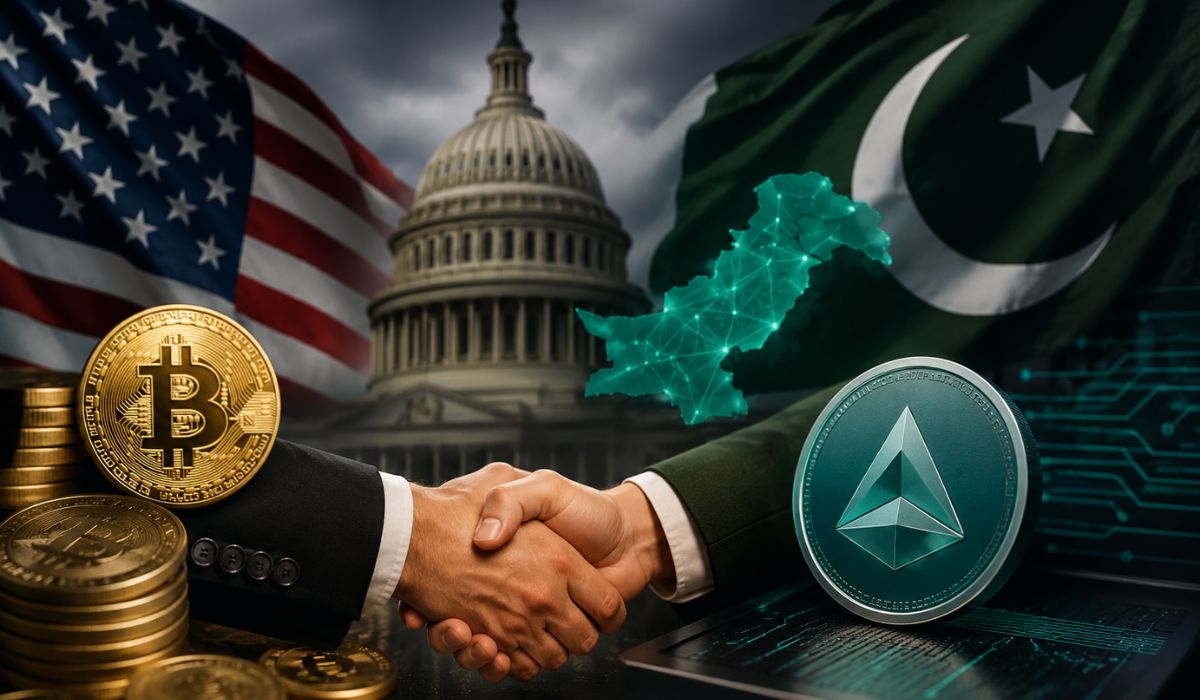
The agreement, signed between Pakistan’s Ministry of Finance and SC Financial Technologies, an affiliate of WLF, was intended to explore the use of the firm’s dollar-backed USD1 stablecoin for cross-border payments. The signing ceremony in Islamabad was attended by Prime Minister Shehbaz Sharif, Army Chief Field Marshal Asim Munir and senior WLF executives, including Zach Witkoff, son of Trump adviser Steve Witkoff.
However, nearly six months after the memorandum of understanding (MoU) was signed, Pakistani officials have confirmed there has been no pilot programme, no regulatory licence issued, and no known financial transaction using the USD1 stablecoin.
The lack of progress has become more noticeable after financial disclosures showed Trump earned more than $500 million from token sales through World Liberty Financial in 2025, highlighting the commercial success of the venture for the Trump family while Pakistan’s expected benefits remain largely unrealised.
Analysts argue the agreement has delivered political visibility rather than financial or technological gains. Several observers believe the primary objective was to strengthen Islamabad’s access to the Trump administration rather than introduce a viable digital payment system.
Pakistan already ranks among the world’s largest cryptocurrency markets. According to Chainalysis, the country was the world’s third-largest adopter of cryptocurrencies last year after India and the United States. Most informal crypto activity is believed to rely on Tether’s USDT stablecoin rather than USD1.
Experts also question whether another dollar-backed stablecoin is necessary when Pakistan is already receiving record remittances through formal banking channels. According to the State Bank of Pakistan, workers’ remittances reached a record $38.3 billion during the last financial year, up 27% from a year earlier. Monthly inflows hit an all-time high of $4.25 billion in May, with annual remittances expected to exceed $42 billion this year.
Banking and finance expert Ibrahim Khalil said there is little evidence that USD1 would solve existing payment challenges.
“People using informal crypto channels are avoiding the banking system for specific reasons. Introducing another stablecoin linked to banking channels does not address those underlying issues,” he said.
Khalil also questioned the practicality of the arrangement, noting that unless Pakistan’s trading partners accept USD1 directly, the country would still need to convert the digital token into US dollars before using it for international trade, creating additional costs and operational complexity.
Although Pakistan has introduced new legislation through the Virtual Assets Act and established the Pakistan Virtual Assets Regulatory Authority (PVARA), the regulatory framework remains incomplete. Licensing rules have yet to be finalised, while crypto firms are still awaiting full operational approval.
A senior banking executive familiar with the process described the MoU as an exploratory agreement focused on technical discussions and knowledge-sharing rather than implementation. The official said no commitment had been made to deploy USD1 and any licensed stablecoin could eventually perform the same role.
Political analysts believe the agreement’s real significance lies in diplomacy rather than digital finance.
In recent months, Pakistan has significantly strengthened ties with the Trump administration. Trump hosted Field Marshal Asim Munir at the White House, while senior US officials publicly praised Pakistan’s role in regional diplomacy, particularly during tensions involving Iran.
Economist Khurram Husain argued the crypto agreement functioned primarily as a diplomatic tool.
“The MoU was essentially an instrument of access. It had little policy foundation but succeeded in improving Pakistan’s access to the Trump White House,” he said.
Khalil reached a similar conclusion, describing the initiative as “pay for access” rather than a policy driven by economic necessity.
With no operational rollout, no measurable financial impact and no confirmed use of USD1 in Pakistan, questions continue to grow over whether the high-profile crypto partnership will ever translate into meaningful economic benefits or remain a politically symbolic agreement.