 BeNewz
Related Articles


Aftab Maken
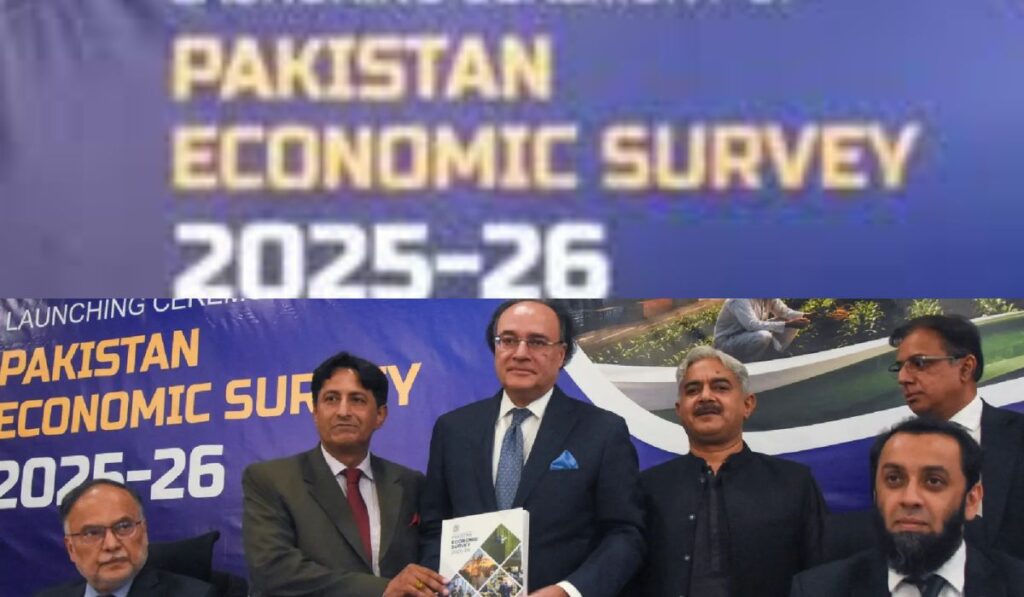
ISLAMABAD: Pakistan’s economy expanded by 3.7 percent during fiscal year 2025-26, according to the Pakistan Economic Survey released on Thursday, reflecting improved economic stability and stronger industrial activity but falling short of the government’s 4.2 percent growth target.
Presenting the survey in Islamabad, Finance Minister Muhammad Aurangzeb said the economy demonstrated resilience despite facing multiple challenges during the year, including devastating floods, regional geopolitical tensions, and uncertainty in global trade markets.
The growth rate marks an improvement from 3.18 percent recorded in the previous fiscal year and represents the highest economic expansion in four years. The size of Pakistan’s economy reached a record Rs126.9 trillion, while per capita income increased to $1,901 from $1,751 a year earlier.
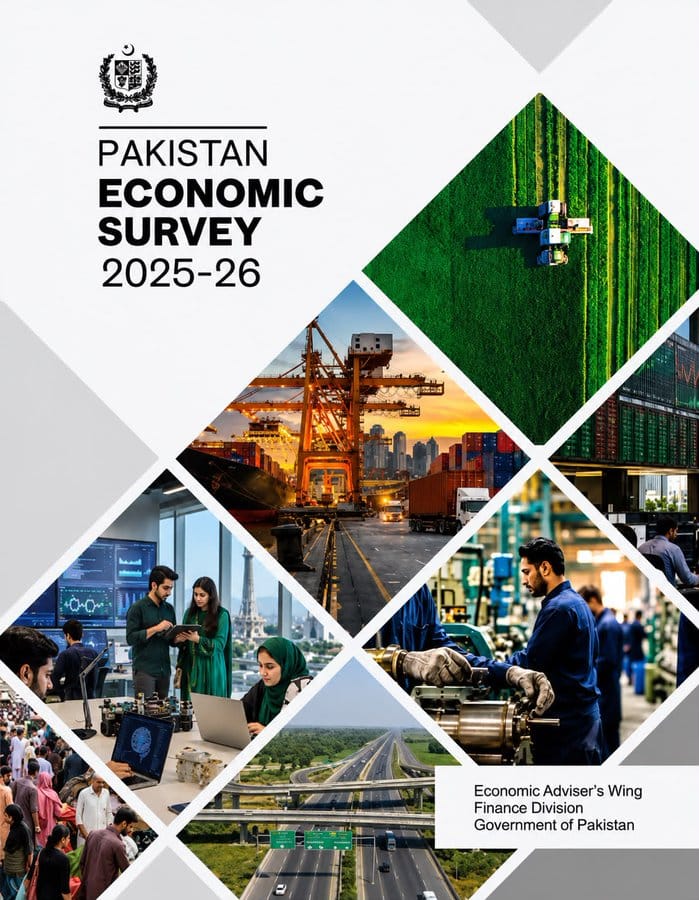
The survey attributed the economic improvement to better macroeconomic management, fiscal discipline, exchange rate stability, recovery in large-scale manufacturing, and reforms implemented under the International Monetary Fund’s Extended Fund Facility programme.
The agriculture sector grew by 2.89 percent compared with 1.53 percent last year despite severe flooding during 2025. Crop production expanded by 1.44 percent, while the livestock sector continued to show steady growth, helping support rural incomes and food production.
Industrial activity strengthened during the year, with the sector posting growth of 3.51 percent. Large-scale manufacturing emerged as a major contributor, expanding by 6.1 percent, the highest growth recorded in four years. Positive performance was reported in 16 out of 22 manufacturing sub-sectors.
The finance minister highlighted strong demand across key industries, noting that cement consumption increased by 10 percent, fertilizer production by 17 percent, petroleum products by 5 percent, automobile manufacturing by 31 percent, and mobile phone production by 9 percent during the year.
The construction sector also contributed to growth, expanding by 5.73 percent, while mining and quarrying activities returned to positive territory after contracting in the previous fiscal year.
Pakistan’s services sector, which accounts for nearly 58 percent of GDP, recorded growth of 4.09 percent. Information and communication services emerged as a standout performer, expanding by 7.52 percent and reflecting the growing importance of the country’s digital economy.
On the fiscal front, the government reported significant improvement in public finances. The fiscal deficit narrowed to 0.7 percent of GDP during July-March FY26, compared with 2.6 percent in the same period last year. Meanwhile, the primary surplus strengthened to 3.2 percent of GDP, supported by higher revenues and lower debt servicing costs.
Tax revenues increased by 11.3 percent to Rs10.17 trillion, with Federal Board of Revenue collections rising 10.1 percent. The government credited digital monitoring systems and technology-driven tax administration reforms for generating additional revenues.
Inflation averaged 6.2 percent during July-April FY26, compared with 4.7 percent during the same period last year. While inflation remained relatively stable for much of the year, rising global oil prices and supply disruptions linked to Middle East tensions pushed inflation higher during the final months.
Pakistan’s external sector remained supported by strong remittance inflows, which rose 8.2 percent to $30.3 billion. The current account posted a modest surplus of $72 million during July-March FY26, although this was lower than the $1.7 billion surplus recorded a year earlier.
Information technology exports exceeded $3.8 billion, while sports goods exports increased by 18 percent. The government also highlighted continued growth in digital services and freelance earnings.
Foreign exchange reserves reached multi-year highs, with total reserves standing at $20.6 billion in April, including $15.1 billion held by the State Bank of Pakistan. Officials expect reserves to approach $18 billion by the end of June, providing three months of import cover.
Pakistan’s capital markets also posted strong gains. The benchmark KSE-100 Index rose 18.4 percent during the first nine months of FY26, supported by declining inflation, lower interest rates, and improved investor confidence following progress under the IMF programme.
The survey showed that total public debt stood at Rs83.3 trillion by the end of March 2026. However, debt growth slowed considerably, while the public debt-to-GDP ratio declined to 68.5 percent from 75 percent in 2023, reflecting improved fiscal management.
Despite the overall progress, the survey noted that poverty and income inequality remained challenges. The national poverty rate increased to 28.9 percent, reflecting the lingering effects of inflation, climate-related shocks, and economic adjustments over recent years.
Looking ahead, officials expressed optimism that continued reforms, stronger exports, digitalisation, and improved macroeconomic stability would support higher growth in the coming fiscal year, although external risks and geopolitical uncertainties remain significant concerns.