 BeNewz
Related Articles

Aftab Maken
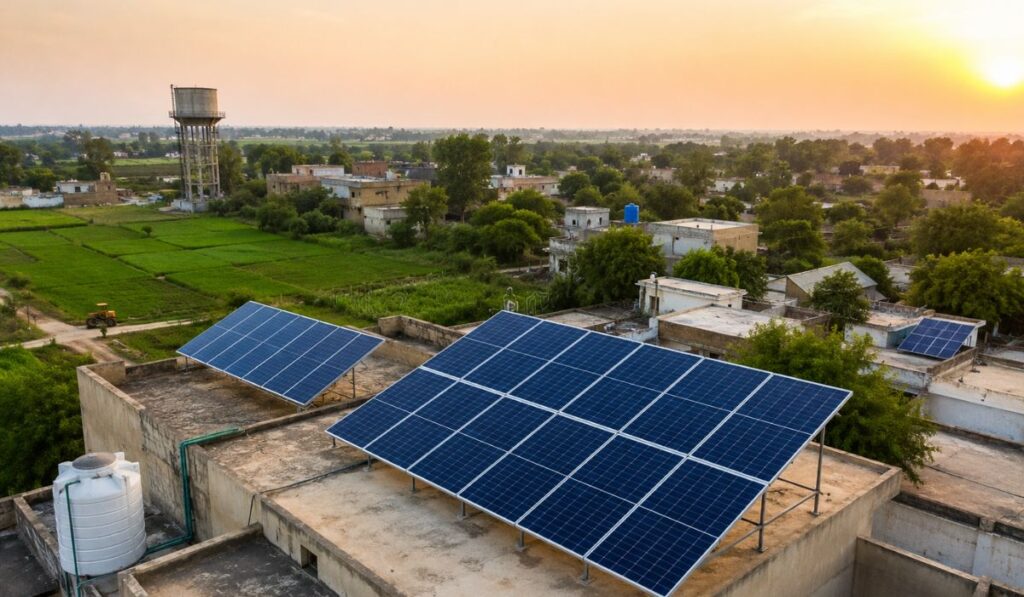
ISLAMABAD: Pakistan’s Quiet Solar Revolution accelerates as households and businesses adopt solar energy rapidly. Millions install panels amid rising electricity tariffs, frequent outages, and economic pressure nationwide. The shift reduces reliance on the national grid while creating a decentralized power system across urban and rural areas.
Pakistan is experiencing a major energy transformation driven by consumer behaviour changes. Ordinary citizens, farmers, and shopkeepers are investing in solar systems at unprecedented speed. The expansion is largely unrecorded in official generation statistics, according to energy analysts. This hidden capacity is reshaping demand patterns across the national grid.
Cheap imported solar panels, primarily from China, have fuelled this expansion significantly. Global photovoltaic prices have fallen by more than eighty percent since 2010. According to the International Energy Agency, solar has become the cheapest electricity source in many markets, including emerging economies. This cost advantage is accelerating adoption in price-sensitive countries like Pakistan.
Electricity tariffs in Pakistan have risen sharply over recent years. The National Electric Power Regulatory Authority has approved multiple tariff adjustments linked to fuel costs and debt servicing. Consumers now compare grid electricity costs with solar installation payback periods. Many systems recover costs within three to five years under current conditions.
Frequent power outages have also pushed households toward independent solutions. Load-shedding has historically affected industrial output and household productivity across Pakistan. Businesses increasingly view solar systems as operational necessity rather than optional investment. Backup diesel generators have become expensive due to fuel inflation and import constraints.
Rural adoption is expanding rapidly, especially in agricultural regions. Farmers are installing solar tube wells to reduce diesel dependence. This shift lowers irrigation costs and improves energy reliability for crop production. Experts note that agricultural solarisation may significantly alter rural energy economics over time.
Most of this expansion occurs behind the electricity meter system. Distributed solar installations are not fully captured in national generation datasets. Energy researchers describe this as a “hidden energy transition” affecting demand forecasting models. The gap between installed capacity and reported generation is widening steadily.
Pakistan’s import data indicates strong growth in solar panel shipments in recent years. Trade analysts report record volumes of photovoltaic imports, particularly from East Asian markets [verify Pakistan Bureau of Statistics data]. This suggests widespread adoption across residential and commercial sectors. However, official installed capacity figures remain comparatively lower.
The decentralised solar economy is emerging without large-scale government rollout programs. Instead, individual financial decisions are driving adoption at household level. Consumers calculate long-term savings against rising grid tariffs. This bottom-up model differs from traditional utility-led expansion systems.
Energy experts argue that solar economics have reached a tipping point. Falling equipment costs and improved battery storage are key enablers. Lithium-ion battery prices have dropped significantly over the past decade. This allows households to store energy for nighttime use and grid backup.
Pakistan’s solar expansion also reflects broader global energy trends. According to the International Renewable Energy Agency, distributed solar is growing faster than centralised power generation in several developing regions. Countries with high electricity costs are experiencing the fastest adoption rates. Pakistan fits this global pattern due to its energy pricing structure.
Industrial users are also integrating solar systems into operations. Textile mills and manufacturing units are adopting rooftop solar to reduce operating costs. Export competitiveness is linked to energy pricing in energy-intensive sectors. Solar adoption helps stabilise production costs amid volatile grid tariffs.
Experts say the transformation is not yet fully reflected in national planning models. Electricity demand forecasts may overestimate grid dependence in coming years. This creates planning challenges for utilities managing capacity and debt obligations. Pakistan’s power sector already faces circular debt pressures and payment delays [verify SBP energy sector reports].
Financial savings from solar adoption are becoming increasingly visible for consumers. Households report reduced monthly electricity bills after installation. Net metering policies allow surplus electricity to be fed back into the grid. However, policy adjustments continue to influence investment decisions in the sector.
Urban centres like Lahore, Karachi, and Islamabad show high rooftop adoption rates. Commercial plazas and residential communities are increasingly solar-powered. Developers now include solar readiness in new construction designs. This reflects growing market expectation for energy self-sufficiency.
The transformation also has macroeconomic implications for fuel imports. Reduced dependence on imported furnace oil and diesel may ease pressure on foreign exchange reserves. Energy import bills remain a major component of Pakistan’s trade deficit. Solar adoption gradually shifts this dependency structure.
Grid utilities face both challenges and opportunities from rising solar penetration. Reduced daytime demand affects revenue collection and load management strategies. However, distributed generation can also reduce peak stress on transmission networks. Regulators are evaluating new frameworks for hybrid energy systems.
Policy experts suggest better integration of distributed energy into national planning. Clear data collection mechanisms are needed to measure actual installed capacity. Improved regulatory frameworks could support sustainable expansion of rooftop solar. International agencies recommend aligning incentives with long-term grid stability goals.
Pakistan’s energy transition is increasingly shaped by consumer-driven investment decisions. The state is no longer the sole driver of electricity expansion. Market forces and household economics now play a central role. This shift represents a structural change in energy governance models.
The long-term outlook for Pakistan’s Quiet Solar Revolution remains strongly growth-oriented. Continued price declines and rising tariffs will sustain adoption momentum. Energy planners expect decentralised systems to form a larger share of total supply. The evolution of Pakistan’s Quiet Solar Revolution will redefine how electricity is produced and consumed nationwide.