 BeNewz
Related Articles



BeNewz Report
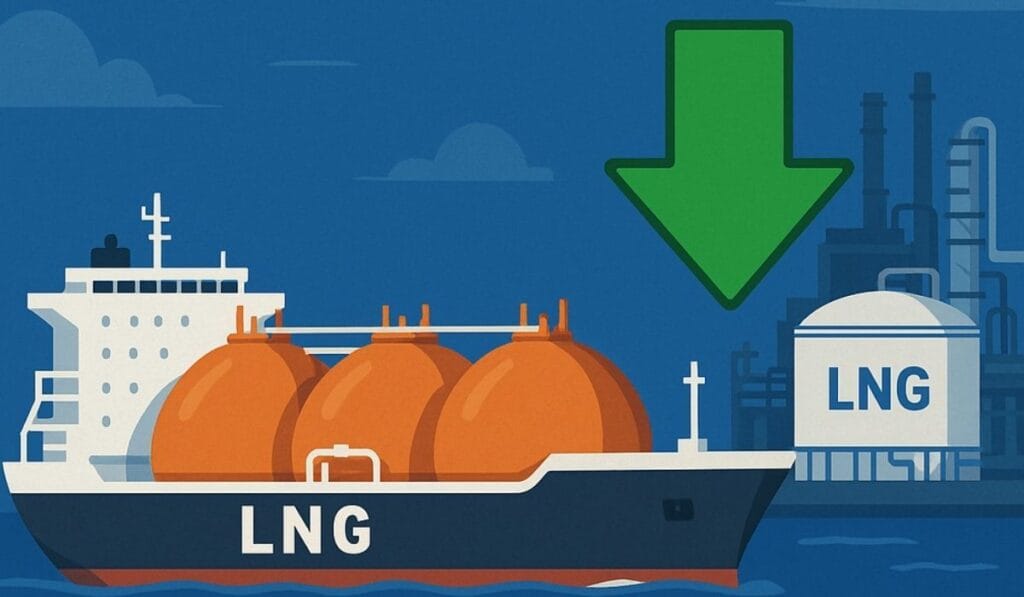
ISLAMABAD: Pakistan is reducing its dependence on imported liquefied natural gas (LNG) as volatile global prices and a weakened rupee strain the economy. The state-owned buyer, Pakistan LNG Ltd (PLL), has negotiated deferments of long-term LNG cargoes with suppliers including Qatar and Italy’s Eni after contracts linked to Brent sent import bills soaring. At the same time the government is turning instead to coal, hydropower and nuclear power to stabilise electricity supply and reduce costly imports.
Pakistan’s long-term LNG portfolio currently includes contracts with QatarGas (3.8 million t/y from 2016–2031), Eni (0.8 million t/y from 2017–2032) and Azerbaijan’s SOCAR (0.8 million t/y from 2023–2028). These deals have become a liability as Brent-linked formulas raised costs in rupee terms, while currency depreciation deepened the burden. The country avoided linking contracts to spot JKM prices (which are currently about $3/MMBtu higher than Brent linked). Nevertheless, LNG remains far more expensive than when Pakistan locked in the 15-year deals.
Following talks beginning in August, PLL in October reached agreement with QatarEnergy and Eni to defer up to two LNG cargoes per month in 2026. The Azerbaijan deal was extended to 2028 and includes greater flexibility—one cargo per month at a below-market price, with no penalties if Pakistan declines shipments.
Only a few years ago Pakistan was a fast-growing buyer of LNG and one of the key drivers of spot demand in South Asia. Today it is pulling back. Petroleum Minister Ali Pervaiz Malik has publicly blamed heavy reliance on LNG imports for discouraging domestic gas exploration. The guaranteed operation of regasified LNG plants has inhibited local production and forced state buyers to absorb expensive volumes even when demand is weak. According to data from the Central Power Purchasing Agency (CPPA) the share of LNG-fired generation has fallen from 20 % in 1Q 2024 to about 14 % in 3Q 2025 as the country prioritises coal and renewables. Transmission bottlenecks between northern and southern grids, however, sometimes force operators to run RLNG plants first, even when cheaper alternatives are available—locking in inefficiency.
Coal and hydropower have emerged as the main alternatives. Imported coal prices tumbled from about $400/t in 2022 to around $100/t in the first nine months of 2025, prompting Pakistan to quietly raise coal’s role in the generation mix. Imported coal’s share rose from 25 % to 27 % in the first ten months of 2025, and about 70 % of total coal consumption now goes to power plants. Meanwhile domestic coal output is rising: Pakistan’s recoverable coal reserves exceed 186 billion tonnes (99 % in Sindh Province), where the Sindh Engro Coal Mining Company (SECMC) mines about 7 million tonnes annually. Though lower grade than imported alternatives, domestic coal at ~$90-95/t is cheaper and attractive as a baseload source.
Hydropower has strengthened quickly. According to the Pakistan Electricity Review 2025, hydropower’s share of generation climbed to 30 % in FY2024, and in June 2025 output peaked at 6,670 GWh in one month—about 44 % of that month’s total electricity supply. Nuclear energy is also expanding rapidly. In 2024 Pakistan operated six commercial reactors with combined capacity 3.3 GW, all built by China National Nuclear Corporation (CNNC), and construction of the seventh (Chashma-5, 1.2 GW) began in December 2024 under the China-Pakistan Economic Corridor (CPEC). Nuclear generation grew from 21.3 TWh in 2023 to 21.7 TWh in 2024, raising its share to about 17 %.
Despite that progress the economics behind the transformation remain fragile. According to the International Energy Agency (IEA), Pakistan’s energy-price component rose from $39/MWh to $55/MWh between 2019-20 and 2024-25, while the capacity-price element slid from $37/MWh to $25/MWh—reflecting rising fuel costs even as plant operational costs held. Residential tariffs climbed from roughly PKR 25/kWh (~$0.09) in 2023 to PKR 35-40 (~$0.12-0.14) in 2024, before easing slightly in 2025 as fuel prices stabilised. Nevertheless Pakistan’s electricity remains among the most expensive in South Asia, with capacity payments and legacy contracts eroding fiscal space.
The structural constraint is significant: Pakistan’s energy infrastructure is financed heavily by external debt — particularly from the IMF, the ADB and China. Many large power plants and transmission lines built under CPEC operate on take-or-pay or capacity-payment terms that oblige payments even when output falls. An estimated 20-30 % of Pakistan’s external debt is owed to Chinese creditors and many contracts are dollar-linked, complicating the fiscal burden. According to the National Electric Power Regulatory Authority (NEPRA)’s State of the Industry Report 2024, high generation costs, rupee devaluation, and under-utilised capacity remain major drivers of sector stress.
Pakistan’s pivot away from LNG marks a pragmatic adaptation to global price realities and a fragile currency. Coal, hydropower and nuclear are filling the gap, but each brings vulnerabilities — environmental costs, seasonal water variability, long construction cycles and heavy debt burdens. For Pakistan the next energy crisis may not be about scarcity, but about whether its evolving mix can deliver reliable power without deepening the financial strain at the core of its economy.