 BeNewz
Related Articles



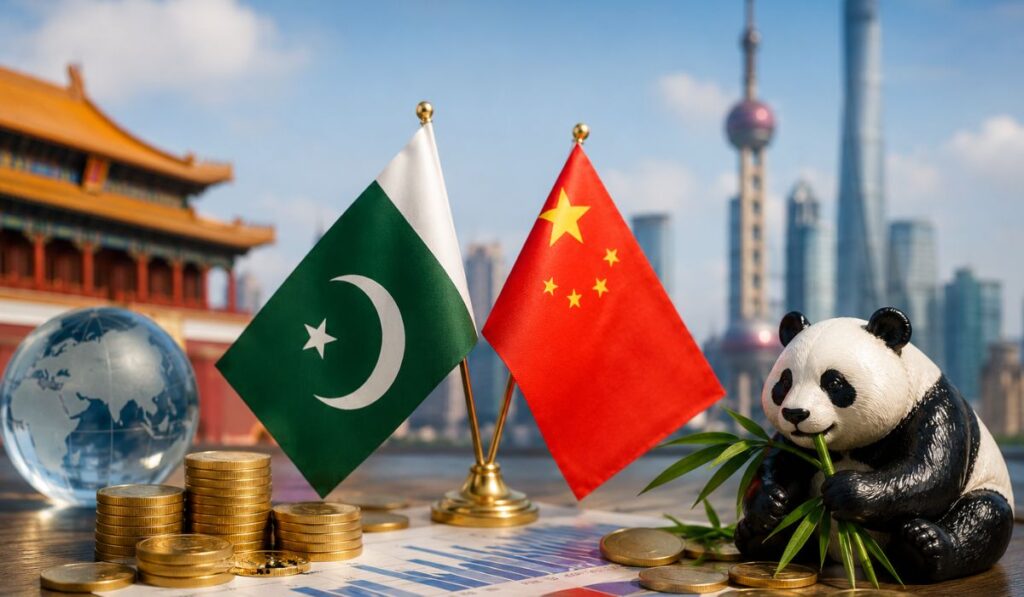
–Pakistan raised RMB1.75 bn through its first Panda Bond in China, attracting bids worth more than five times the issue size and signaling renewed investor confidence in the country’s economic recovery and reform agenda
Aftab Maken
ISLAMABAD: Pakistan on Thursday completed its inaugural Panda Bond issuance in China’s onshore capital market, marking the country’s first sovereign fundraising in renminbi and a major step toward diversifying external financing sources.
The three-year fixed-rate bond raised RMB1.75 bn, equivalent to about $250 mn, with a coupon rate of 2.5%, according to officials involved in the transaction. Investor demand exceeded RMB8.8 bn, or nearly $1.26 bn, resulting in an oversubscription of more than five times.
Officials said demand for the first tranche alone surpassed Pakistan’s broader Panda Bond programme target of RMB7.2 bn, equivalent to around $1 bn, highlighting strong appetite from Chinese institutional investors for Pakistan-linked sovereign debt.
The successful issuance gives Pakistan direct access to China’s domestic capital market, the world’s second-largest bond market after the United States. Analysts said the transaction reflects improving investor sentiment toward Pakistan after months of economic stabilization under reforms backed by the International Monetary Fund.
Pakistan has been working to rebuild foreign exchange reserves, narrow its fiscal deficit, and strengthen external account stability after facing severe balance-of-payments pressures in recent years. According to the State Bank of Pakistan, foreign exchange reserves have improved steadily since the country secured IMF support in 2023 and tightened fiscal and monetary policies.
Finance ministry officials described the Panda Bond as part of a broader strategy to diversify funding sources beyond traditional dollar-denominated borrowing and commercial loans. The issuance is also expected to deepen financial cooperation between Pakistan and China under expanding bilateral economic ties.
China remains Pakistan’s largest bilateral creditor and biggest trading partner. Bilateral cooperation has intensified under the China-Pakistan Economic Corridor, which has brought billions of dollars in infrastructure and energy investment into Pakistan over the past decade.
Market participants said the 2.5% pricing reflected confidence in Pakistan’s sovereign repayment capacity and improving macroeconomic indicators. Pakistan’s inflation has eased sharply from record highs seen in 2023, while the current account balance has shown improvement due to import controls, remittance inflows, and higher exports.
The Panda Bond also marks Pakistan’s gradual return to international capital markets after a prolonged absence caused by economic instability and rising default concerns. Pakistan last tapped international markets through Eurobond and Sukuk issuances before global borrowing costs surged amid tighter monetary policies worldwide.
Economists said access to China’s domestic bond market could provide Pakistan with a relatively stable and lower-cost financing avenue compared with volatile international dollar markets. However, they added that sustaining investor confidence would depend on continued fiscal discipline, structural reforms, and political stability.
The issuance comes as Pakistan seeks to strengthen long-term external financing options while reducing short-term repayment risks. Officials said the transaction signals growing international recognition of Pakistan’s economic recovery and reform momentum.
Pakistan’s Panda Bond debut is expected to pave the way for future renminbi-denominated fundraising as the government expands its presence in Asian capital markets and pursues broader financial integration with China and regional investors.