 BeNewz
Related Articles

Aftab Maken
ISLAMABAD: The Economic Coordination Committee (ECC) on Monday approved a series of sectoral initiatives and technical supplementary grants aimed at boosting housing finance, education, energy supply, and electric vehicle adoption, according to an official statement.
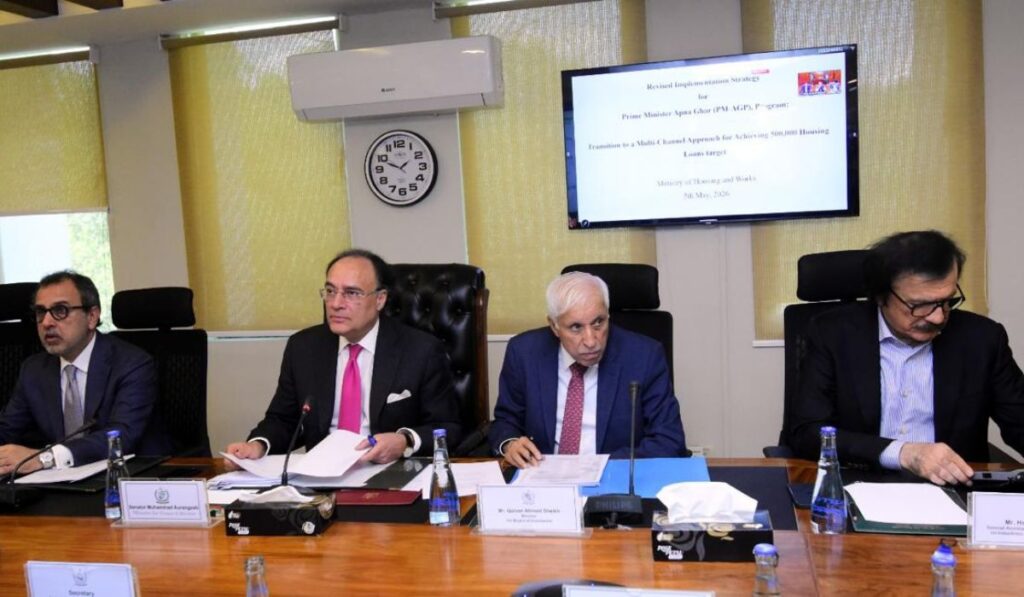
The meeting, chaired by Finance Minister Senator Muhammad Aurangzeb at the Finance Division in Islamabad, endorsed a revised framework for the Prime Minister’s Apna Ghar Programme to expand housing finance outreach. The updated model incorporates institutional financing, public-private partnerships, participation of overseas Pakistanis, and inclusion of non-banking financial institutions to accelerate housing targets.
The ECC also approved multiple technical supplementary grants (TSGs), including Rs100m for the construction of the Faiz Ahmad Faiz Complex in Narowal and Rs350m for operational requirements of Danish School Kuri in Islamabad following the start of academic activities. Another Rs59.6m was sanctioned for expenses related to Independence Day and Marqa-e-Haq celebrations in 2025.
In the industrial and energy sectors, the committee approved the second phase of the Pakistan Accelerated Vehicle Electrification (PAVE) Programme under the National Electric Vehicle Policy 2025–30. The revised framework aims to improve efficiency, expand access, and strengthen third-party verification mechanisms to encourage electric vehicle adoption.
To support government operations, the ECC approved a Rs2.5bn TSG for the Directorate General Immigration and Passports (IMPASS) to meet expenditures including salaries, consumables, and outstanding liabilities during fiscal year 2025-26.
The committee also cleared a proposal from the Petroleum Division to supply gas to National Steel Complex Limited (NSCL) to facilitate revival of its operations. Gas will be provided for industrial processes and captive power generation, subject to availability and applicable tariffs. The ECC directed authorities to adopt a uniform policy framework for such approvals.
In the power sector, the ECC approved a uniform application of Use of System Charges (UoSC) across all distribution companies, including K-Electric, to ensure a level playing field under the Competitive Trading Bilateral Contract Market (CTBCM). Officials said the move is aimed at promoting competition and transparency in electricity trading.
The meeting was attended by key federal ministers and senior officials, reflecting the government’s focus on coordinated economic reforms. The decisions come as Pakistan continues efforts to stabilise its economy, improve infrastructure financing, and align policies with ongoing structural reforms under international commitments.