 BeNewz
Related Articles

Aftab Maken
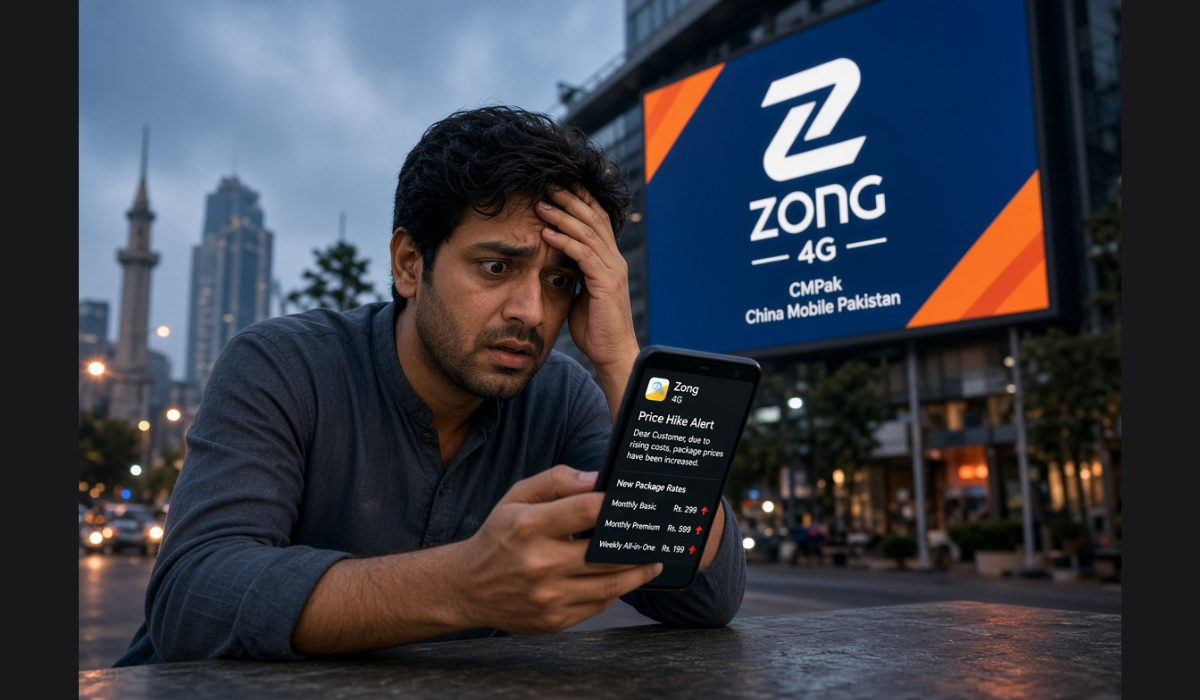
ISLAMABAD: Pakistani telecom subscribers are absorbing a fresh round of pain in their monthly budgets as data shows that Zong’s Top 15 hybrid bundles recorded an average annual tariff increase of 14.4% during Fiscal Year 2026, with several low-cost weekly packages — the ones relied on most by budget-conscious and low-income users — rising by as much as 29% in a single year. Not a single bundle among the Top 15 saw its price reduced over the fiscal year, leaving consumers with no direction to turn but up.
Background: Why the Zong Bundle Price Hike Is Hurting Ordinary Users
A review of pricing data from June 2025 to June 2026 shows that every one of the 15 flagship hybrid bundles either increased or, at best, stagnated — none went down. The steepest Zong bundle price hike was recorded in the “Haftawar Load Offer,” a 7-day package that jumped from Rs. 450 to Rs. 580, a 29% increase, followed closely by the “Weekly All-in-One” (+23%) and “Weekly Pro Plus” (+23%).
What makes this hike particularly punishing for ordinary consumers is that it is concentrated in short-validity weekly bundles rather than monthly ones. Since weekly packages must be recharged roughly four times as often as monthly bundles, even a “moderate” percentage increase compounds far more heavily over a year for subscribers who depend on 7-day plans because they cannot afford to commit larger sums upfront for a full month.
Even bundles introduced only partway through the year were not spared. The “Monthly WhatsApp 100” package, launched around March 2026 at Rs. 150, was already up 20% to Rs. 180 within a single quarter — meaning newly launched, ostensibly “budget-friendly” options are being repriced upward before consumers even get used to them. Likewise, “Weekly Super” rose 22% and “Weekly All-In-One Mini” rose 9% within months of their own launch.
The burden was not limited to premium users either. Even the smallest, cheapest option on the list — the “3 Days Bundle,” aimed squarely at low-income and low-usage subscribers — rose 8%, from Rs. 120 to Rs. 130. Meanwhile, the top-tier “Monthly Supreme Plus” bundle absorbed the largest rupee-value hike of all, up Rs. 300 (19%) to Rs. 1,900, showing that no tier of user, from the most basic to the most premium, was shielded from higher costs.
Notably, the few bundles that officially show a “0% annual increase” — Monthly Social Plus, Monthly WhatsApp Prime, and WhatsApp Plus Offer — do not tell the full story. Monthly Social Plus, for instance, was quietly cut from Rs. 700 to Rs. 500 in September 2025, only to be raised straight back to Rs. 700 by March 2026. For consumers, this pattern looks less like price stability and more like a temporary promotional dip that was reversed once attention moved on.
Government data shows that Pakistan’s headline consumer inflation eased to the mid-single digits for large stretches of FY2026 before climbing again later in the year, but even during the calmer months, a 14.4% average tariff increase across Zong’s flagship bundles ran well ahead of the general cost-of-living trend that most households were tracking — meaning telecom costs quietly outpaced the inflation numbers dominating the headlines.
Social Media Reaction
Pakistani social media users have not stayed quiet about the recurring Zong bundle price hike. On X (formerly Twitter) and Facebook telecom-complaint groups, subscribers frequently vent about weekly bundle prices rising “every few months,” with many saying they now get less data and minutes for the same or higher recharge amount compared to a year ago.
A recurring complaint is that low-cost weekly bundles — the ones daily-wage earners and students rely on — are being hiked more aggressively than premium monthly plans, deepening the sense that the most price-sensitive customers are bearing the heaviest cost. Several users have also criticized the brief price cuts on select bundles as a marketing gimmick, pointing out that prices were restored to previous or higher levels within a few months.
Expert Analysis
Telecom sector analysts note that repeated tariff increases on short-validity bundles disproportionately affect Pakistan’s low-income and prepaid-heavy user base, who make up the bulk of the country’s mobile subscribers and typically cannot afford longer-validity monthly commitments.
Analysts also point out that because all listed prices are inclusive of Withholding Tax (WHT) and General Sales Tax (GST), consumers have no visibility into how much of each increase reflects government taxation versus a deliberate commercial price hike by the operator — a lack of transparency that makes it difficult for the public to hold either the company or regulators accountable.
Consumer rights commentators argue that the pattern of hiking newly launched “affordable” bundles within months of their debut undermines the very purpose such bundles are marketed for: giving low-income users an accessible entry point.
FY2026 Snapshot: Zong Top 15 Bundles
| Bundle | Validity | Jun 2025 | Jun 2026 | Annual Increase |
|---|---|---|---|---|
| Haftawar Load Offer | 7 Days | Rs. 450 | Rs. 580 | +29% |
| Weekly Pro Plus | 7 Days | Rs. 570 | Rs. 700 | +23% |
| Weekly All-in-One | 7 Days | Rs. 300 | Rs. 370 | +23% |
| Weekly Digital Max | 7 Days | Rs. 600 | Rs. 730 | +22% |
| Weekly Super* | 7 Days | Rs. 450 (Dec’25) | Rs. 550 | +22% |
| Weekly Premium | 7 Days | Rs. 500 | Rs. 600 | +20% |
| Monthly WhatsApp 100* | 30 Days | Rs. 150 (Mar’26) | Rs. 180 | +20% |
| Monthly Supreme Plus | 30 Days | Rs. 1600 | Rs. 1900 | +19% |
| Monthly WhatssApp | 30 Days | Rs. 220 | Rs. 250 | +14% |
| Weekly All-In-One Mini* | 7 Days | Rs. 220 (Mar’26) | Rs. 240 | +9% |
| 3 Days Bundle | 3 Days | Rs. 120 | Rs. 130 | +8% |
| Monthly Social Max | 30 Days | Rs. 750 | Rs. 800 | +7% |
| Monthly Social Plus | 30 Days | Rs. 700 | Rs. 700 | 0%* (dropped to Rs.500 in Sep’25, then restored) |
| Monthly WhatsApp Prime | 30 Days | Rs. 300 | Rs. 300 | 0% |
| WhatsApp Plus Offer | 30 Days | Rs. 400 | Rs. 400 | 0% |