 BeNewz
Related Articles

BeNewz Report
ISLAMABAD: Petroleum Division is preparing a gas sector deregulation roadmap with World Bank technical support. The plan seeks competitive pricing, stronger regulation, private investment, and reduced subsidy distortions.
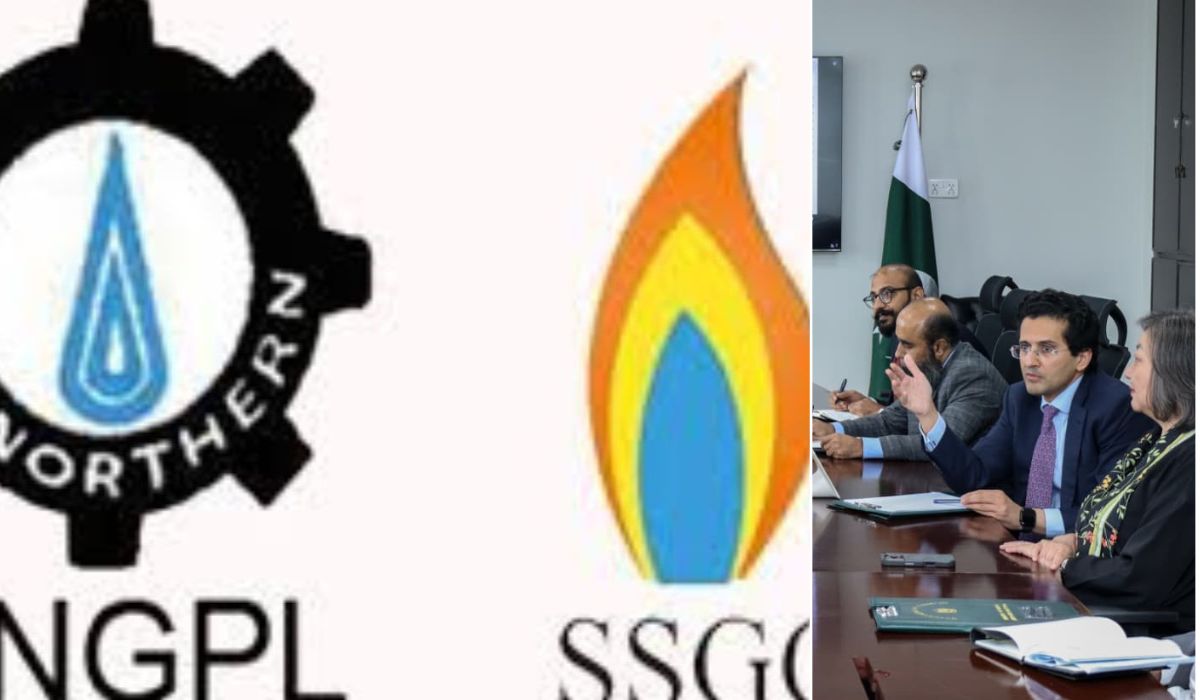
Petroleum Division will finalize a gas sector reform roadmap by August-end. Federal Petroleum Minister Ali Pervaiz Malik chaired the meeting in Islamabad Monday. World Bank Country Director Bolormaa Amgaabazar and her team attended the meeting. Senior officials from SNGPL, SSGCL and OGRA also participated in discussions.
The roadmap aims to shift Pakistan toward a competitive and open gas market. Officials reviewed reforms covering pricing, regulation, subsidies, infrastructure and private sector participation. The Petroleum Division developed the framework with technical assistance from the World Bank.
The proposed reforms would strengthen OGRA’s role as an independent market regulator. OGRA would oversee competition, market monitoring and transparent commercial practices across gas markets. The framework also proposes restructuring and unbundling Pakistan’s two Sui gas companies.
Under the proposal, transmission, distribution and energy businesses could operate separately. The restructuring could create greater opportunities for private companies across the gas value chain. Officials said the changes should also improve efficiency and financial sustainability.
The minister stressed that deregulation requires a strong post-reform regulatory architecture. He said competition must improve efficiency while protecting consumers from market abuse. The proposed system would also seek commercially viable gas markets over time.
The government also plans to redesign the existing gas subsidy structure. Officials want support better targeted toward consumers who genuinely need protection. The reform framework proposes redefining the protected customer category and reducing market distortions.
The longer-term objective is a single market clearing price for gas. Such a system would gradually replace fragmented pricing structures across consumer categories. However, implementation will require regulatory, legal and political decisions before market liberalization.
Pakistan’s gas market already faces significant supply and affordability pressures. According to the Pakistan Economic Survey 2024-25, average gas consumption reached 3,143 MMCFD. RLNG accounted for approximately 798 MMCFD of that average consumption during July-March FY2025.
The same survey showed that power remained the largest gas-consuming sector. Power consumption reached 973 MMCFD during the reviewed period. Domestic consumers used 777 MMCFD, while fertilizer production consumed 764 MMCFD.
These figures underline the competing demands facing Pakistan’s gas system. Gas supplies must balance households, power producers, fertilizer plants and industrial consumers. Greater reliance on imported RLNG has added further pricing and supply considerations.
The government has already taken steps toward broader gas sector reform. In January 2026, officials said gas circular debt flow had been contained. SNGPL reported UFG losses falling from 9% to 5% during reforms. SSGCL reported its UFG losses declining from 17% to 10%.
The government also kept gas prices unchanged for six months earlier this year. That decision provided temporary relief amid continuing affordability concerns. It also highlighted the challenge of balancing consumer protection with cost recovery.
Pakistan’s gas reforms have increasingly focused on reducing structural financial pressures. The IMF said semi-annual gas tariff adjustments aligned with cost recovery continued. It also noted that authorities finalized an audited gas circular debt dataset. The data is being disseminated quarterly to support future debt management.
The World Bank has previously advocated deeper gas market reforms in Pakistan. Its policy recommendations included eliminating cross-subsidies through tariff reforms and improving sector efficiency. It also supported unbundling gas transportation and downstream supply functions.
The latest roadmap builds on that longer reform direction with technical assistance. In December 2025, the World Bank confirmed support for Pakistan’s gas sector reform roadmap. It specifically highlighted potential improvements in Sui company performance and unbundling.
Pakistan has also expanded deregulation efforts across other energy segments. In July 2026, the Petroleum Division moved toward daily petroleum product pricing. Officials said the change would improve transparency and encourage competition.
The gas reforms could therefore reshape Pakistan’s energy market over several years. Greater private participation could improve investment, efficiency and service delivery. However, consumer protection will remain critical during the transition.
The roadmap includes a Gas Market Evolution Plan and an investment roadmap. It also contains a sector financial model and detailed legal analysis. A dedicated OGRA capacity-building programme forms another major component.
The minister directed officials to submit the finalized roadmap to the Prime Minister. Approval would be followed by phased implementation after stakeholder consultations. The government said implementation should ensure a smooth and sustainable transition.
The proposed reforms could affect gas pricing, industrial competitiveness and energy security. They could also influence investment across exploration, trading and intermediary businesses. Their success will depend heavily on credible regulation and transparent market rules.
The World Bank’s broader Pakistan reform agenda also emphasizes private-sector-led growth. Its 2026-35 country partnership framework prioritizes durable private investment and structural reforms. The framework identifies energy reform as part of Pakistan’s broader economic transformation.
For Pakistan, the next phase will test reform implementation and consumer safeguards. Pakistan’s gas deregulation roadmap could determine the sector’s financial sustainability. The government’s final decisions will shape competition, pricing and investment across Pakistan’s gas market.