 BeNewz
Related Articles
–Finance body approves key SOE decisions, defers gas firms’ IFRS exemption
BeNewz Report
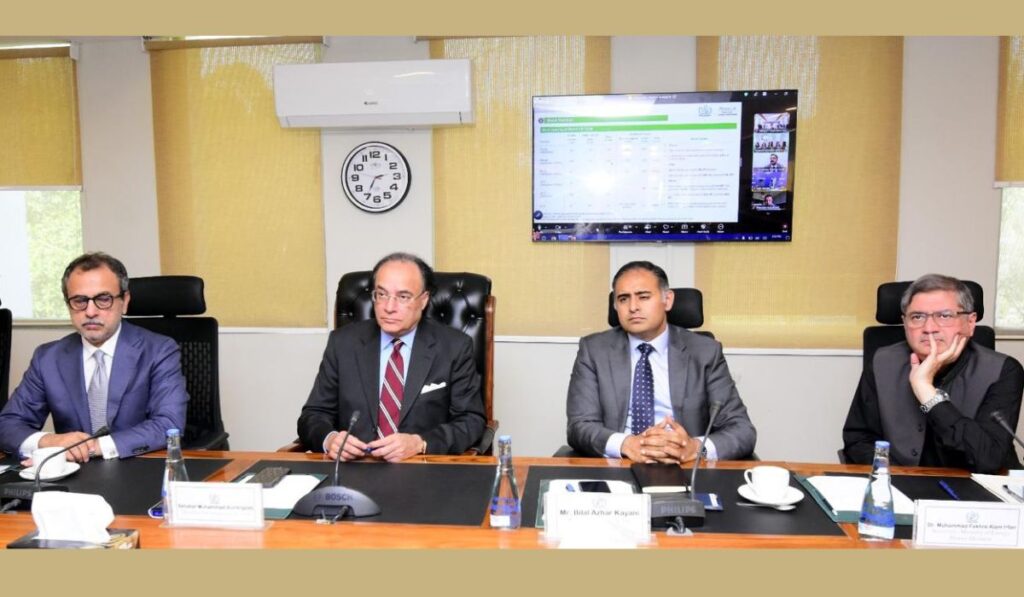
ISLAMABAD: The Cabinet Committee on State-Owned Enterprises (CCoSOEs) on Thursday approved multiple governance changes across key public sector entities during a meeting chaired by Finance Minister Muhammad Aurangzeb in Islamabad.
The meeting reviewed and cleared a summary from the Railways Division for appointing seven members to the board of a special purpose vehicle for the Thar coal rail connectivity project. The project is being executed jointly with the Government of Sindh to improve coal transportation infrastructure and support power generation from Thar reserves.
Pakistan’s Thar coalfield is one of the largest lignite reserves globally, estimated at over 175 billion tonnes, according to official energy data. The government has increasingly relied on Thar coal to reduce dependence on imported fuels and contain the energy import bill, which has been a key driver of external account pressures.
The committee also approved the winding up of Sarmaya-e Pakistan Limited following its redundancy under the evolving governance framework for state-owned enterprises. The move aligns with reforms introduced under the SOEs Act 2023, which aims to streamline oversight and improve efficiency of public sector companies.
Pakistan has over 200 state-owned enterprises, many of which have posted persistent losses. According to Ministry of Finance reports, aggregate SOE losses exceeded Rs 800 billion in recent years, highlighting the urgency of governance reforms and restructuring initiatives.
A proposal by the Petroleum Division seeking exemption from international accounting standards for major gas utilities, including Sui Northern Gas Pipelines Limited and Sui Southern Gas Company Limited, was deferred. The committee directed further review by a panel comprising officials from the Law Division, Securities and Exchange Commission of Pakistan, Petroleum Division, and Privatization Division.
The issue relates to the applicability of IFRS-9 and IFRS-14 standards, which govern financial instruments and regulatory deferral accounts. Analysts say full compliance could significantly impact the financial reporting and balance sheets of energy sector SOEs, many of which carry large receivables linked to circular debt.
Pakistan’s gas sector faces mounting financial stress, with circular debt in the gas chain exceeding Rs 2.9 trillion, according to recent official estimates. Weak recoveries, pricing distortions, and delayed tariff adjustments have compounded the problem over the past decade.
The committee also approved the reconstitution of the board of Pakistan LNG Limited, following recommendations by the Board Nomination Committee and approval by the prime minister. Pakistan LNG plays a central role in managing imported liquefied natural gas supplies, which account for a significant share of the country’s energy mix.
Separately, a summary regarding the appointment of independent directors on the board of Pakistan Petroleum Limited was discussed. The committee noted that the SOEs Act 2023 was not applicable in this case and referred the matter to the federal cabinet for final consideration.
In the power sector, the committee approved the reconstitution of the boards of Hyderabad Electric Supply Company and Sukkur Electric Power Company. Both distribution companies operate in Sindh and have faced operational and financial challenges, including high transmission losses and recovery issues.
Pakistan’s power distribution sector continues to struggle with inefficiencies, with aggregate losses and low bill recoveries contributing significantly to circular debt. The government has prioritized board reforms and professional management to improve performance of distribution companies.
The committee also approved the appointment of an independent director to the board of Trading Corporation of Pakistan, following completion of the prescribed selection and vetting process. TCP is responsible for managing strategic imports and exports of essential commodities.
In maritime affairs, the committee endorsed the appointment of Yousaf Khan as member and trustee of the board of Karachi Port Trust. The port handles the majority of Pakistan’s seaborne trade and remains critical for logistics and supply chain operations.
The meeting was attended by Maritime Affairs Minister Muhammad Junaid Anwar Chaudhry and senior officials from relevant ministries and regulatory bodies.
Pakistan’s SOE reform agenda has gained momentum under ongoing commitments with the International Monetary Fund. The government is working to reduce fiscal risks, improve transparency, and enhance corporate governance across public sector entities.
Analysts say sustained reforms, including professional board appointments and stricter financial oversight, are essential to reducing losses and improving service delivery. The decisions taken by CCoSOEs are part of broader efforts led by the Finance Division to restructure and strengthen Pakistan’s state-owned enterprise sector.