 BeNewz
Related Articles

BeNewz Report
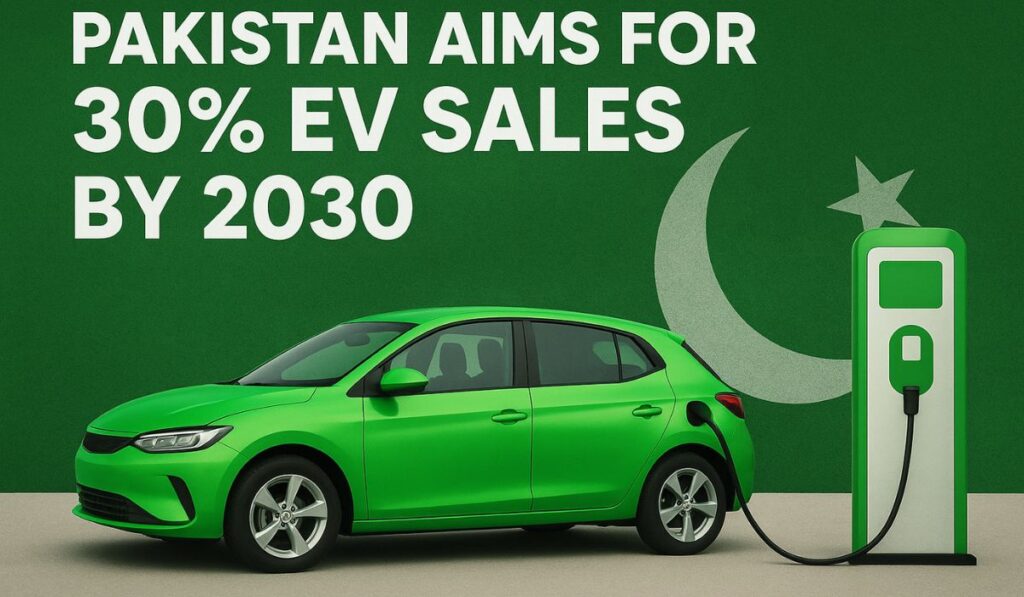
ISLAMABAD: The government has set ambitious goals under the New Energy Vehicle Policy 2025-30, targeting a 30 percent increase in electric vehicle (EV) sales by 2030 to promote environmentally friendly transport.
As part of the policy, three to four charging stations will be established across the country, with funding gaps covered through budget allocations and special levies. Officials said the government will introduce a subsidy scheme worth Rs122 billion to boost EV adoption, with Rs9 billion earmarked in the current fiscal year’s budget.
Funding will be raised through a levy of 1 to 3 percent on conventional petrol and diesel vehicles under the New Energy Vehicles Adoption Levy Act, enforced via the Finance Bill 2025. Over the next five years, 116,000 electric motorcycles, 3,170 electric rickshaws, and electric loaders will be introduced to support both personal and commercial transport needs.
The policy prioritizes EVs over petrol and diesel vehicles, aiming to reduce Pakistan’s oil import bill while improving environmental quality. It also emphasizes compliance with safety, quality, and environmental standards to ensure consumer protection and long-term sustainability.
According to the Ministry of Finance, the initiative will help Pakistan meet its climate commitments under the Paris Agreement. Implementation will be carried out with provincial cooperation, supported by a comprehensive framework to accelerate EV adoption nationwide. The policy is also expected to make efficient use of surplus electricity resources that are currently underutilized.
Experts note that this move aligns Pakistan with global trends. China is pushing to ensure that most of its cars are electric or hybrid by 2035, while the European Union has set strict timelines to phase out fossil-fuel vehicles. Pakistan’s first EV policy was introduced in 2019 but faced slow implementation due to infrastructure gaps and industry resistance. The new policy seeks to address those shortcomings with stronger financial incentives and regulatory backing.
Officials maintain that the strategy will not only improve air quality but also stimulate local industry and attract investment opportunities in the EV sector. However, critics warn that unless the government ensures rapid rollout of charging infrastructure, technology transfer, and domestic manufacturing capacity, the policy risks remaining limited to paperwork.
Despite these concerns, policymakers are optimistic that the New Energy Vehicle Policy 2025-30 will simultaneously boost Pakistan’s economy, reduce dependence on imported fuels, and strengthen its role in combating climate change.