 BeNewz
Related Articles


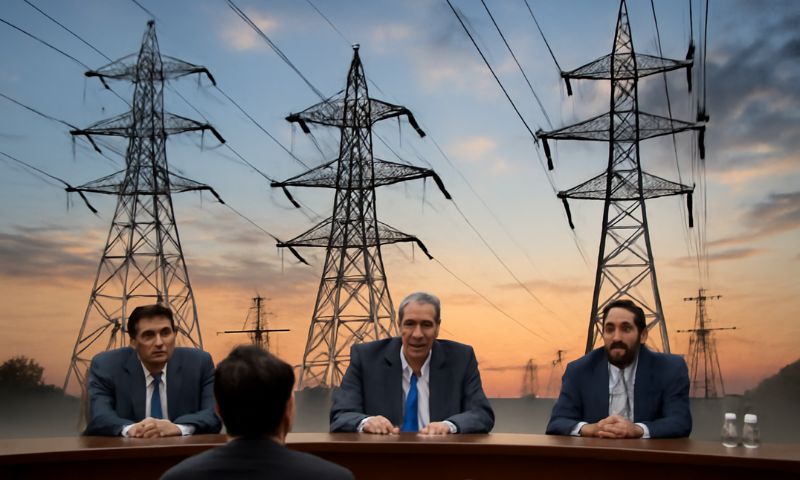
–NEPRA will review a Rs0.2660 per kilowatt-hour fuel charge adjustment request, affecting electricity bills nationwide and reflecting March 2026 generation costs for consumers and industries across Pakistan
BeNewz Report
ISLAMABAD: The National Electric Power Regulatory Authority, known as NEPRA, will hold a public hearing on April 28, 2026, in Islamabad to examine the Fuel Charges Adjustment request submitted by the Central Power Purchasing Agency Guarantee Limited for March 2026.
The proposed adjustment of Rs 0.2660 per kilowatt-hour could increase electricity bills for millions of consumers across Ex-WAPDA distribution companies and potentially K-Electric users under uniform tariff policy guidelines. The hearing will take place at NEPRA Tower with online participation enabled for wider public access and transparency in the regulatory process.
NEPRA is Pakistan’s independent electricity regulator established under the NEPRA Act 1997, responsible for licensing power generation, transmission, and distribution companies. It also determines tariffs, monitors sector efficiency, and ensures consumer protection through monthly and quarterly adjustments like the Fuel Charges Adjustment mechanism. The FCA system allows recovery of fuel cost differences when actual generation costs diverge from baseline tariff assumptions. According to NEPRA’s regulatory framework documentation available at Nepra, the authority reviews cost variations submitted by CPPA-G before allowing pass-through charges to consumers.
The Central Power Purchasing Agency Guarantee Limited acts as the market operator and data aggregator for the national grid. It collects generation costs from all power plants and submits monthly fuel cost adjustment requests to NEPRA. For March 2026, CPPA-G reported total generation of 8,939 gigawatt-hours, with net delivery to distribution companies at 8,664 gigawatt-hours after accounting for losses and power station transactions. Transmission losses were recorded at 2.77 percent, highlighting ongoing efficiency challenges in the national grid system.
Pakistan’s power generation mix continues to show heavy reliance on thermal fuels despite growing renewable capacity. Hydropower contributed 2,105 gigawatt-hours, representing 23.55 percent of total generation and remaining the lowest-cost source. Nuclear power added 1,962 gigawatt-hours, supplying stable baseload electricity at relatively low fuel costs. According to World Bank energy sector data for Pakistan at World Bank hydropower and nuclear together provide a significant portion of low-carbon electricity, but expansion remains constrained by infrastructure and financing limits.
Thermal generation still dominates the system, with coal contributing 2,732 gigawatt-hours or roughly 30.59 percent of output. Imported and local coal costs ranged between Rs11.1400 and Rs15.2324 per kilowatt-hour, reflecting fuel price volatility and import dependence. RLNG-based generation added 504 gigawatt-hours at Rs24.5559 per kilowatt-hour, while residual fuel oil remained the most expensive at Rs36.1606 per kilowatt-hour. These cost-heavy sources continue to push up the average fuel basket despite cleaner additions.
Wind and solar energy together contributed 415 gigawatt-hours, representing just under five percent of total generation. According to International Energy Agency country outlook data at IEA renewable penetration in Pakistan is gradually increasing through net metering policies and new wind corridors in Sindh. However, grid integration issues, transmission bottlenecks, and financing gaps continue to slow large-scale renewable adoption.
Bagasse and other biomass sources added 77 gigawatt-hours, showing incremental diversification in agricultural energy use. Electricity imports from Iran accounted for 39 gigawatt-hours at higher marginal costs. The overall weighted fuel cost for March generation stood at approximately Rs8.0783 per kilowatt-hour before adjustments, reflecting a blended impact of hydel, nuclear, and thermal inputs.
The FCA mechanism translates these generation costs into consumer tariffs on a monthly basis. After adjustments, CPPA-G has requested Rs71,578 million in fuel cost recovery, leading to the proposed Rs0.2660 per kilowatt-hour increase. For a household consuming 200 units monthly, the impact is estimated at around Rs53 in additional billing, adding pressure on already stretched household budgets amid inflationary conditions tracked by the State Bank of Pakistan at SBP.
NEPRA’s role extends beyond tariff approvals into long-term energy planning and market reforms. The regulator is increasingly involved in facilitating competitive electricity markets and encouraging private investment in renewable energy. Policy documents indicate Pakistan aims to expand renewable share significantly by 2030, although progress remains uneven due to circular debt pressures and fuel import dependence.
Historically, Pakistan’s energy mix has shifted from hydel dominance in the mid-twentieth century toward thermal-heavy generation after the 1990s. According to energy transition assessments by international development partners, including the Asian Development Bank at ADB the sector has faced recurring inefficiencies, delayed capacity payments, and rising capacity costs.
Consumer impact remains central to NEPRA’s monthly hearings, where stakeholders can challenge assumptions and demand transparency from CPPA-G submissions. The authority is required under law to balance cost recovery with affordability considerations, although global fuel volatility limits regulatory flexibility.
The broader outlook for Pakistan’s electricity sector remains tied to renewable expansion, grid modernization, and reduced reliance on imported fuels. Policymakers continue to emphasize solar and wind growth alongside hydro upgrades to stabilize long-term tariffs and reduce monthly FCA volatility affecting consumers and businesses.