 BeNewz
Related Articles

BeNewz Report
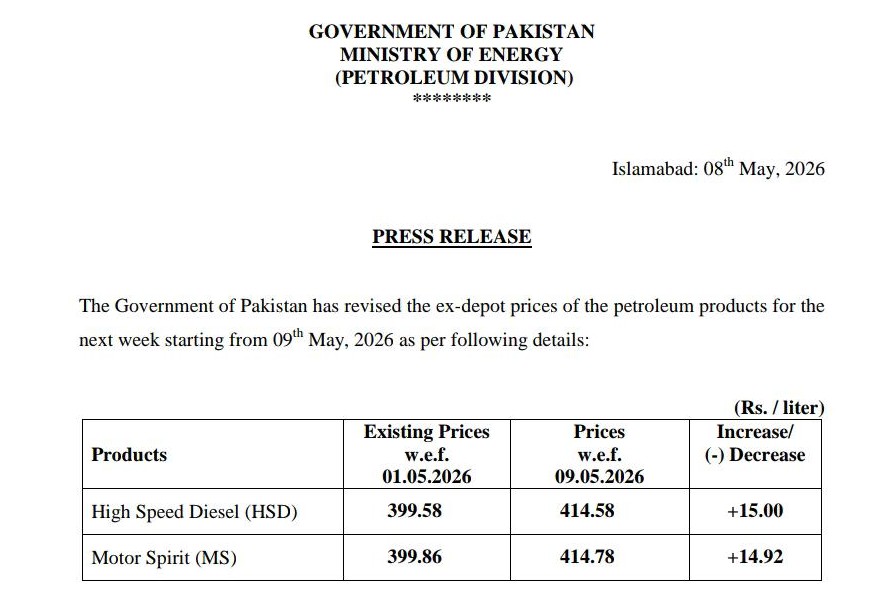
ISLAMABAD: The federal government on Friday increased the prices of petrol and high-speed diesel (HSD) by around Rs15 per litre, pushing fuel rates above Rs 414 per litre amid continued volatility in global oil markets.
According to a notification issued by the Petroleum Division, the price of petrol has been increased by Rs 14.92 per litre to Rs 414.78, while high-speed diesel has become costlier by Rs 15 per litre, taking its new price to Rs 414.58 per litre. The revised rates came into effect from May 9.
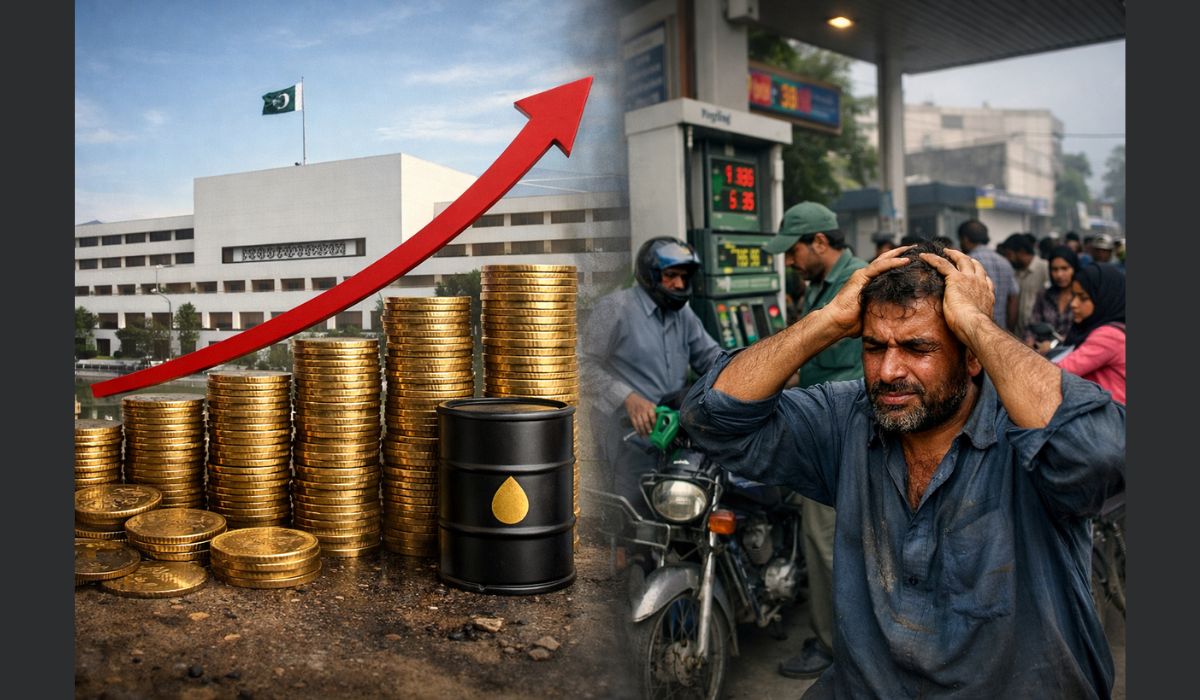
Petrol is widely used in motorcycles, rickshaws, and private vehicles, making it a key expense item for middle and lower-middle-income households. High-speed diesel is primarily consumed by heavy transport vehicles, agricultural machinery, and industrial generators, meaning its price directly affects freight charges and food inflation.
The latest increase comes as the government continues weekly revisions in petroleum prices following the disruption in international energy markets caused by the US-Israeli conflict with Iran and the resulting closure of the Strait of Hormuz earlier this year. The waterway normally handles nearly one-fifth of the world’s oil and gas trade.
Since the conflict began on February 28, Pakistan has witnessed repeated adjustments in fuel prices. On March 6, the government initially raised petrol and diesel prices by Rs 55 per litre and announced austerity measures to manage rising import costs and pressure on foreign exchange reserves.
Prime Minister Shehbaz Sharif later claimed on multiple occasions that he had rejected summaries recommending further fuel price hikes despite increasing global crude oil prices. However, on April 2, Petroleum Minister Ali Pervaiz Malik and Finance Minister Muhammad Aurangzeb announced a major increase in fuel prices, citing extraordinary international market conditions and fiscal pressures.
At that time, petrol prices were raised by 43 percent while diesel prices increased by 55 percent. The government also introduced a targeted fuel subsidy programme aimed at protecting vulnerable segments of society from the impact of rising transport and energy costs.
A day later, Prime Minister Shehbaz Sharif reduced the petroleum levy by Rs 80 per litre, bringing petrol prices down to Rs 378 per litre. On April 10, the government further reduced diesel prices by Rs135 per litre and petrol by Rs12 per litre in an attempt to ease inflationary pressure.
Despite those reductions, fuel prices have resumed an upward trend in recent weeks. Last week, petrol prices were increased by Rs 6.51 per litre while diesel rates went up by Rs19.39 per litre.
Economists warn that continued increases in fuel prices could further accelerate inflation, raise transportation and production costs, and add pressure on consumers already struggling with high electricity and food prices. Pakistan relies heavily on imported petroleum products, making domestic fuel prices highly sensitive to fluctuations in global crude oil markets and currency exchange rates.