 BeNewz
Related Articles


–Govt increases petrol and diesel prices for one week as global oil markets react to Strait of Hormuz disruptions
BeNewz Report
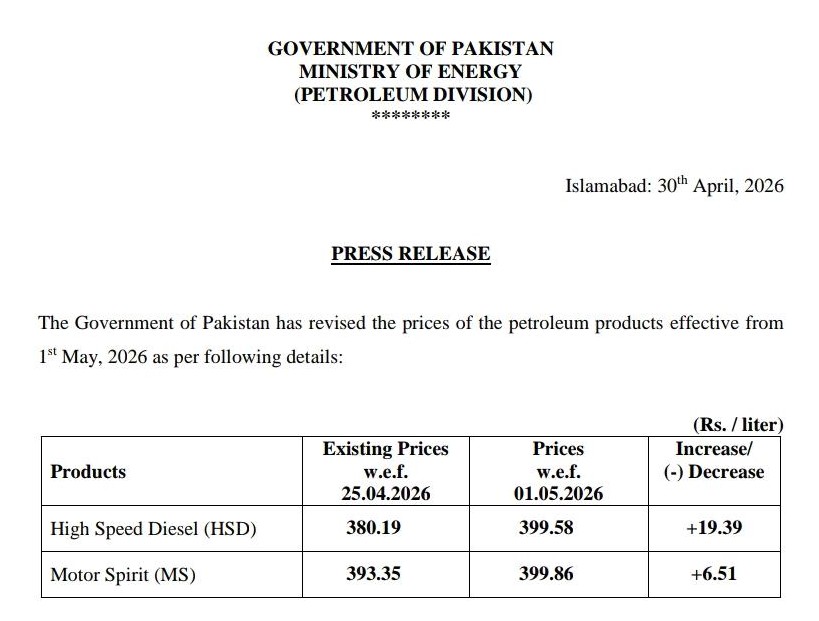
ISLAMABAD: The government on Thursday raised petroleum product prices, increasing high-speed diesel by Rs19.39 per litre and petrol by Rs 6.51 per litre for a one-week period amid rising global oil prices linked to tensions in the Strait of Hormuz.
According to a notification issued by the Petroleum Division, the new price of high-speed diesel stands at Rs 399.58 per litre, up from Rs 380.19, while petrol is now priced at Rs 399.86 per litre compared to the previous Rs 393.35. The adjustment reflects pressure from international oil markets following supply concerns in the Gulf region.
The increase in diesel prices is expected to have a broader economic impact, particularly on the agriculture and transport sectors. High-speed diesel is widely used in farm machinery and goods transportation, and the ongoing sowing season could see higher input costs for farmers. Analysts warn that rising fuel costs may translate into increased food prices, adding to inflationary pressures already faced by consumers.
Petrol, mainly used by motorcycles and private vehicles, also plays a key role as an alternative fuel in regions lacking compressed natural gas infrastructure. Punjab, which faces shortages of indigenous gas supply for CNG stations, is particularly dependent on petrol, further increasing demand pressures.
The price hike comes against the backdrop of escalating geopolitical tensions between Iran and the United States, which have disrupted shipping routes through the Strait of Hormuz. The strategic waterway handles nearly 20 percent of global oil shipments, according to international energy agencies. Any disruption in this corridor typically leads to volatility in global oil prices, affecting import-dependent economies like Pakistan.
Global crude oil prices have surged in recent days as fears of supply shortages intensified. Several Gulf countries have also reported logistical challenges in oil exports, further tightening the market. Pakistan, which relies heavily on imported fuel, remains vulnerable to such external shocks.
Despite the rising prices, the government moved to dispel concerns about fuel shortages. The Petroleum Division rejected reports circulating on social media about a possible shutdown of petrol pumps from May 1. It clarified that the country currently holds sufficient fuel reserves, including 28 days of petrol and 34 days of diesel stocks.
The Oil Companies Advisory Council (OCAC) also dismissed rumours of a nationwide strike by fuel stations, terming them baseless. Similarly, a spokesperson for the Oil and Gas Regulatory Authority (Ogra) denied claims of any planned strike by petroleum dealers, urging the public to rely on official sources for accurate information.
Officials emphasized that all petrol pumps across the country will remain operational and that fuel supply chains are functioning normally. Authorities warned against spreading unverified information, noting that such rumours could create unnecessary panic in the market.
Pakistan’s fuel pricing mechanism is closely linked to international oil trends and exchange rate fluctuations. In recent months, the country has faced persistent pressure from global commodity markets, while domestic economic reforms under international financial programmes have limited the government’s ability to provide subsidies.
The latest increase underscores the challenges faced by policymakers in balancing fiscal discipline with public relief. With global energy markets remaining volatile, further adjustments in fuel prices cannot be ruled out in the coming weeks, particularly if tensions in the Middle East persist.
