 BeNewz
Related Articles


Pakistan’s competition watchdog has flagged major antitrust violations by PTCL, derailing its proposed acquisition of Telenor Pakistan.
Aftab Maken
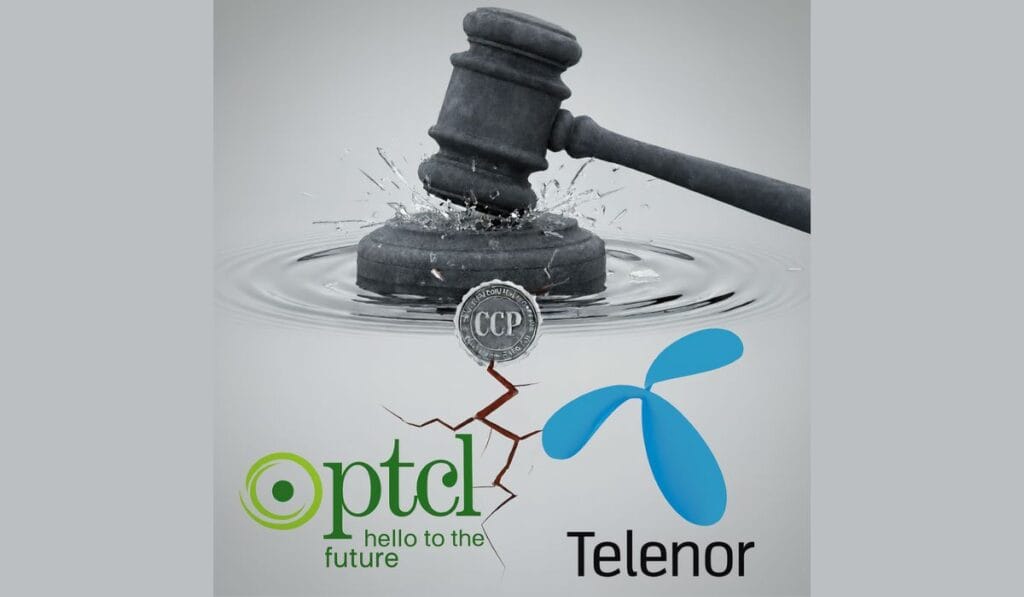
The proposed merger between Pakistan Telecommunication Company Limited (PTCL) and Telenor Pakistan has hit a regulatory wall after the Competition Commission of Pakistan (CCP) presented a comprehensive dossier detailing PTCL’s long-standing anti-competitive practices and regulatory non-compliance. The development, revealed during a Senate Standing Committee on IT and Telecom briefing, raises serious doubts about the future of the deal and the broader implications for market competition in Pakistan’s telecom sector.
At the heart of the matter is PTCL’s failure to submit a $1 billion investment plan required under Section 11(10) of the Competition Act to justify the efficiencies expected from the merger. The Commission accused PTCL of delaying critical disclosures, including investment outlines and financial projections, which are essential for evaluating whether the merger would benefit or harm market competition.
CCP officials further revealed that PTCL had challenged several regulatory mandates from the Pakistan Telecommunication Authority (PTA) in court, securing stay orders that undermine regulatory oversight. For instance, PTCL contested PTA’s Significant Market Power (SMP) determination and its Reference Interconnect Offer (RIO), effectively allowing it to operate without standard tariff checks, which creates an opaque and potentially exploitative pricing regime for rival telecom operators.
Compounding the issue is PTCL’s joint management with Ufone, despite the two holding separate licenses—an LDI license for PTCL and a CMO license for Ufone. The CCP warned that such a setup facilitates cross-subsidization, where losses from one arm (Ufone) can be hidden or offset through revenues from another (PTCL), distorting fair market competition. The regulator explicitly noted PTCL’s non-compliance with the Separate Accounting Requirement, which exists precisely to prevent this type of manipulation.
The Commission also recalled PTCL’s prior record of abusing its dominant position. Notably, in the controversial International Clearing House (ICH) case, PTCL and 13 other operators were fined for collusive behavior. That decision was upheld by the Competition Appellate Tribunal (CAT) on August 11, 2025, and Rs70 million in penalties have since been recovered, signaling PTCL’s entrenched history of market manipulation.
Furthermore, CCP noted that Ufone, PTCL’s mobile arm, has consistently reported financial losses, raising alarms that PTCL could be using anti-competitive means to support an otherwise failing entity artificially. This creates a compelling case for in-depth scrutiny of the merger to ensure that the transaction does not further entrench PTCL’s dominance or allow it to weaponize its upstream infrastructure control against competitors.
The Commission’s fears are not limited to regulatory theory. According to its findings, PTCL’s attempt to acquire Telenor Pakistan would create a highly concentrated mobile market player, internally referred to as “MergeCo.” This entity would possess not only significant infrastructure (PTCL controls over 33% of the country’s long-haul fiber network) but also a customer base that could tip the market away from competition entirely. The CCP noted that such a configuration could raise entry barriers, suppress innovation, and reduce consumer choice.
Adding to the controversy is PTCL’s refusal to disclose its board composition to the Senate Standing Committee. Senator Palwasha Khan, Chairperson of the Committee, expressed serious concerns about the company’s lack of transparency and governance accountability. The secrecy surrounding board members—especially in a state-owned enterprise—was seen as indicative of the broader culture of regulatory evasion and control consolidation that the CCP has highlighted.
CCP’s report also documented PTCL’s legal stonewalling tactics. In February 2025, when asked for additional documentation to justify the merger, PTCL’s legal team bizarrely claimed that the Commission was “functus officio”—or that it no longer held legal authority to review the case. This argument was summarily rejected by the CCP, which viewed it as yet another attempt by PTCL to delay oversight and derail scrutiny.
Even the information PTCL eventually submitted, such as Regulatory Separated Accounts, was deemed unusable by the Commission due to missing links and overly technical formatting. The CCP concluded that these submissions were structured not to clarify but to confuse, undermining any genuine review of the merger’s impacts.
With these findings now formally in the hands of the Senate, political pressure has intensified on both PTCL and the regulators. The CCP must decide whether to approve the merger conditionally, demand enforceable compliance agreements, or reject the transaction altogether under Section 11(11) of the Competition Act. However, given PTCL’s pattern of challenging PTA regulations in courts and its refusal to cooperate transparently, skepticism is mounting about whether any conditions could realistically be enforced.
The proposed acquisition, initially touted as a strategic move to consolidate market share and streamline telecom services in Pakistan, now appears to be a potentially dangerous gambit by an incumbent operator with a proven record of regulatory defiance. Rather than promoting progress, PTCL’s bid to acquire Telenor could stifle innovation, raise prices, and concentrate control over critical telecom infrastructure in fewer hands.
If approved, the merger risks becoming a textbook example of regulatory failure. But if blocked, it may serve as a watershed moment for Pakistan’s telecom regulators and legislators—one that could finally put consumer protection and market fairness above unchecked corporate ambition.
The Competition Commission’s next move could reshape Pakistan’s digital future. With the Senate now watching closely, the decision may also become a litmus test for the country’s broader commitment to transparent and competitive market governance.