 BeNewz

Related Articles



Aftab Maken
ISLAMABAD: The Pakistan Bureau of Statistics (PBS) has released the latest Sensitive Price Indicator (SPI) data, showing a welcome decline of 0.67% for the week ended January 01, 2026, said an official data of PBS here on Friday.
The SPI, a key tool for monitoring short-term inflation, tracks price movements of 51 essential commodities collected from 50 markets across 17 major cities in Pakistan. This weekly decrease offers some respite to consumers amid ongoing efforts to stabilize prices of daily-use items.
The notable weekly drop was primarily driven by sharp reductions in several kitchen staples and fuel products. Onions led the decline with an impressive 11.84% fall, followed closely by potatoes at 10.21% and eggs at 6.25%. Fuel prices also contributed significantly, with petrol dropping 3.89% and diesel 3.20%. Other items that became cheaper included sugar (2.88%), pulse gram (2.32%), pulse masoor (1.80%), LPG (1.31%), gur (1.12%), and pulse mash (1.05%). These reductions are likely to ease the burden on household budgets, particularly for low- and middle-income families who spend a large portion of their income on food and energy.
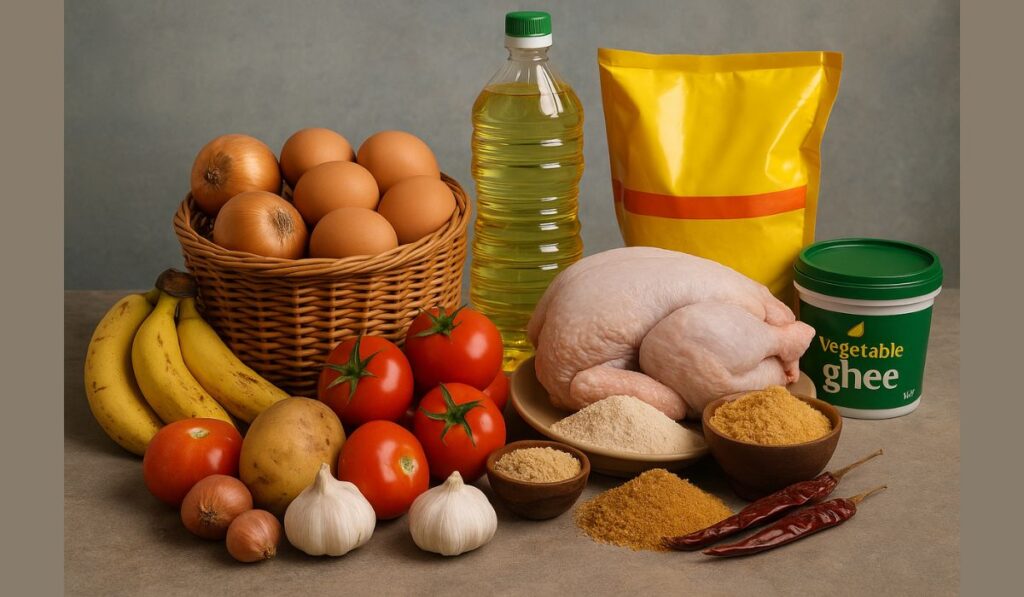
However, not all items followed the downward trend. Prices rose for several commodities, with chicken increasing by 2.37%, wheat flour by 1.88%, and tomatoes by 1.72%. Smaller hikes were seen in bananas (1.13%), garlic (1.11%), rice basmati broken (0.96%), rice IRRI-6/9 (0.75%), vegetable ghee 2.5 kg (0.44%), and firewood (0.01%). Out of the 51 items monitored, 12 (23.53%) recorded price increases, 13 (25.49%) saw decreases, while a significant 26 items (50.98%) remained stable, indicating a mixed but overall softening market.
On a year-on-year basis, the SPI registered a modest rise of 2.41%, reflecting controlled inflation compared to previous periods of volatility. The annual comparison revealed sharp contrasts. Major increases over the past year included gas charges for the first quarter (29.85%), wheat flour (24.98%), beef (12.95%), sugar (11.90%), bananas (10.63%), gur (10.57%), firewood (10.43%), chilies powder (10.31%), powdered milk (9.51%), printed lawn fabric (8.29%), shirting (8.07%), and mutton (7.43%). These upward trends highlight persistent pressure on energy and certain food items.
Conversely, substantial yearly declines provided significant relief in other categories. Tomatoes plummeted by 70.52%, potatoes by 52.25%, onions by 40.54%, and garlic by 37.35%. Pulses also saw major drops, with gram down 31.06%, mash 14.01%, and masoor 8.38%. Other notable decreases included Lipton tea (17.79%), LPG (2.23%), and diesel (0.30%). These steep falls in vegetable and pulse prices are attributed to improved supplies and seasonal factors.
The SPI serves as an essential early-warning mechanism for policymakers, enabling timely interventions to curb inflationary pressures on essential goods. The latest data suggests that recent administrative measures and better crop arrivals may be yielding positive results in containing short-term price spikes. Analysts view the weekly decline as a positive signal for economic stability, especially as the government continues structural reforms to support affordable access to basic commodities for the public.