 BeNewz

Related Articles


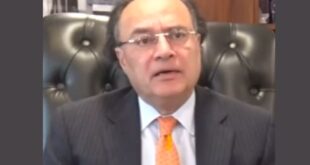

ISLAMABAD: The IT minister, Shaza Fatima, has skipped the high-level conference organized by GSMA, which has irked the telecom industry players.
Unfortunately, the IT minister is not present at the conference, a key GSMA official said while talking to journalists here on Thursday.
The GSMA has noted that, despite having talent, ambition, and the vision of ‘Digital Pakistan’, the country risks falling behind the region if urgent reforms are not implemented in the telecom policy. As a result, investors will walk away, and the people of Pakistan will pay the price.
Talking to the media at the GSMA Digital Nation Summit – 2025, Julian Gorman, Head of Asia Pacific, GSMA, highlighted three key barriers that were creating hurdles in making Pakistan’s ‘digital world’ in the region.
He pointed out barriers that included high taxes, low spectrum, and policy inconsistencies.
Talking to the media after the ‘GSMA Digital Nation Summit – 2025’. Mr. Gorman said that reducing taxation on the telecom sector, despite being in the IMF program, was possible because it had been done by some other countries, including Argentina.
“If urgent reforms are not held, the investors will move away to any country,” he said. “Similarly, freelancers are an important category in Pakistan, but their profession will finish if they do not have more internet and electricity.”
He also added that the demand for the spectrum has increased – “We recommend the government reduce this spectrum usage and availability gap.”
Mr Gorman also expressed the concern that the digitalisation speed in Pakistan was slow.
“We are getting to a critical point, the AI and other technologies are growing all around the world at a very fast pace,” he said. The head of GSMA, Asia Pacific, also noted that Pakistan should fast-track the satellite-based internet too, as it was beneficial for the overall economy, the IT sector and the social life of the country.
While stressing higher usage of higher internet, the GSMA has highlighted the importance of ‘digital trust’.
“From personal identity and details of money to important information, digital trust was essential; the system has to provide digital safety to the consumers,” Mr Gorman added.
During the summit, the GSMA publication ‘Unlocking Pakistan’s Digital Potential: Reform, Trust and Opportunity ‘ was also launched.
The report also highlighted that Pakistan was falling behind in 5G rollout across the Asia Pacific region, as the regional countries were accelerating their 5G rollout to power smart cities, digital industries, and inclusive growth.
The report has highlighted that Pakistan’s 5G rollout has remained stalled – it was not just about faster speeds; 5G was about enabling real-time services, industrial automation, and digital inclusion.
The report also highlighted that the smartphones had a combined customs duties and taxes of up to 40 percent, while mobile broadband services face multiple layers of taxation.
The GSMA report emphasised the importance of aligning fiscal policy with Pakistan’s digital-development goals.

Addressing the ‘GSMA Digital Nation Summit’, Bilal Azhar, Minister of State for Finance, here on Thursday, highlighted the achievements and the efforts by the government towards achieving the Digital Pakistan initiative.
He highlighted that digitalisation of the economy includes reforms in the FBR with the usage of AI, enhancing the cashless economy, and increasing digital public infrastructure.
“We have set the target to enforce digitalisation of all government payments within 18 months, and this includes not just issuing cheques but implementing an end-to-end cashless system,” he added.
He said that the answer to the problems faced by the masses was only digitally-driven solutions.
The CEO of Telenor Pakistan, Khurrum Ashfaq, highlighted that many complaints faced by the telecom sector had nothing to do with the IT and telecom industry, like load shedding, but it was impacting the telecom sector.
Incidentally, even the Chairman Pakistan Telecommunication Authority (PTA) Maj. Gen. (retd) Hafeez Ur Rehman acknowledged that the road to the ‘Digital Pakistan’ initiative was zig-zag and difficult. He referred to high charges by different government departments for laying fibre optic cable and said that the government has recently decided that all such ‘Right of Way’ charges will be abolished.
While Chairman Pakistan Software Houses Association (P@SHA) Sajjad Syed expressed a gloomy picture of the IT sector in the country. He added that a whole-of-nation approach was needed to ensure the growth of the IT sector. Chairman P@SHA also expressed concerns that the growth rate of Pakistan’s IT exports was on the decline – it was alarming.