 BeNewz

Related Articles


Staff Report
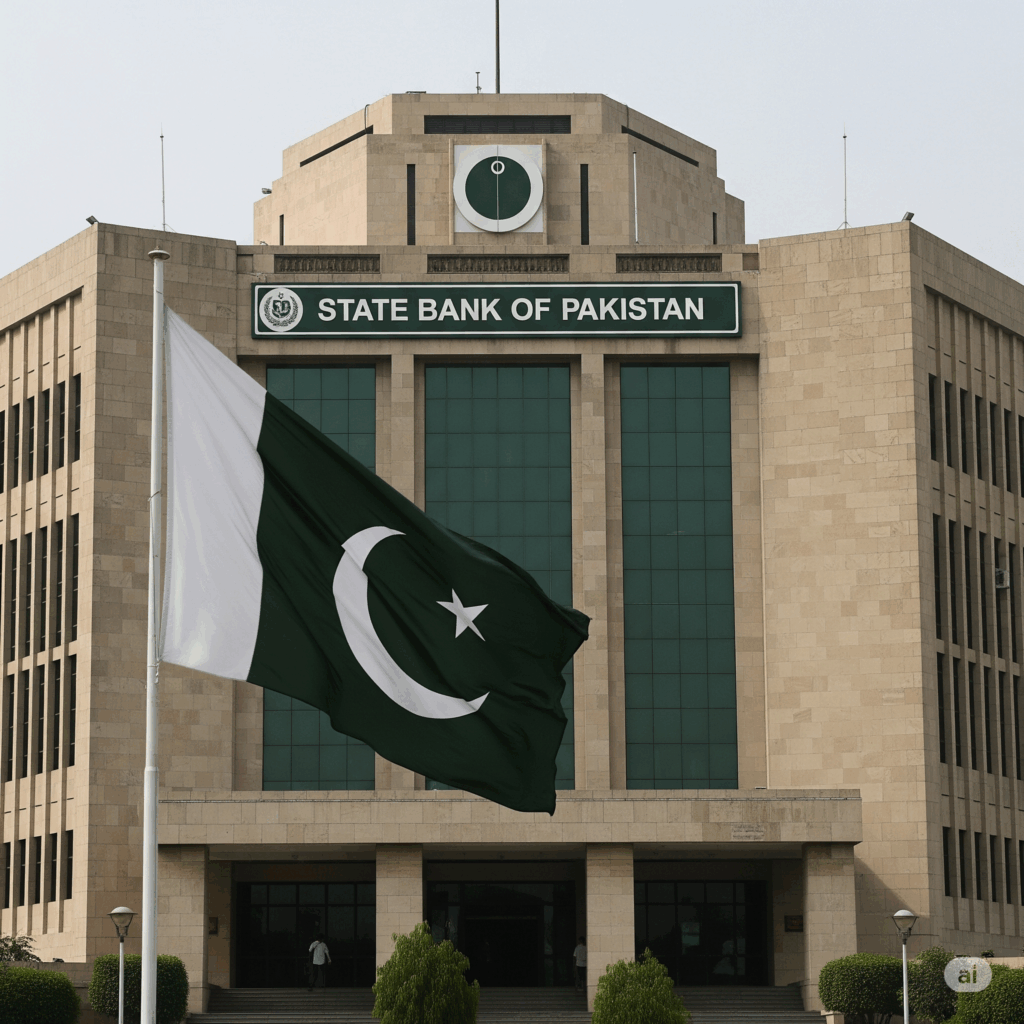
KARACHI: The State Bank of Pakistan (SBP) has opted to maintain its key policy rate at 11 percent, signaling a cautious monetary stance in response to escalating global oil prices, significant geopolitical tensions, and an ongoing domestic economic recovery.
The decision was announced today following a meeting of the Monetary Policy Committee (MPC). This hold comes after a 100-basis point rate cut on May 5, 2025, which brought the rate to its lowest level since early 2022. The central bank has now enacted a total reduction of 1,100 basis points from the cycle peak of 22 percent in June 2023.
Economic Snapshot: Recovery on Track, Agriculture Remains a Concern
The central bank’s statement highlighted a visible economic rebound in the latter half of the current fiscal year, with GDP growth reaching 3.9%. The SBP maintained its real GDP growth projection of 2.7% for the fiscal year 2024-25 and affirmed a target of 4.2% for the upcoming fiscal year 2025-26.
While the industrial and services sectors have demonstrated strong recovery and are expected to drive future growth, the performance of the agriculture sector was subdued, primarily due to a decline in major crop yields.
External Sector: Strong Reserves and a Balanced Current Account
Pakistan’s external position remains stable. The current account for April 2025 was nearly balanced, contributing to a $1.9 billion surplus for the first ten months of the fiscal year. Despite a widening trade deficit, the SBP reported that foreign exchange reserves have remained robust, rising to $11.7 billion.
The MPC expressed confidence that the current monetary policy is appropriate for keeping inflation within the target range of 5–7 percent. It also noted that the inflationary impact of recent budgetary measures is expected to be limited, supporting overall price stability.
Global Risks: Oil Price Surge and Regional Conflict Dominate Decision
The decision to hold the policy rate was heavily influenced by external inflationary risks. A recent surge in geopolitical tensions in the Middle East, particularly between Israel and Iran, has roiled global energy markets. This has led to sharp increases in oil prices, a significant concern for an oil-importing nation like Pakistan.
Market Impact: Brent crude, WTI, and Arab Light have experienced weekly hikes of 10–12%, with some daily surges exceeding 6% following escalations in the conflict.
Analyst Consensus: A Reuters poll of 14 economists confirmed that 11 had anticipated the SBP would hold the rate steady, citing the volatile geopolitical landscape as a key factor overshadowing domestic recovery efforts.
Market Insights: Analysts Support SBP’s Prudent Approach
Leading financial analysts had predicted the SBP would adopt a “wait-and-see” approach.
Topline Securities noted that heightened geopolitical risk, coupled with recent U.S.-China trade developments and potential domestic utility tariff hikes, warranted caution.
Arif Habib Limited, in a recent policy note, stated that despite improvements in domestic inflation and the current account, the SBP was unlikely to pursue further easing until external conditions stabilized.
S&P Global Market Intelligence’s senior economist, Ahmad Mubeen, reinforced this view, warning, “Geopolitical instability could push commodity prices higher, triggering a renewed inflationary trend in Pakistan.”
The MPC has reiterated its commitment to monitoring developments closely and stands ready to adjust its monetary stance to maintain macroeconomic stability and foster sustainable growth.