 BeNewz

Related Articles

BeNewz Report
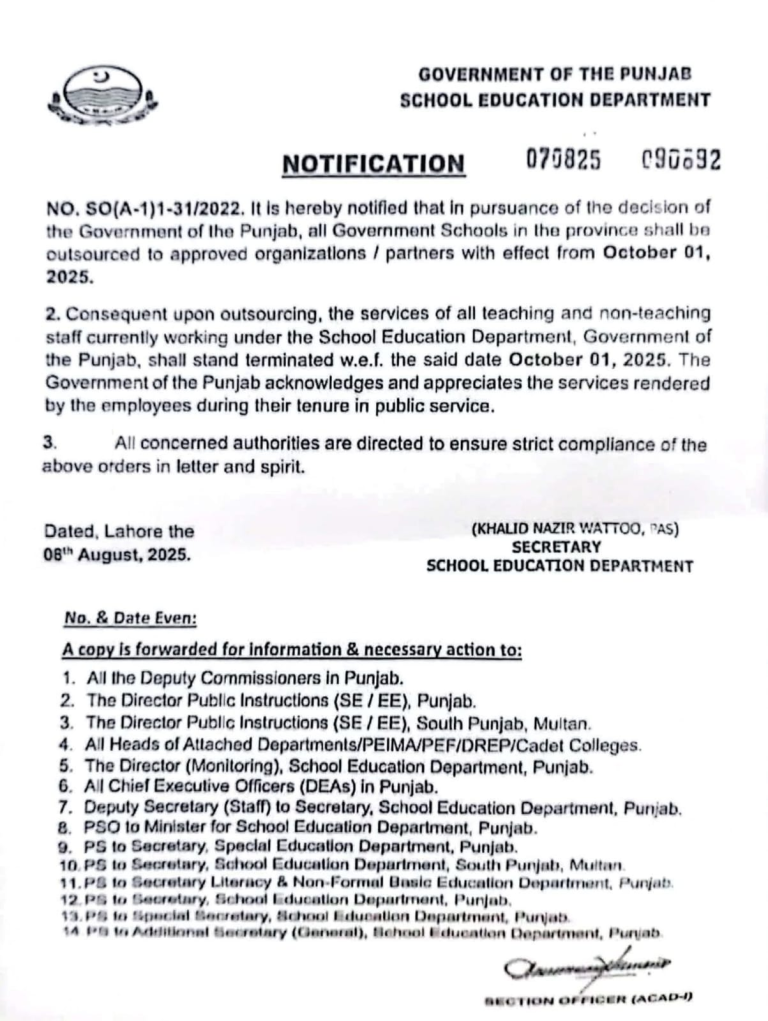
Punjab has announced it will outsource all government schools to partner organizations from October 1, 2025, in a sweeping education sector reform that will also terminate the services of existing staff.
According to an official notification issued by the School Education Department, the restructuring will transfer management of public schools to approved external organizations. The order, signed by Secretary of the School Education Department Khalid Nazir Wattoo, confirms that the services of all teaching and non-teaching employees will formally end on October 1, 2025. The notification noted that the provincial government “acknowledges and appreciates” their contributions to public service, but made clear that the shift in management is part of a comprehensive restructuring plan.
Authorities across Punjab, including deputy commissioners, chief executive officers of district education authorities (DEAs), and directors of public instruction, have been directed to ensure strict compliance with the order. The move marks one of the most dramatic changes in the province’s education policy in recent years, signaling a shift away from government-run schooling toward a model managed by private partners and non-governmental organizations.
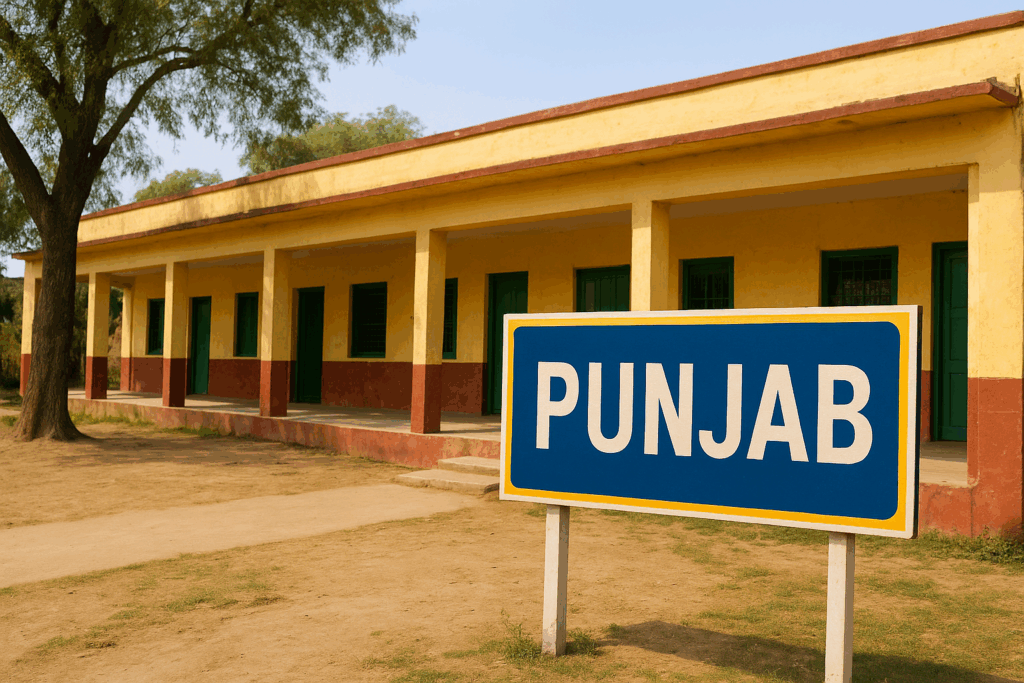
Officials argue that outsourcing government schools is aimed at improving efficiency, accountability, and learning outcomes, citing long-standing concerns about poor infrastructure, absenteeism, and underperformance in public education. However, the decision has also sparked uncertainty for thousands of employees whose services will be terminated. Teacher associations and unions are expected to voice strong opposition to the policy, which effectively dismantles the traditional model of government employment in education.
Punjab’s education sector has faced mounting challenges for decades, with overcrowded classrooms, underfunding, and declining enrollment in government institutions as many families opt for private schools. The outsourcing initiative mirrors earlier experiments in Punjab, such as the handing over of poorly performing schools to education foundations and semi-private management partners, which were promoted as ways to raise performance standards. However, the scale of the October 2025 transition is unprecedented, encompassing the entire provincial school system.
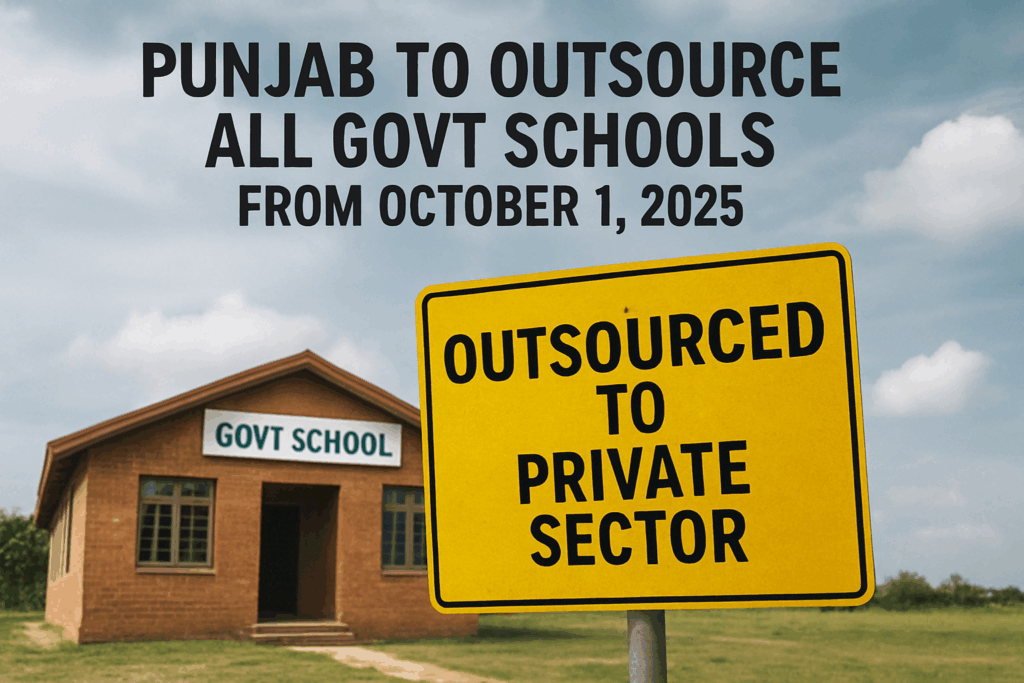
The restructuring comes at a time when the provincial government is under pressure to improve literacy and skill development, while also managing financial constraints. By transferring operations to external organizations, officials expect reduced administrative burden and greater reliance on performance-based contracts. Proponents argue that this model can deliver results where traditional bureaucratic control has failed.
Critics, however, warn that outsourcing could deepen inequality by prioritizing efficiency over inclusivity. Questions remain about job security for teachers, the quality of new management, and the long-term implications for students in rural and underserved areas who rely heavily on government schools.
Historically, efforts to reform Pakistan’s education system have faced mixed results. The federal and provincial governments have previously experimented with public-private partnerships in education, particularly through organizations such as the Punjab Education Foundation. While some successes have been noted, challenges persist in scaling quality improvements across thousands of schools.
As Punjab prepares to implement this major overhaul, stakeholders across the province—including teachers, parents, and civil society—are bracing for far-reaching consequences. With just over a year before the policy takes effect, education experts suggest that the government will need to establish clear frameworks for accountability, transparent partner selection, and strong monitoring systems to ensure that learning outcomes improve rather than deteriorate.
The Punjab government maintains that this restructuring is a step toward modernizing the education system and addressing systemic inefficiencies. Whether it succeeds in improving standards or triggers new controversies will become clearer after October 2025, when all government schools officially shift to outsourced management.