 BeNewz

Related Articles



BeNews Report
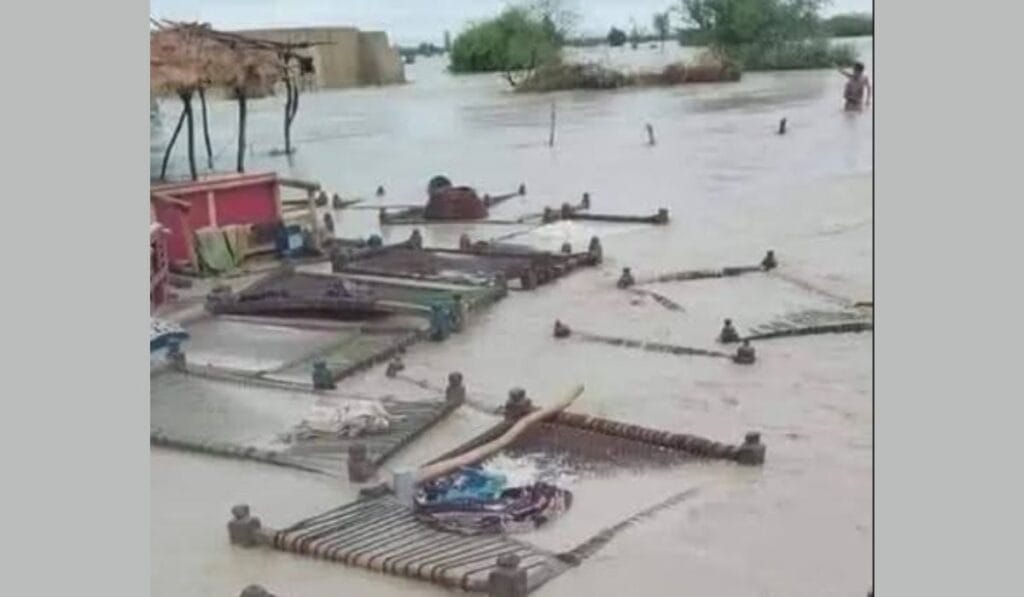
India’s release of 200,000 cusecs of water into the Ravi River, combined with relentless monsoon rains, has triggered Punjab’s worst floods in decades, submerging towns, destroying farmland, and forcing tens of thousands to flee as authorities warn of further devastation.
Floodwaters have pushed the Chenab, Ravi, and Sutlej rivers to exceptionally high levels. At Head Khanki, inflows on the Chenab crossed one million cusecs, surpassing the barrage’s designed capacity of 800,000 cusecs. The National Disaster Management Authority (NDMA) has cautioned that the mounting pressure could compromise critical hydraulic structures, including barrages and headworks, across the province.
The Flood Forecasting Division in Lahore reported extremely high flood levels at Head Marala on the Chenab, Ganda Singh Wala on the Sutlej, and Jassar on the Ravi. Officials confirmed that the Ravi River is experiencing its most severe flooding in 32 years, with more than 45,000 people already displaced. Authorities have warned that low-lying settlements near Shahdara and the M-2 Motorway face immediate inundation threats.
In Gujranwala, emergency crews resorted to a controlled explosion near Qadirabad Headworks to divert waters and reduce pressure on the structure. The Provincial Disaster Management Authority (PDMA) confirmed that inflows at Qadirabad had reached extremely high levels, forcing engineers to implement the drastic measure.
Rescue operations remain at full scale. In Narowal, 50 women and children trapped by floodwaters were saved after clinging to a wall as torrents surged around them. Among those stranded was provincial assembly member Ahmad Iqbal Lahri, who was also evacuated safely with his companions. In Shakargarh, rescue workers employed boats to reach cut-off communities, where appeals for immediate assistance continue.
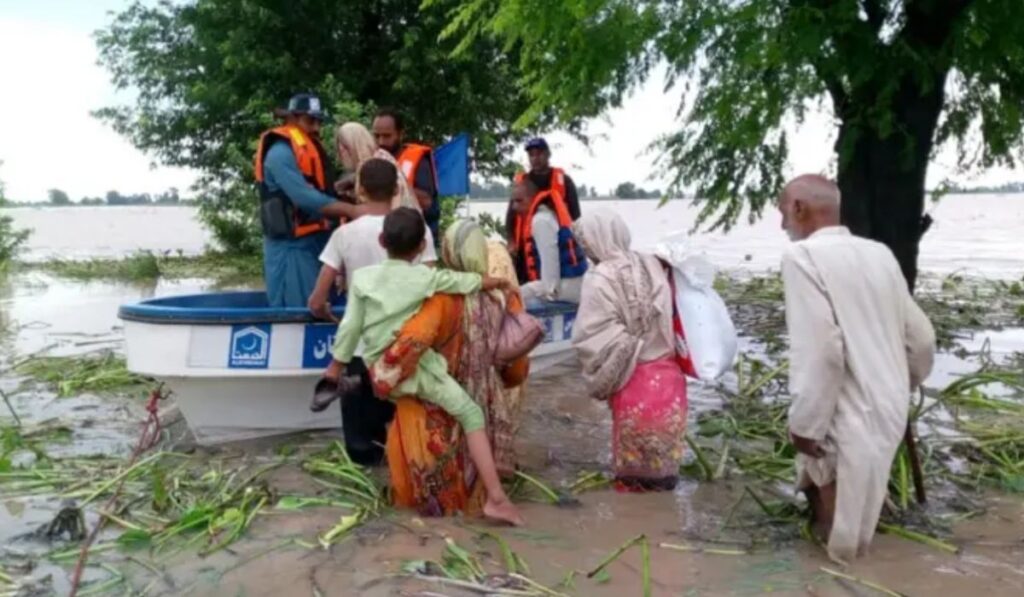
Several areas across Punjab are now submerged. At Head Baloki in Nankana Sahib, medium-level floods are rising rapidly, with inflows of nearly 80,000 cusecs. Villages including Heerey, Jattan Da Warra, Nawan Kot, Khizarabad, and Lalu Ana are underwater, while others, such as Sheikh Da Tube Well, Gujran Da Thatta, and Dera Hakim, have lost road access, leaving residents isolated. Crops of rice, maize, vegetables, and fodder face widespread destruction.
Kartarpur has been completely inundated, with water entering homes, farmland, and even the Sikh community’s sacred Gurdwara Darbar Sahib. At Sukkur Barrage on the Indus River, a low-level flood has been reported, further straining disaster management resources already stretched across Punjab.

Authorities say more than 45,000 people have been directly impacted, though no fatalities have been reported so far. Relief camps have been established to shelter the displaced, while families and livestock are being moved to higher ground. Local communities are working alongside government crews to construct mud embankments and strengthen levees to contain the torrents.
At Marala Barrage, water inflows on the Chenab reached 479,000 cusecs, while Khanki registered 255,800 cusecs. In Chiniot, river levels hit 100,000 cusecs, with forecasts suggesting a 350,000-cusec flood wave could strike within two days. Officials warn that water levels are likely to continue rising across the river system, exacerbating damage in downstream districts.
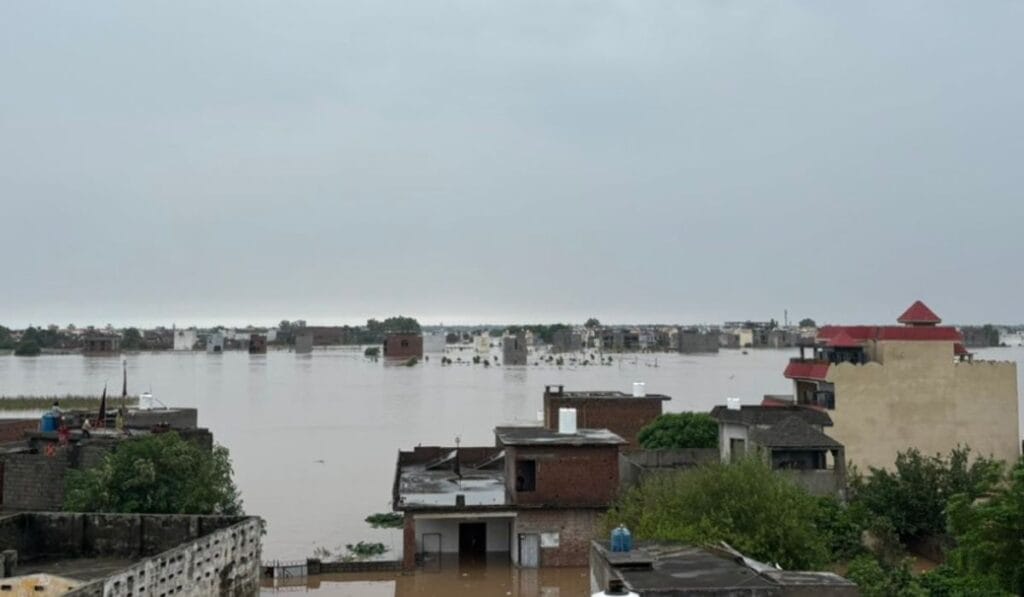
In response to the worsening emergency, the army has been deployed across eight districts—Lahore, Hafizabad, Sargodha, Kasur, Sialkot, Faisalabad, Narowal, and Okara—to support civilian authorities. Troops are using boats to evacuate residents in Kasur, Ganda Singh Wala, and Sulemanki, while also setting up relief camps and transporting livestock and belongings to safer locations. Rescue 1122 and Punjab Police remain stationed along vulnerable riverbanks, with sirens sounded in flood-prone areas to warn residents of impending surges.
Prime Minister Shehbaz Sharif has directed federal ministers to immediately visit flood-hit areas, supervise evacuations, and monitor aid distribution. He also instructed the NDMA and PDMA to stay on maximum alert and ensure better coordination between agencies. “Rescue operations must be accelerated, and riverside populations must be relocated to safer ground without delay,” the prime minister said in his directive.
The flooding crisis has underscored Punjab’s vulnerability during the monsoon season, particularly when upstream discharges from India compound heavy rainfall. Past floods in 2014 and 2019 caused widespread devastation in similar regions, and experts warn that the scale of destruction this year could surpass those disasters if water levels continue rising.
For now, authorities emphasize that the immediate priority remains saving lives and relocating populations. But as entire villages, crops, and infrastructure lie submerged, concerns are mounting over food security, agricultural losses, and the long-term recovery of Punjab’s rural economy once the floodwaters recede.