 BeNewz

Related Articles



Aftab Maken
ISLAMABAD: Pakistan’s long-delayed privatisation drive received a boost on Friday as the Privatisation Commission (PC) Board approved the inclusion of AKD Group Holdings (Pvt.) Ltd in the Arif Habib Corporation Limited (AHCL)-led consortium for the privatisation of Pakistan International Airlines Corporation Limited (PIACL).
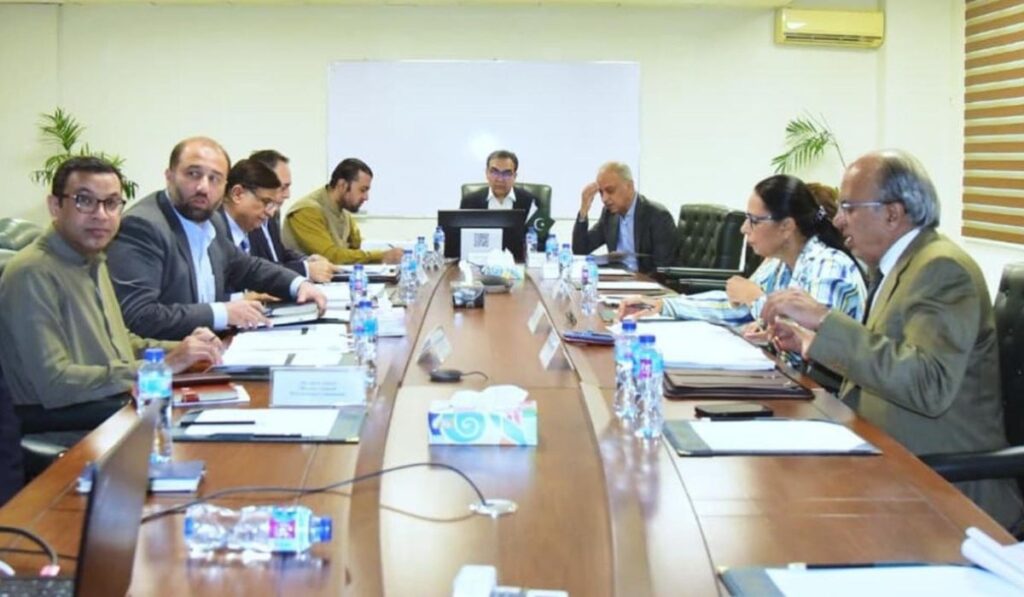
The decision was made at the 242nd meeting of the Board chaired by Muhammad Ali, Adviser to the Prime Minister on Privatisation, said an official statement issued by PC after the meeting.
The AHCL consortium is among four pre-qualified parties participating in the national carrier’s privatisation process. According to officials, AKD Group’s inclusion, approved under the terms of the Statement of Qualifications (SOQ), is expected to enhance the consortium’s financial depth and operational expertise. The move signals a key step forward in restructuring the debt-laden airline, which has accumulated losses exceeding Rs 700 billion as of mid-2025.
The privatisation of PIACL has been a cornerstone of Pakistan’s economic reform agenda, backed by commitments made under the IMF’s Extended Fund Facility. The government aims to complete the transaction by the second quarter of 2026 to reduce fiscal pressure and attract foreign investment.
At the same meeting, the Board took up other significant matters concerning the House Building Finance Company Limited (HBFCL) and the management of three major international airports — Islamabad, Lahore, and Karachi.
The Board recommended to the Cabinet Committee on Privatisation (CCoP) the approval of a reference price for the privatisation of HBFCL, along with the terms of the Sale Purchase Agreement. HBFCL is being privatised through a negotiated sale to Pakistan Mortgage Refinance Company Limited (PMRCL), which has already been pre-qualified as a bidder. The proposal follows a previous federal cabinet approval granted in July 2023, allowing a negotiated sale to a single bidder. PMRCL’s bid will be opened once the reference price is approved by the CCoP and ratified by the cabinet.
In another key development, the Board recommended that the management of Islamabad, Lahore, and Karachi international airports be included in the government’s ongoing privatisation programme. Under this initiative, airport operations will be offered to private investors on a long-term concession basis.
Officials familiar with the discussions said the airport management concession model is intended to enhance efficiency, attract global operators, and modernize infrastructure without transferring ownership. Similar models have been implemented in regional hubs such as Doha, Abu Dhabi, and Istanbul, where private-sector management improved service standards and increased passenger throughput.
The Board reiterated its commitment to implementing the government’s privatisation agenda with transparency, efficiency, and strategic focus. Adviser Muhammad Ali emphasized that all ongoing transactions are being aligned with Pakistan’s reform roadmap aimed at fiscal consolidation, public-sector efficiency, and economic recovery.
Board members expressed confidence that the inclusion of financially strong entities like AKD Group and PMRCL would help overcome past obstacles that delayed key transactions. They reaffirmed their resolve to ensure the timely and successful completion of privatisation initiatives that can reduce fiscal burdens and attract long-term investment.
The government’s privatisation pipeline currently includes over 20 state-owned enterprises (SOEs) from sectors such as energy, banking, and aviation. According to officials, successful completion of ongoing transactions could yield up to $4–5 billion over the next three years, easing fiscal constraints and boosting foreign reserves.
Analysts note that the inclusion of private investors in Pakistan’s state-run entities is critical for achieving fiscal sustainability. “Privatisation remains one of the few structural reforms that can unlock efficiency and investment,” said a Karachi-based financial analyst. “The challenge will be ensuring transparency and competitive bidding, especially in politically sensitive entities like PIA.”
As Pakistan moves forward with its reform commitments under the IMF and World Bank frameworks, the government appears determined to fast-track the privatisation of loss-making enterprises — a move seen as essential to achieving sustainable economic recovery and restoring investor confidence.